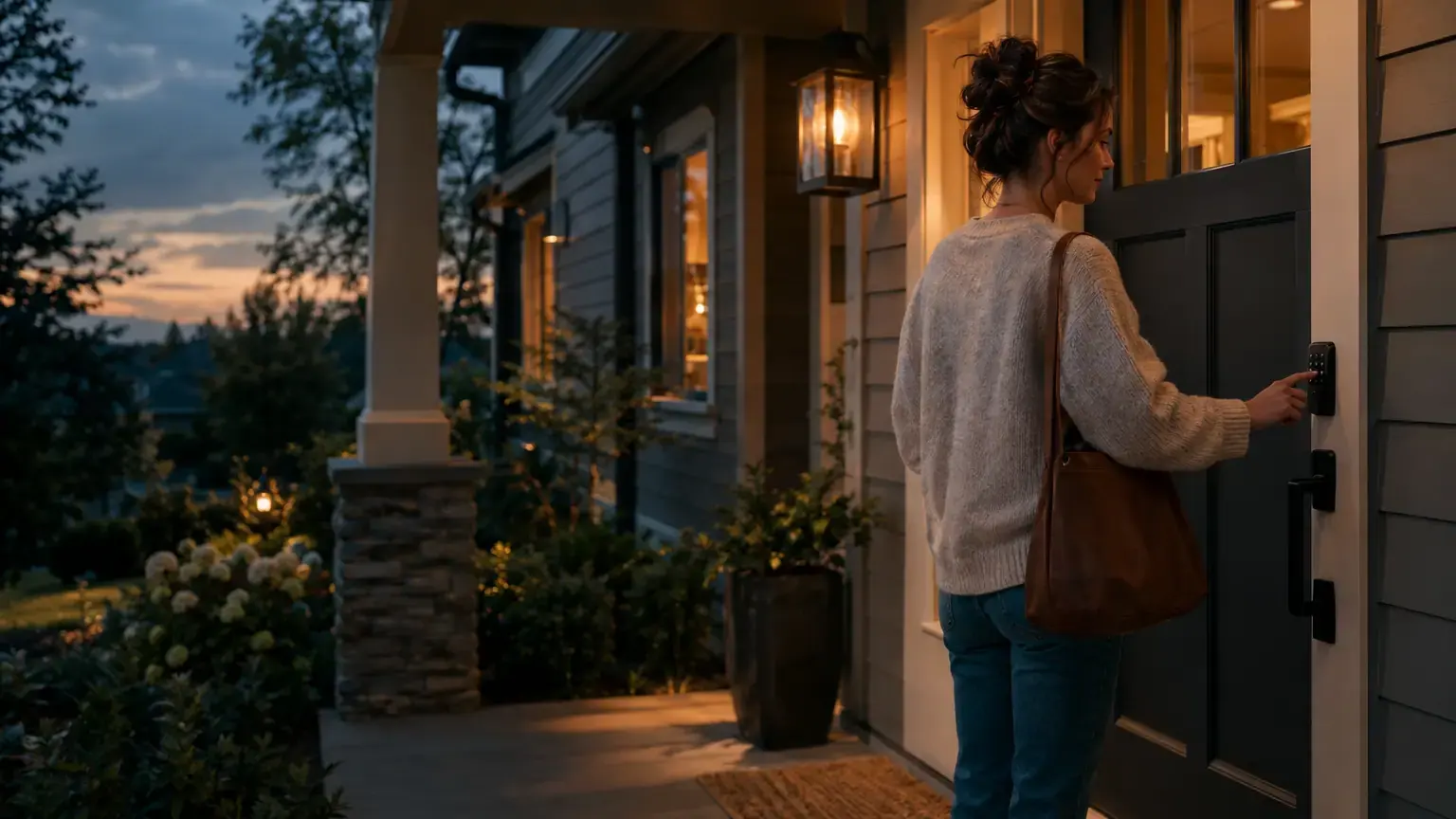
From Maple-Ash bungalows to Town Lake high-rises
Vivint Home Security in Tempe, AZ
Tempe packs ASU apartments, mid-century ranch houses and lakeside condos into one busy city. A security plan here has to fit renters and owners, students and longtime residents. It also has to handle monsoon outages, hail, street flooding and summer heat that can turn a failed air conditioner into an emergency.
Independently owned authorized Vivint dealer, operated by Plondo. Not Vivint Smart Home, Inc.'s corporate site.
Quick answer
What is the best Vivint setup for a home in Tempe?
For most Tempe houses, start with the Vivint Smart Hub, a Doorbell Camera Pro, sensors on every exterior door and the backyard slider, a smart lock and a Vivint Smart Thermostat. Add an Outdoor Camera Pro for the driveway, carport or alley, plus water sensors and smoke and carbon monoxide detectors. Renters near ASU can choose a lighter setup. Vivint Smart Home Pros install it, and 24/7 professional monitoring with battery and cellular backup helps it stay connected through monsoon outages.
Last reviewed by the Vivint Security editorial team.
Tempe at a glance
| Data point | Value | Source |
|---|---|---|
| Population | 188,065U.S. Census Bureau, ACS 5-year 2024 | |
| Owner-occupied homes | 42.3%U.S. Census Bureau, ACS 5-year 2024 | |
| Single-family detached homes | 38.1%U.S. Census Bureau, ACS 5-year 2024 | |
| Homes in buildings with 10+ units | 33.3%U.S. Census Bureau, ACS 5-year 2024 | |
| Median year homes were built | 1984U.S. Census Bureau, ACS 5-year 2024 | |
| Median home value | $455,400U.S. Census Bureau, ACS 5-year 2024 | |
| Housing vacancy rate | 9.2%U.S. Census Bureau, ACS 5-year 2024 | |
| Overall natural hazard risk (county) | Very HighFEMA National Risk Index, Maricopa County | |
| Highest-rated hazards (county) | Hail (Very High); Inland flooding (Very High); Heat wave (Very High); Strong wind (Very High)FEMA National Risk Index, Maricopa County |
What threatens Tempe homes
Monsoon storms, extreme heat and opportunistic theft
Tempe sits in Maricopa County, which carries a Very High overall score in FEMA's National Risk Index. Hail, inland flooding, heat wave and strong wind all land in that top tier for the county. In Tempe they tend to show up together during monsoon season, when a haboob can roll across Tempe Town Lake, followed by microburst winds and a hard downpour on the same afternoon.
Monsoon winds can knock down power lines and palm fronds and leave whole neighborhoods dark. A Vivint system runs on battery backup and reports over a cellular connection, so monitoring does not depend on your Wi-Fi or a landline. Hail can crack roof tile and skylights and damage patio fixtures. Outdoor Camera Pro footage saved by the Playback DVR gives you a record of when a storm hit.
Flooding is a real concern even in the desert. Low intersections, streets that pond during monsoon downpours and central Tempe lots that still use flood irrigation can take on water fast. Water sensors under sinks, by the water heater and near the laundry or garage entry alert your phone at the first sign of a leak or seepage.
Heat wave risk matters most when nobody is home. If the AC quits in July, an empty house heats up quickly, which is dangerous for pets and hard on electronics and finishes. The Vivint Smart Thermostat lets you watch indoor temperature from the Vivint app and act before it becomes a costly problem.
Common property concerns in Tempe are opportunistic: packages left on porches, cars and bikes in apartment lots, and garages left open along busy streets. Doorbell Camera Pro and Outdoor Camera Pro with Smart Deter can warn off people who linger, and garage door control lets you close a garage you forgot about from anywhere.
Tempe housing
Setting up security for the way Tempe lives
With ASU at its center, Tempe is a renter's city. Census figures count 188,065 residents, and just 42.3% of homes are lived in by their owners. Detached single-family houses account for 38.1% of homes, while 33.3% are units in large apartment and condo buildings. The median Tempe home dates to 1984, and the median value is $455,400.
That mix creates two common profiles. One is a block or frame stucco ranch house with older locks, a sliding glass door to the backyard and a block wall around the lot. The other is an apartment or condo where the front door is the only entry and the building controls the exterior. The housing vacancy rate is 9.2%, and near campus many units sit quiet when ASU students leave for summer, so cameras and alerts help when neighbors are away.
Maple-Ash, Mitchell Park and the ASU area
These older blocks near campus mix owner-occupied bungalows with rentals and student housing. Foot traffic is constant and parking is tight. Put a Doorbell Camera Pro on the front porch, a smart lock so you never hand out spare keys, and glass break sensors on street-facing windows. If you rent here, ask about a setup that avoids drilling and moves with you.
Downtown and Tempe Town Lake
High-rise condos and apartments along Rio Salado Parkway and Mill Avenue usually have controlled entries, so focus inside your unit. An Indoor Camera Pro, a door sensor, a smart lock and a water sensor under the sink cover most needs. Check HOA or building rules before mounting anything on a balcony or in a hallway.
Broadmor and central Tempe ranch neighborhoods
Mature trees, alleys, carports and large lots define much of central Tempe, and some streets still use flood irrigation. Cover the side yard and alley gate with an Outdoor Camera Pro or Spotlight Pro, add sensors to the backyard slider and use garage door control. A water sensor near the garage or laundry entry helps when irrigation water or monsoon runoff creeps toward the slab.
South Tempe: The Lakes and Warner Ranch
South of the Superstition Freeway, homes are larger, many are two stories and many sit in HOA communities. Families here often commute and travel. A full perimeter of door and window sensors, motion sensors on the main floor, cameras covering the driveway and backyard, and a Vivint Smart Thermostat for summer trips make sense. Choose camera placements that fit HOA guidelines.
Questions about Vivint Home Security in Tempe? A Vivint expert can help.
Call 866.417.1540Where to start
A starting Vivint setup for a typical Tempe home
This is a sensible starting point for a single-family Tempe house. Apartments and condos usually need fewer pieces. Your Vivint specialist will adjust it to your floor plan on the call.
- Vivint Smart Hub: the control panel for the whole system, with battery and cellular backup for monsoon outages.
- Doorbell Camera Pro: sees packages and visitors on porches that bake in afternoon sun, and helps you deter porch pirates.
- Outdoor Camera Pro with Smart Deter: watches the driveway, carport or alley gate and warns off people who linger.
- Door and window sensors: on every exterior door, the backyard slider and reachable windows, common entry points in older ranch homes.
- Smart lock: gives roommates, dog walkers or pool service their own codes instead of spare keys.
- Garage door control: close a garage left open on a busy street like Rural Road or McClintock Drive from the Vivint app.
- Vivint Smart Thermostat: track indoor temperature during heat waves and protect pets and belongings if the AC fails.
- Smoke and carbon monoxide detectors plus water sensors: monitored protection for fire, gas appliances and leaks from water heaters or monsoon runoff.
How it works
Professional installation and 24/7 monitoring in Tempe
Our part, as an independently owned authorized Vivint dealer, is planning. On the phone we talk through your Tempe house or unit, whether it is a Broadmor ranch or a Mill Avenue condo, match equipment to it and build your quote. Vivint's own Smart Home Pros handle the install: they mount each device, test every sensor and camera, pair the Vivint app and walk you through arming before they leave.
After setup, a Vivint monitoring center keeps watch 24/7. If a door sensor trips or a smoke detector sounds, an agent works to verify the alarm, then contacts the appropriate emergency services following local protocol. How quickly help arrives is up to those agencies, which is why no arrival time is promised.
The system communicates over cellular, so a monsoon power outage or a cut internet line does not cut off monitoring. The Vivint app lets you arm, disarm, check cameras and adjust the thermostat from work, the ASU campus or out of state.
Tempe may have its own rules for monitored alarms, such as registration, so ask the city what applies to your address before the system goes live. Your quote call is where you confirm what Vivint offers at your address, along with current pricing and promotions, since each of these varies from home to home.
Questions about Vivint Home Security in Tempe? A Vivint expert can help.
Call 866.417.1540Desert climate
Sensors built for Tempe's heat and monsoon season
Tempe rarely worries about frozen pipes, but it has its own water trouble. Long heat waves push AC units and water heaters hard, and monsoon storms send runoff toward slab foundations and garage doors. A water sensor by the water heater, under sinks, behind the washer and near any low entry door can catch a leak or runoff early.
The Vivint Smart Thermostat shows indoor temperature in the Vivint app, so you know quickly if cooling stops during a July heat wave while you are away. Monitored smoke and carbon monoxide detectors add protection year round, especially in older Tempe homes with gas water heaters or furnaces.
Talk to a Vivint expert right now.

Vivint Home Security in Tempe FAQ
I rent near ASU. Can I get a Vivint system?
Yes. Renters outnumber owners in Tempe, so this is a common request. A renter setup usually focuses on the Smart Hub, door sensors, an Indoor Camera Pro and a smart lock if your landlord allows it. Ask your landlord before replacing locks or drilling. On the call, mention that you rent so the specialist can suggest options that are easy to remove and take with you.
Does Vivint work in a Tempe apartment or condo?
It does. In a downtown high-rise or a condo near Town Lake, the building usually controls the lobby and garage, so your system protects your unit. A door sensor, Indoor Camera Pro, smart lock and water sensor cover the main risks. Check building or HOA rules before mounting cameras on balconies or in common hallways, and plan around them.
Will my HOA in South Tempe allow outdoor cameras?
Many HOAs allow doorbell and outdoor cameras but set rules on placement, color or visible wiring. Review your CC&Rs before installation and share any limits during your quote call. Vivint Smart Home Pros can place cameras to cover the driveway and entries with a tidy look that suits neighborhoods like The Lakes or Warner Ranch.
What happens to my system during a monsoon power outage?
The Vivint Smart Hub has a backup battery, and the system communicates over cellular, so it stays connected when monsoon winds knock out power or internet. Monitoring continues, and you still get alerts in the Vivint app. Once power returns, the battery recharges. This matters in Tempe, where summer storms can darken a neighborhood quickly.
How can Vivint help while I travel in summer?
Many ASU students head home after the spring semester, and plenty of families escape the heat for a few weeks. Arm the system from the Vivint app, watch cameras, and use the Vivint Smart Thermostat to keep the house cool enough without wasting energy. Water sensors and monitored smoke detectors flag problems while you are gone, and smart locks let a trusted neighbor check in.
Do I need an alarm permit in Tempe?
It depends on current city rules, so ask the City of Tempe whether monitored alarms at your address need a permit or registration. Do this before activation, since procedures can change. Your Vivint specialist can flag the step during setup, but where registration applies, it is the resident's job to complete it.
Is Vivint worth it for a newer townhome or condo in Tempe?
Newer infill townhomes and condos near downtown and along the light rail have modern doors and windows, but they still benefit from cameras, sensors and monitoring. Many have ground-floor garages and large sliders, so garage door control, door sensors and motion sensors help. A Smart Home Pro places each device to fit your finished layout and connects the thermostat and locks in the same visit.
Can I take my system with me if I move within Tempe?
Moving is common here, whether from a rental near campus to a house in South Tempe or from a condo to a ranch home. Ask about moving options, since equipment needs often change with the new home. Call before your move so the specialist can review the new address, adjust the setup and confirm availability.
Vivint products for homes in Tempe
 Home Security SystemsProfessionally installed Vivint home security systems with 24/7 monitoring.
 Security CamerasVivint indoor, outdoor and doorbell security cameras with smart deterrence.
 Doorbell Camera ProVivint Doorbell Camera Pro with package protection and two-way talk.
- Outdoor Camera ProVivint Outdoor Camera Pro with Smart Deter and night vision.
 24/7 MonitoringVivint 24/7 professional home security monitoring.
- Vivint Cost and PricingWhat Vivint costs: monitoring plans, equipment and offers.