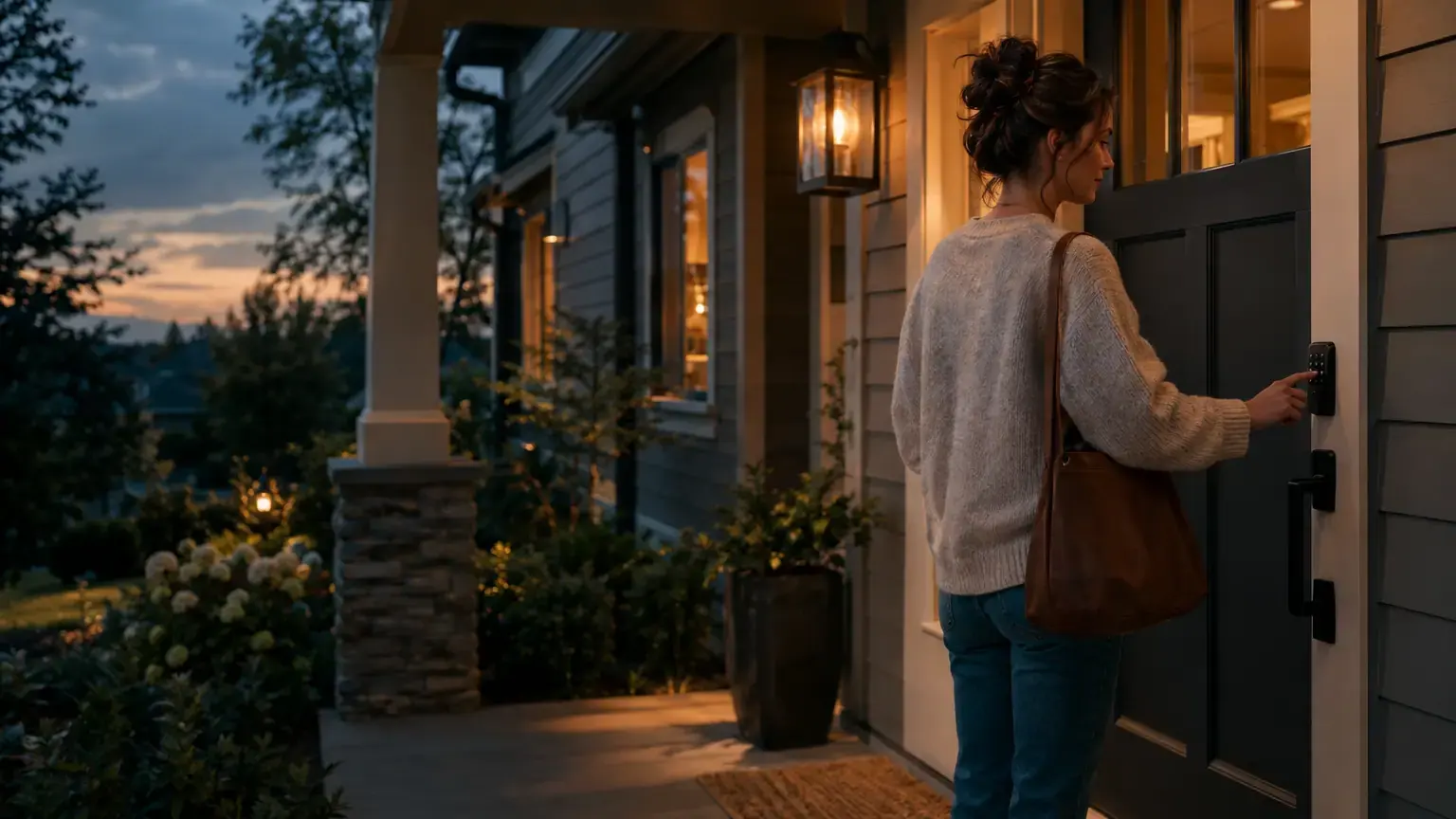
East Valley homes, monsoon ready
Vivint Home Security in Mesa, AZ
Mesa homes face monsoon storms that bring strong wind, dust, hail and flash flooding. Summers get hot enough to make a failed AC an emergency. Snowbirds and summer travelers leave houses empty for long stretches. A Vivint system here should guard the garage, the back slider and the yard behind the block wall, and keep you connected to the house while you are away.
Independently owned authorized Vivint dealer, operated by Plondo. Not Vivint Smart Home, Inc.'s corporate site.
Quick answer
What is the best Vivint setup for a home in Mesa, AZ?
Picture a typical Mesa single story with an attached garage and a pool behind a block wall. A strong core for that house: the Vivint Smart Hub as the control panel, a Doorbell Camera Pro on the front porch, an Outdoor Camera Pro aimed at the pool and side gate, sensors on the patio slider and every exterior door, garage door control, a Vivint Smart Thermostat for summer cooling, and water sensors by the garage water heater and AC lines. Cellular communication plus a backup battery keeps the hub talking to 24/7 monitoring when monsoon wind cuts power. That also matters for snowbird homes left empty from spring to fall.
Last reviewed by the Vivint Security editorial team.
Mesa at a glance
| Data point | Value | Source |
|---|---|---|
| Population | 511,764U.S. Census Bureau, ACS 5-year 2024 | |
| Owner-occupied homes | 64.4%U.S. Census Bureau, ACS 5-year 2024 | |
| Single-family detached homes | 55.1%U.S. Census Bureau, ACS 5-year 2024 | |
| Homes in buildings with 10+ units | 14.2%U.S. Census Bureau, ACS 5-year 2024 | |
| Median year homes were built | 1989U.S. Census Bureau, ACS 5-year 2024 | |
| Median home value | $408,000U.S. Census Bureau, ACS 5-year 2024 | |
| Housing vacancy rate | 11.0%U.S. Census Bureau, ACS 5-year 2024 | |
| Overall natural hazard risk (county) | Very HighFEMA National Risk Index, Maricopa County | |
| Highest-rated hazards (county) | Hail (Very High); Inland flooding (Very High); Heat wave (Very High); Strong wind (Very High)FEMA National Risk Index, Maricopa County |
What threatens Mesa homes
Monsoon storms, extreme heat and everyday risks in Mesa
FEMA's National Risk Index rates Maricopa County's overall natural hazard risk as Very High. Four hazards rate Very High for the county: hail, inland flooding, heat waves and strong wind. In Mesa, much of that risk arrives during monsoon season. A calm afternoon can turn into a wall of wind-driven dust, then microburst gusts, hail and rain that fills washes and low streets fast.
Monsoon wind can bring down power and internet lines. A Vivint Smart Hub communicates over a cellular connection instead of relying on home internet, and it has a backup battery, so alarms can still reach the monitoring center when the modem goes dark. Outdoor Camera Pro and Spotlight Pro units are built for outdoor mounting, and detection zones can be tuned so blowing palm fronds and debris do not flood your phone with alerts.
Inland flooding in Mesa is rarely a river cresting. It is a monsoon cell stalling overhead, washes running high, and water finding its way under a garage door or across a slab. Older central Mesa lots that still take flood irrigation add another source of standing water near the house. Water sensors in the garage, by the water heater and under sinks send an alert to the Vivint app as soon as they get wet.
Heat waves are a property risk too. If the AC fails during a July heat wave, an empty house can get dangerously hot for pets and hard on electronics. The Vivint Smart Thermostat lets you watch indoor temperature from anywhere and adjust cooling remotely, which matters most when no one is home.
Mesa layouts also shape everyday security. Front porches hold deliveries in the sun, garages often sit open on hot evenings, and backyards hide behind block walls where no one on the street can see. A Doorbell Camera Pro watches deliveries, Smart Deter on Outdoor Camera Pro uses light and sound to warn off people who linger, garage door control lets you close a door you forgot, and sensors on the back slider cover the door that opens to the yard.
Housing in Mesa
How Mesa's homes and neighborhoods shape a security plan
Mesa is home to 511,764 people, and its housing reflects decades of East Valley growth. The median home was built in 1989, which in Mesa often means single story stucco, a concrete tile roof, a slab foundation, an attached two car garage and a sliding glass door that opens to a pool or patio. Single-family detached homes make up 55.1% of housing, and 64.4% of homes are owner occupied. The median home value is $408,000.
Mesa also has plenty of apartments, condos, townhomes and manufactured home and RV communities, many filled with winter visitors. Homes in buildings with ten or more units account for 14.2% of housing, with many along major corridors and near the light rail on Main Street. The housing vacancy rate is 11.0%. Census vacancy counts include seasonal homes, and Mesa has many winter residents who leave for the summer. Empty houses are where remote monitoring, smart locks and water sensors pay off.
Dobson Ranch and west Mesa
Dobson Ranch was one of Mesa's early master planned communities, with many homes older than the citywide median, set around lakes and greenbelts. Many still have original sliders and side yard gates. Put door and window sensors on every exterior door and the slider, add a glass break sensor in the family room, and place an Outdoor Camera Pro to cover the side gate. Check HOA rules before mounting cameras on the front of the home.
Downtown Mesa and the central historic districts
Around Downtown Mesa and the historic neighborhoods near Main Street, homes are older, some lots are flood irrigated, and some owners rent out casitas or live near the light rail. A Doorbell Camera Pro and smart locks handle visitors and tenants, water sensors near exterior walls and the garage catch irrigation seepage, and indoor coverage works well for apartments and condos where exterior mounting is limited.
Las Sendas, Red Mountain and northeast Mesa
Near the Usery Mountains and the Salt River, northeast Mesa homes often sit on larger lots that back onto desert, washes and open land. That can mean long perimeters, view fencing instead of block walls, and few neighbors watching. Use Outdoor Camera Pro and Spotlight Pro units on the rear corners with Smart Deter enabled, motion sensors inside, and water sensors in low garages that border a wash.
Eastmark and southeast Mesa new construction
Southeast Mesa near Phoenix-Mesa Gateway Airport and ASU Polytechnic is full of newer builds in Eastmark and nearby communities, often two stories on tight lots. New homes usually do not come with professional monitoring. Pair a Vivint Smart Hub with garage door control, smart locks and a Doorbell Camera Pro for frequent deliveries, and cover the downstairs slider with a door sensor and glass break sensor. HOA design rules here can be detailed, so confirm camera placement first.
Questions about Vivint Home Security in Mesa? A Vivint expert can help.
Call 866.417.1540A starting point
A recommended Vivint setup for a typical Mesa home
This is a starting point for a single story stucco home with an attached garage and a backyard pool, a common layout in Mesa. Your Smart Home Pro will adjust it during installation, and equipment availability and pricing are confirmed for your address on a call.
- Vivint Smart Hub: the control panel for the whole system, with cellular communication and a backup battery so alarms can reach monitoring when monsoon winds take out power and internet.
- Doorbell Camera Pro: watches the front porch, where packages sit in the sun, and lets you answer the door from anywhere.
- Outdoor Camera Pro with Smart Deter: covers the backyard, pool and side gate, the areas hidden behind a block wall.
- Door and window sensors: on the front door, garage entry door and especially the sliding glass door to the patio.
- Glass break sensor: for the family room or any room with large windows facing the yard.
- Garage door control: close the garage from the Vivint app, a real fix for doors left open on hot evenings.
- Smart locks: let in pool service, pest control or a house sitter with a code instead of hiding a key.
- Vivint Smart Thermostat: watch indoor temperature and adjust cooling remotely during heat waves.
- Water sensors: by the water heater in the garage, under sinks and near the washer.
- Smoke and carbon monoxide detectors: monitored, so emergency services can be contacted even if no one is home.
How it works
Installation, 24/7 monitoring and the Vivint app in Mesa
vivint.security is run by an authorized Vivint dealer that is independently owned, not by Vivint corporate. On the phone, tell us what you live in, maybe a Dobson Ranch single story, an Eastmark two story or a condo off Main Street, and when the house tends to sit empty. We suggest equipment and check which offers and prices apply at your address. Installation is handled by Vivint's own Smart Home Pros. They mount the cameras, place each sensor, configure the Vivint Smart Hub and walk you through the Vivint app on install day.
Vivint runs 24/7 professional monitoring. When an alarm goes off, a monitoring agent works to verify it and contacts emergency services following local protocol. Smoke and carbon monoxide alarms are monitored too, which matters for homes left empty during long summer trips. Because the hub communicates over cellular, monitoring does not depend on your internet staying up through a monsoon wind storm.
The Vivint app puts the whole system on your phone: arm or disarm, watch live video, review recorded clips from Playback DVR, lock doors, close the garage and check the thermostat. For snowbirds who spend summers elsewhere and Mesa families who head to the high country in July, that remote control is the main reason to have a system.
Before your install, check whether the City of Mesa requires an alarm permit or registration for monitored systems. Requirements and any fees are set by the city, so confirm the current rules with the city directly. We can help you understand what information you will need.
Questions about Vivint Home Security in Mesa? A Vivint expert can help.
Call 866.417.1540Built for the desert
Weather ready: heat, water, smoke and CO protection for Mesa
Mesa's climate creates its own household risks. Water heaters in Mesa garages bake through the summer and work against the East Valley's hard water, which can shorten their life and lead to sudden leaks. AC condensate lines run hard for months and can clog and drip into ceilings. Slab leaks under a 1989 era foundation can go unnoticed for weeks. Water sensors in the garage, laundry area and under sinks send an early alert through the Vivint app, so a small leak is caught before it reaches flooring and drywall.
Winter residents often leave the thermostat set higher to save energy while they are gone for the summer. If a heat wave pushes the house past that setting or the AC quits, the Vivint Smart Thermostat shows it in the app and lets you lower the setpoint or call a repair before damage builds. For Mesa commuters who leave dogs home during a workday in Tempe or Phoenix, the same check takes seconds.
Monitored smoke and carbon monoxide detectors round out the system. Many Mesa homes have attached garages, and many use natural gas for water heaters, ranges or furnaces, which makes CO detection worth having. Because these devices are monitored around the clock, an alarm is acted on even when the house sits empty for the summer.
Talk to a Vivint expert right now.

Vivint Home Security in Mesa FAQ
I rent in Mesa. Can I still get a Vivint system?
Often, yes. Many Vivint devices, including the Vivint Smart Hub, Indoor Camera Pro, door and window sensors and water sensors, install with minimal impact. Get your landlord's approval before mounting outdoor cameras, swapping locks or drilling into stucco. Renters near Downtown Mesa, ASU Polytechnic or the light rail often start with indoor coverage and a Doorbell Camera Pro. Call us to talk through what fits your lease.
Does Vivint work in Mesa apartments and condos?
Yes. Homes in buildings with ten or more units make up 14.2% of Mesa housing, and a smaller setup works well there. A Vivint Smart Hub, sensors on the entry door and any patio slider, an Indoor Camera Pro and smoke and CO detectors cover the basics. If your building controls exterior walls, focus on indoor devices. Check your lease or association rules, then call to confirm what is available for your unit.
My Mesa HOA has strict rules. Can I install cameras?
HOAs across Mesa, from Dobson Ranch to Eastmark and Las Sendas, may set rules on camera placement, color or visible wiring on the front of the home. Read your CC&Rs or ask the HOA before installation. A Doorbell Camera Pro replaces an existing doorbell, so it often raises fewer concerns. Your Smart Home Pro can often mount Outdoor Camera Pro units under eaves to keep them discreet.
Will my system work during a monsoon power outage?
The Vivint Smart Hub communicates with the monitoring center over a cellular connection, so a downed internet line does not cut off monitoring. The hub also has a backup battery to help it ride through outages. Some devices that rely on Wi-Fi or wired power may pause until power returns. Ask during your call how your specific equipment behaves when monsoon winds knock out power.
I spend summers out of state. How does Vivint help snowbirds?
Snowbirds are a big part of Mesa life, and empty summer homes need attention. With the Vivint app you can arm the system, watch cameras, let in a pool or pest service with a smart lock code, and check indoor temperature on the Vivint Smart Thermostat. Water sensors alert you to leaks, and 24/7 monitoring covers intrusion, smoke and carbon monoxide alarms while you are gone.
I just bought a new build in southeast Mesa. Is it worth adding a system?
Yes. New homes in Eastmark and nearby communities usually do not include professional monitoring, and growing neighborhoods often have empty lots, construction traffic and frequent deliveries. A Doorbell Camera Pro, garage door control, smart locks and sensors on the downstairs doors are a strong start. Installing early lets you plan camera placement before landscaping and furniture are in place.
Does Mesa require an alarm permit?
Check with the City of Mesa before or right after your installation to confirm whether your monitored system needs a permit or registration, and whether any fees apply. Rules can change, and the city sets them. We do not set or collect those fees. Knowing the rules up front helps you avoid problems if emergency services are ever sent to your home.
Can I take my Vivint system with me if I move within Mesa or the East Valley?
Plenty of Mesa households relocate only a few miles at a time: a condo by the light rail to a house in Eastmark, or west Mesa to Gilbert or Chandler. Vivint offers options for customers who relocate, and much of your equipment can often be reinstalled at the new place. What applies depends on your account and the new address, so call before moving day to confirm the steps and timing.
Vivint products for homes in Mesa
 Home Security SystemsProfessionally installed Vivint home security systems with 24/7 monitoring.
 Security CamerasVivint indoor, outdoor and doorbell security cameras with smart deterrence.
 Doorbell Camera ProVivint Doorbell Camera Pro with package protection and two-way talk.
- Outdoor Camera ProVivint Outdoor Camera Pro with Smart Deter and night vision.
 24/7 MonitoringVivint 24/7 professional home security monitoring.
- Vivint Cost and PricingWhat Vivint costs: monitoring plans, equipment and offers.