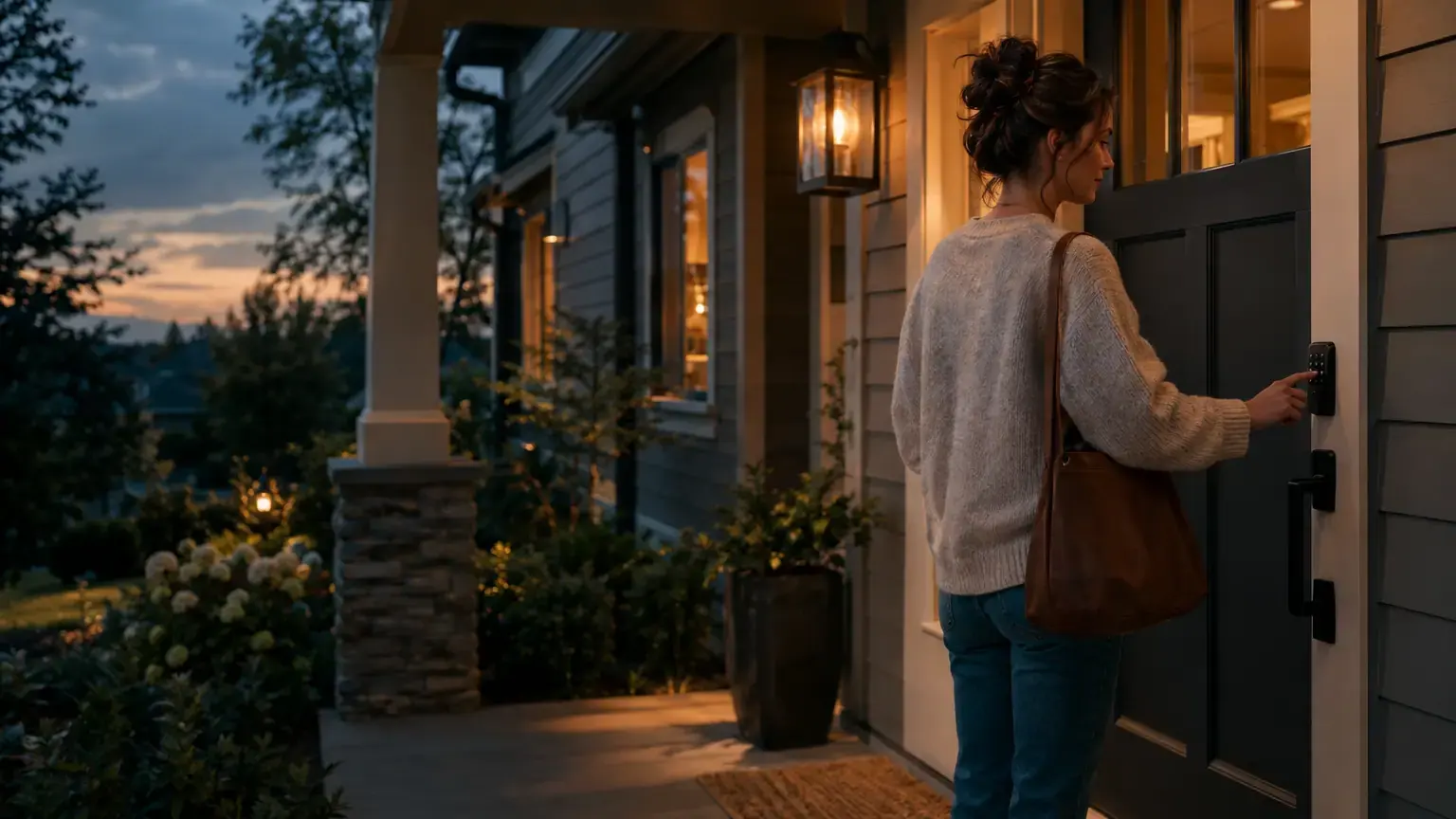
Built for monsoon season, desert heat and long summer trips
Vivint Home Security in Phoenix, AZ
A Phoenix home has to hold up through haboobs and microbursts that cut power, monsoon hail, washes that flood in minutes, and months when an air conditioner failure becomes an emergency. Many owners also leave the Valley for weeks in summer, and winter residents leave homes empty from spring to fall. A good system guards the front door, and it also watches indoor temperature and water lines while you are gone.
Independently owned authorized Vivint dealer, operated by Plondo. Not Vivint Smart Home, Inc.'s corporate site.
Quick answer
Is Vivint a good home security choice in Phoenix?
For many Phoenix homes, yes. A Vivint system can be set up around what local homes actually face: monsoon hail and wind, flash flooding in washes and low streets, long heat waves and frequent summer travel. An authorized dealer helps you plan the setup, then Vivint's Smart Home Pros install it and 24/7 professional monitoring watches over it. Cellular communication keeps alarms reaching the monitoring center when storms knock out power or internet. Pricing and offers vary by address, so call for a free quote.
Last reviewed by the Vivint Security editorial team.
Phoenix at a glance
| Data point | Value | Source |
|---|---|---|
| Population | 1,642,323U.S. Census Bureau, ACS 5-year 2024 | |
| Owner-occupied homes | 57.3%U.S. Census Bureau, ACS 5-year 2024 | |
| Single-family detached homes | 59.8%U.S. Census Bureau, ACS 5-year 2024 | |
| Homes in buildings with 10+ units | 21.6%U.S. Census Bureau, ACS 5-year 2024 | |
| Median year homes were built | 1985U.S. Census Bureau, ACS 5-year 2024 | |
| Median home value | $420,700U.S. Census Bureau, ACS 5-year 2024 | |
| Housing vacancy rate | 6.5%U.S. Census Bureau, ACS 5-year 2024 | |
| Overall natural hazard risk (county) | Very HighFEMA National Risk Index, Maricopa County | |
| Highest-rated hazards (county) | Hail (Very High); Inland flooding (Very High); Heat wave (Very High); Strong wind (Very High)FEMA National Risk Index, Maricopa County |
What threatens Phoenix homes
Monsoon storms, extreme heat and crimes of opportunity
Phoenix sits in Maricopa County, and the county's profile in FEMA's National Risk Index lands at Very High overall. Hail, inland flooding, heat wave and strong wind each carry a Very High rating of their own. In Phoenix they tend to arrive together during the summer monsoon, when a still, triple-digit afternoon can give way to a wall of dust rolling across the Valley, a microburst and a downpour in under an hour.
Monsoon wind and hail knock out power, crack roof tile, damage flat roofs and can swing open a side gate on a block wall. The Vivint Smart Hub keeps running on its backup battery and reports over a cellular connection. Outdoor Camera Pro units are weather rated, and the Vivint app lets you check the yard, the pool gate and the roofline once the storm moves on.
Inland flooding in Phoenix usually means fast runoff. Washes, dips in the road and low lots fill quickly, and water can slip under a patio door or back up from a clogged roof scupper. Water sensors at the water heater, under sinks and near patio doors send an alert the moment moisture shows up, even if you are at work across the Valley.
Heat waves do the most harm when nobody is home. A failed air conditioner in July can make a house unsafe for pets within hours, which is why remote temperature monitoring matters more here than in milder cities.
Phoenix theft is often about opportunity: packages baking on a sunny porch, side gates on block walls left unlatched, and garages left open on summer afternoons to let heat out. The Doorbell Camera Pro records who walks up, and Smart Deter on the Outdoor Camera Pro spots people who linger and warns them off with light and sound. Garage door control lets you close a door you forgot about from your phone.
Housing across Phoenix
How Phoenix homes are built, and how to protect each type
Phoenix is home to 1,642,323 people, and its housing grew mostly outward. Single-family detached homes make up 59.8% of the housing stock, and the median home was built in 1985. That means a lot of single-story block and stucco houses with attached garages, slab foundations, sliding patio doors and block perimeter walls, often with the water heater out in a hot garage.
Owner-occupied homes account for 57.3%, so a large share of residents rent. Another 21.6% of homes are in buildings with 10 or more units, many of them along the central corridor, near ASU's downtown campus and along the light rail. The median home value is $420,700, and the housing vacancy rate is 6.5%. Seasonal and empty homes are part of the picture here, and they need remote eyes.
Arcadia
Large lots, mature citrus, mid-century ranch homes and newer custom rebuilds near the base of Camelback Mountain. Long frontages and dense landscaping create blind spots, so plan Outdoor Camera Pro coverage on the driveway, side yards and pool area, and add a Spotlight Pro where trees shade the walk. Glass break sensors make sense for homes with big window walls facing the yard.
Ahwatukee Foothills
Mostly stucco homes from the late twentieth century, many in HOA communities that back onto South Mountain preserve land. Back walls facing the trails and washes deserve sensors on patio doors and a camera on the rear yard. Many HOAs have rules about exterior mounting, so a Doorbell Camera Pro and discreet eave-mounted cameras usually fit well.
Willo, Encanto-Palmcroft and Roosevelt historic districts
Bungalows, Spanish Revival and Tudor homes from the early and middle twentieth century, many with original windows, detached garages and alley access. Wireless door and window sensors avoid drilling into plaster and old trim. Cover the alley side with a camera, and put a smart lock on the back door that faces it. Smoke and carbon monoxide detectors matter in homes with older gas appliances.
Downtown, Midtown and North Phoenix apartments
Midrise and garden-style communities from Midtown up to Desert Ridge. Renters usually want a setup that fits the lease: an Indoor Camera Pro, door and window sensors, a smart lock where the lease allows it, and the Vivint app. Ask the property manager before replacing a deadbolt or mounting a doorbell.
Questions about Vivint Home Security in Phoenix? A Vivint expert can help.
Call 866.417.1540Where to start
A starting Vivint setup for a typical Phoenix house
For a single-story stucco home with an attached garage, a block wall and a backyard pool, this is a solid starting point. Your Vivint consultation adjusts it to your floor plan and your budget.
- Vivint Smart Hub: the control panel. It runs on battery backup and reports over cellular when monsoon storms take down power or internet.
- Doorbell Camera Pro: package detection and two-way talk for deliveries that sit in direct sun, plus a record of who walked up.
- Outdoor Camera Pro with Smart Deter on the driveway and side gate: common approach points on Phoenix lots with block walls and side yards.
- Smart locks on the front door and the garage entry door: give pool service, landscapers or a house sitter their own codes.
- Garage door control: close the door from the app instead of leaving it open all afternoon.
- Door and window sensors on every exterior door, the sliders and accessible windows, plus a motion sensor in the main hallway.
- Water sensors at the water heater, under the kitchen sink and near the air handler condensate line.
- Vivint Smart Thermostat: watch indoor temperature during heat waves and trips, and catch it when the cooling stops keeping up.
- Smoke and carbon monoxide detectors that are monitored around the clock, not just loud.
How it works here
Professional installation, 24/7 monitoring and an app that travels with you
As an independently owned authorized Vivint dealer, we help you understand options and get a free quote. Vivint's own technicians, called Smart Home Pros, handle the installation. They place sensors, mount cameras for the best sightlines across a wide stucco front or a narrow side yard, connect smart locks and the thermostat, and show you how to use the Vivint app before they leave.
Once the system is active, Vivint's 24/7 professional monitoring takes over. When an alarm trips, agents verify it and contact emergency services following local protocol. The Smart Hub communicates over cellular, so a wind-downed line or a dead router does not cut your home off from the monitoring center. Outdoor cameras can record to the Playback DVR, so you can review clips once a storm passes.
The City of Phoenix has had rules for monitored alarm systems, so check with the city whether your address needs an alarm permit or registration before activation. Requirements can change, and we can walk you through what to ask on your call. Availability, pricing and current offers vary by address, and you confirm all of it on the phone.
Questions about Vivint Home Security in Phoenix? A Vivint expert can help.
Call 866.417.1540Desert climate protection
Sensors that matter in the Phoenix climate
Heat is the quiet risk. Air conditioners run hard from May into October, and a failure while you are away can mean warped finishes, spoiled food and real danger to pets. The Vivint Smart Thermostat shows indoor temperature in the app, which gives you time to call a repair company or a neighbor before it becomes an emergency.
Water damage is a real cost even in the Sonoran Desert. Water heaters in hot garages work hard, attic condensate lines clog during humid monsoon weeks, and runoff finds the lowest door. Water sensors at each of these spots report a leak right away. Monitored smoke and carbon monoxide detectors cover gas ranges, furnaces and fireplaces.
Talk to a Vivint expert right now.

Vivint Home Security in Phoenix FAQ
I rent in Phoenix. Can I still get a Vivint system?
Often, yes. Many renters choose wireless door and window sensors, an Indoor Camera Pro and the Vivint app, which install without major changes to the unit. Check your lease before swapping a deadbolt for a smart lock or mounting a doorbell camera, and ask your landlord for written approval. Call to confirm what is available at your address and what makes sense for a rental.
Does Vivint work in Phoenix apartments and condos?
Yes. Units in Midtown, downtown and along the light rail usually need fewer sensors but benefit from an indoor camera, entry sensors and a smart lock if the association allows it. Shared lobbies and garages belong to the building, so cameras typically stay inside your unit or at your own door. Professional monitoring and the app work the same as in a house.
Will my HOA in Ahwatukee or North Phoenix allow outdoor cameras?
Many Phoenix HOAs allow doorbell cameras and small exterior cameras, but some have rules about placement, color or visible wiring. Read your CC&Rs or ask the management company before installation. Vivint's Smart Home Pros can mount cameras under eaves and at the door so they stay discreet against the stucco. Bring any HOA requirements to your quote call.
What happens to my system during a monsoon power outage?
The Vivint Smart Hub has a backup battery and communicates with the monitoring center over cellular, so alarms keep reaching Vivint when storms knock out power or home internet. Cameras that depend on home power and Wi-Fi may pause until service returns. After a storm, use the Vivint app to check doors, the garage and the yard before you head home.
I leave Phoenix for part of the summer. How does Vivint help?
Long summer trips are common here, and that is when heat and leaks can do the most damage. The Vivint Smart Thermostat shows if indoor temperature climbs. Water sensors flag leaks. Cameras and Smart Deter watch the driveway, and smart locks give a house sitter or pool service their own code. Monitoring continues 24/7 while you are away.
I bought a new construction home in Laveen or North Phoenix. When should I install security?
Soon after closing is ideal, before you fill the garage and while the moving trucks are still drawing attention. New homes are sometimes prewired for a basic builder system, so a Vivint consultation can tell you what to keep and what to add. Wireless sensors, a Doorbell Camera Pro and garage door control are common first steps.
Do I need an alarm permit in Phoenix?
The City of Phoenix has had requirements for monitored alarm systems, so check with the city whether your address needs a permit or registration before your system goes live. Requirements and processes can change over time. We can explain what to look for during your quote call.
Can I take my Vivint system with me if I move within the Phoenix area?
Vivint service can often move with you across the Valley, whether from a Midtown apartment to a house in Arcadia or from Ahwatukee to a newer home in Laveen. Options depend on your equipment, your agreement and the new address. Call before you move so Vivint can plan the transfer and any additional devices the new home needs.
Vivint products for homes in Phoenix
 Home Security SystemsProfessionally installed Vivint home security systems with 24/7 monitoring.
 Security CamerasVivint indoor, outdoor and doorbell security cameras with smart deterrence.
 Doorbell Camera ProVivint Doorbell Camera Pro with package protection and two-way talk.
- Outdoor Camera ProVivint Outdoor Camera Pro with Smart Deter and night vision.
 24/7 MonitoringVivint 24/7 professional home security monitoring.
- Vivint Cost and PricingWhat Vivint costs: monitoring plans, equipment and offers.