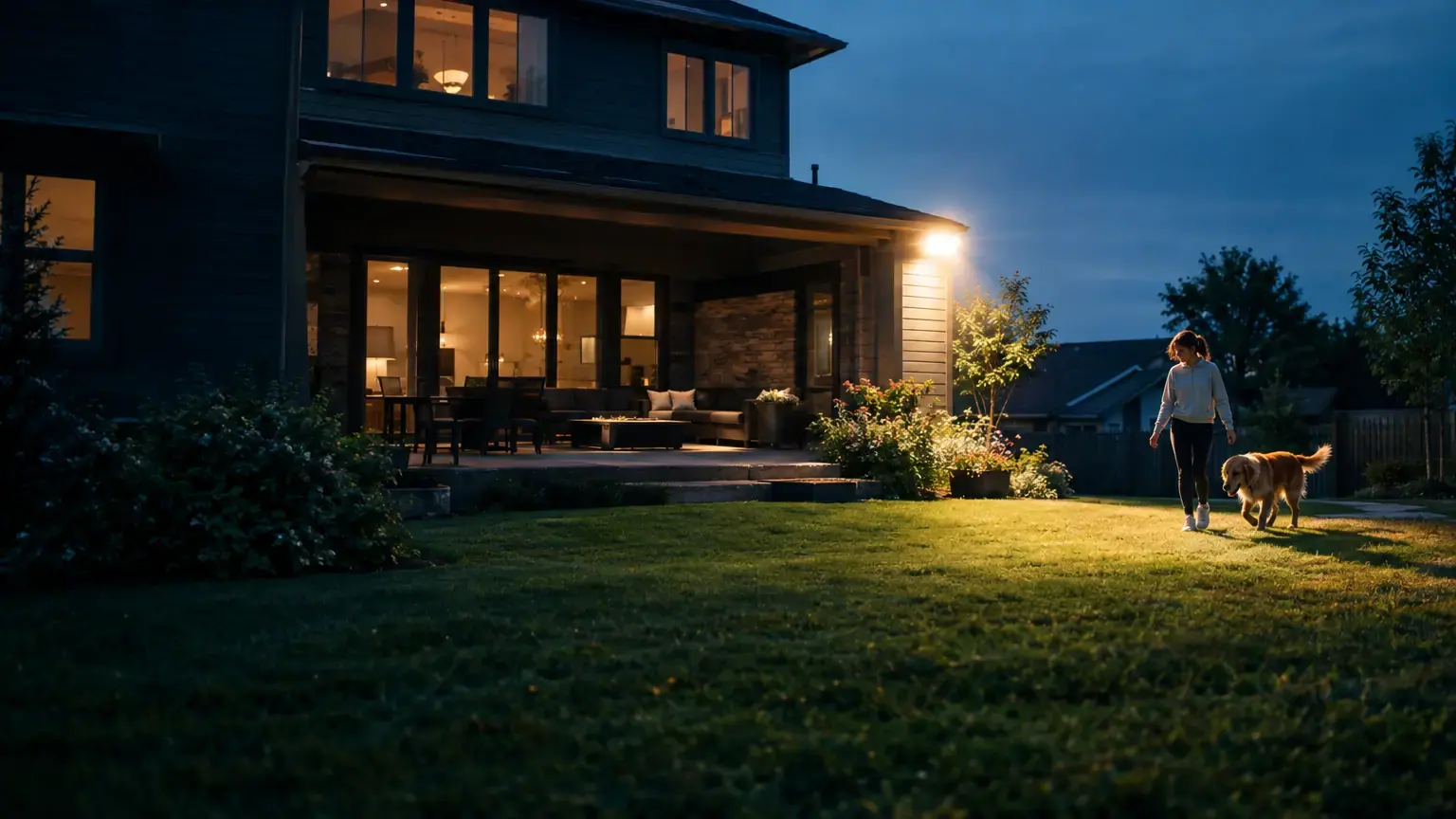
Built for Gem City homes, from Oregon District brick to east side bungalows
Vivint Home Security in Dayton, OH
Protecting a Dayton home often means a brick or frame house from around the middle of the last century, a basement not far from one of the city's rivers, and winters where ice, not snow, does the real damage. Add spring tornado warnings and streets where vacant houses sit beside occupied ones, and you need a system that watches doors, basements and weather at the same time.
Independently owned authorized Vivint dealer, operated by Plondo. Not Vivint Smart Home, Inc.'s corporate site.
Quick answer
What is the best Vivint setup for a home in Dayton, OH?
For most Dayton homes, start with a Vivint Smart Hub, door and window sensors on every ground-level entry and basement window, a Doorbell Camera Pro, an Outdoor Camera Pro facing the driveway or alley garage, and water sensors in the basement. Add smoke and carbon monoxide detectors for gas furnaces and the generators that come out after ice storms. Vivint Smart Home Pros install it, and 24/7 professional monitoring with cellular communication and battery backup helps alarms reach the monitoring center when power or internet fails. Pricing depends on your address, so call for a free quote.
Last reviewed by the Vivint Security editorial team.
Dayton at a glance
| Data point | Value | Source |
|---|---|---|
| Population | 136,579U.S. Census Bureau, ACS 5-year 2024 | |
| Owner-occupied homes | 48.4%U.S. Census Bureau, ACS 5-year 2024 | |
| Single-family detached homes | 63.8%U.S. Census Bureau, ACS 5-year 2024 | |
| Homes in buildings with 10+ units | 13.1%U.S. Census Bureau, ACS 5-year 2024 | |
| Median year homes were built | 1951U.S. Census Bureau, ACS 5-year 2024 | |
| Median home value | $100,600U.S. Census Bureau, ACS 5-year 2024 | |
| Housing vacancy rate | 16.9%U.S. Census Bureau, ACS 5-year 2024 | |
| Overall natural hazard risk (county) | Relatively ModerateFEMA National Risk Index, Montgomery County | |
| Highest-rated hazards (county) | Ice storm (Very High); Tornado (Relatively High); Hail (Relatively High); Inland flooding (Relatively High)FEMA National Risk Index, Montgomery County |
What threatens Dayton homes
Ice, storms, rising rivers and empty houses next door
FEMA's National Risk Index rates Montgomery County's overall natural hazard risk as Relatively Moderate, but a few hazards stand out. Ice storm risk is rated Very High. Tornado, hail and inland flooding are each rated Relatively High. Those ratings match what Dayton residents already know: freezing rain that coats trees and power lines, spring nights spent listening for sirens, and rivers that rise fast after heavy rain.
An ice storm is the hazard most likely to knock out your power for an extended stretch. When that happens, a system that depends on home Wi-Fi goes quiet. The Vivint Smart Hub has battery backup and cellular communication, so alarms can still reach the monitoring center. Water sensors in the basement help you catch a leak or a split pipe in a decades-old house before it floods the floor.
Dayton families remember the Memorial Day tornadoes that tore through Trotwood, Old North Dayton, Northridge and Beavercreek, followed by days of cleanup and running generators. Smoke and carbon monoxide detectors tied to monitoring cover the fire and generator risks that follow storms like that. Outdoor Camera Pro footage saved on the Playback DVR can also show a roof, car or siding before and after a hail or wind event, a record that can help when you talk to your insurer.
The Great Miami River, the Stillwater River, the Mad River and Wolf Creek all run through or near the city. Even with the region's levee and dam system, heavy rain can push water into basements and low streets. Water sensors near the sump pump, water heater and floor drains send an alert to the Vivint app the moment they get wet.
Dayton's housing vacancy rate is 16.9%, so it is common to live near an empty house, and an unwatched property next door gives someone cover to linger. Porches with packages and detached garages on alleys are also easy to approach unseen. Visible cameras, Smart Deter lights and sounds, and smart locks you can check from your phone make your house the harder target.
- Ice storms (Very High): cellular communication, battery backup, water sensors
- Tornadoes (Relatively High): monitored smoke and carbon monoxide detectors, app alerts, camera recording
- Hail (Relatively High): Outdoor Camera Pro and Playback DVR footage for documentation
- Inland flooding (Relatively High): water sensors in basements and near sump pumps
- Vacant houses and alley garages: Doorbell Camera Pro, Outdoor Camera Pro with Smart Deter, garage door control
Dayton housing
How Dayton's homes shape your system
Dayton's median home was built in 1951, so a typical house has a basement, a side door off the driveway and often a detached garage on an alley. Single-family detached homes make up 63.8% of the housing, while 13.1% of homes are in buildings with 10+ units. Only 48.4% of homes are owner-occupied, so a large share of Dayton households rent, and wireless equipment that installs without major drilling matters.
With a median home value of $100,600, it makes sense to cover the real weak points of your house instead of buying devices you will not use. Here is how setups usually differ across the city.
Oregon District and St. Anne's Hill
These historic districts have tightly packed brick homes, some with rear courtyards and alley access, close to the bars and restaurants on Fifth Street. Foot traffic runs late. Put a Doorbell Camera Pro on the front door, a door sensor and smart lock on the rear entrance, and an Outdoor Camera Pro over the alley or back gate. Check historic district rules before mounting visible exterior equipment.
Dayton View and Five Oaks
Large older homes here often have several entrances, sunrooms, tall first-floor windows and deep porches. That means more ways in than a newer house. Cover every exterior door with sensors, add glass break sensors for rooms with big panes, and use motion sensors in main hallways. A Spotlight Pro on a dark side yard helps where mature trees block streetlights.
Belmont, Walnut Hills and the east side
Postwar brick and frame bungalows with basements and detached garages are common. Ground-level basement windows and garages off the alley are the weak points. Use window sensors on basement openings, an Outdoor Camera Pro covering the garage, and water sensors near the water heater and floor drain.
University of Dayton and South Park
Near campus, many houses are rentals shared by students, and South Park mixes owners in restored Victorians with renters. Shared houses benefit from smart locks with individual codes, a Doorbell Camera Pro for package deliveries, and an Indoor Camera Pro in common areas, with everyone's agreement, for the weeks the house empties out over breaks.
Questions about Vivint Home Security in Dayton? A Vivint expert can help.
Call 866.417.1540Starting point
A starting Vivint setup for a typical Dayton home
Think of this list as the bones of a system for a Dayton brick or frame house with a basement, a side door off the driveway and a garage, either attached or out back on the alley. Your Smart Home Pro walks the property at the install visit and may trim or add devices, such as skipping garage door control where there is no garage or adding glass break sensors for a Dayton View house with tall front windows. What you pay depends on the devices you pick and your address, which we confirm on a call.
- Vivint Smart Hub: the control panel, with battery backup and cellular communication for ice storm outages
- Door and window sensors on every ground-floor door and on basement windows, the usual weak points in older homes
- Doorbell Camera Pro to see visitors and protect packages on the porch
- Outdoor Camera Pro covering the driveway, alley or garage, with Smart Deter to warn off lurkers
- Smart lock on the most-used door, often the side or back entrance
- Motion sensor in the main hallway or stairway as a second layer
- Smoke and carbon monoxide detectors, important with gas furnaces and storm-season generators
- Water sensors by the sump pump, water heater and floor drain
- Vivint Smart Thermostat to adjust heat and check indoor temperature from the Vivint app while you travel
- Garage door control so you can close a forgotten alley garage door from the Vivint app
How it works
Installation, monitoring and the Vivint app in Dayton
We are an independently owned authorized Vivint dealer, separate from Vivint's corporate company, and everything we do for Dayton homeowners happens over the phone. Tell us whether you live in a St. Anne's Hill brick house, a Belmont bungalow with an alley garage or a South Park rental, and we will suggest equipment that fits and check availability and current offers for your address. Vivint then sends its own technicians, called Smart Home Pros, to mount the sensors and cameras, pair everything with the Smart Hub and set up the Vivint app on your phone.
Vivint's monitoring center watches your system 24/7. If a sensor trips in your Dayton home, an agent works to confirm whether it is a real emergency, then contacts the right emergency services, whether that is the City of Dayton or your suburb's department, following local protocol. Because the Smart Hub signals over cellular, a router that loses power during a freezing rain outage does not have to cut you off, as long as the hub's backup battery holds.
The Vivint app lets you arm and disarm, lock doors, view live camera feeds, review Playback DVR clips and get water leak alerts from anywhere. That is useful for Wright-Patterson Air Force Base families on travel or deployment, nurses working long shifts at Miami Valley Hospital, and anyone stuck away from home during a winter storm.
Dayton sits among many separate cities, including Kettering, Oakwood, Trotwood and Huber Heights, and alarm rules can differ from one to the next. Before your system goes live, check whether the City of Dayton or your suburb requires an alarm permit or registration. We can walk you through what to ask on your call.
Questions about Vivint Home Security in Dayton? A Vivint expert can help.
Call 866.417.1540Ohio weather
Sensors that match Dayton's climate
Dayton winters swing between thaw and hard freeze, and freezing rain is a bigger risk here than deep snow. Homes built around the middle of the last century often have plumbing along exterior basement walls or in unheated spaces. Water sensors under the kitchen sink and in the basement send an alert the moment a split pipe starts leaking, so you can shut off the water before the damage spreads.
Spring and summer bring the tornado watches and hail that rate Relatively High in Montgomery County, along with the heavy rain behind inland flooding along the Great Miami and its tributaries. Sump pumps work hard in those storms, and a failed pump can fill a basement overnight. Monitored smoke and carbon monoxide detectors cover furnace season and the portable generators many households run after ice storms.
Talk to a Vivint expert right now.

Vivint Home Security in Dayton FAQ
I rent in Dayton. Can I still get Vivint?
Often yes. Many Vivint devices are wireless and mount with minimal hardware, which suits a city where a large share of households rent. Get your landlord's permission before installing cameras, smart locks or anything that changes the property. On your call we can talk through which equipment works best for a rental and confirm what is available at your address.
Does Vivint work in Dayton apartments?
It can, whether you live in a downtown loft or a unit in an older converted house. In an apartment, protection usually focuses on your own unit: a door sensor and smart lock on the entry, a Doorbell Camera Pro if the building allows it, glass break or window sensors on reachable windows, and an Indoor Camera Pro. Check your lease and building rules first, especially for anything mounted in shared hallways.
My neighborhood has an HOA. Will that limit my cameras?
Older neighborhoods inside the city rarely have HOAs, but newer subdivisions in Huber Heights, Centerville and other suburbs often do. Some HOAs have rules about exterior lighting or where cameras can face. Review your HOA guidelines before installation and tell your Smart Home Pro, who can place cameras and Spotlight Pro units to fit the rules.
What happens to my system during an ice storm or power outage?
The Vivint Smart Hub has a backup battery and communicates over cellular, so alarms can still reach the monitoring center when power and internet go out. Battery life depends on your equipment and how long the outage lasts. Water sensors help you catch leaks from frozen pipes, a real concern in Dayton's older homes during long winter outages.
How can Vivint help while I travel or deploy from Wright-Patterson?
The Vivint app shows your cameras, locks and sensors from anywhere. You can confirm doors are locked, watch package deliveries and get alerts if water shows up in the basement. Smart locks let you give a temporary code to a neighbor or house sitter, and 24/7 monitoring keeps watching the house while you are gone.
I am buying new construction near Dayton. Should I wait to set up security?
It is smart to plan early. Newer homes in Beavercreek, Huber Heights and Centerville often have attached garages, larger windows and open floor plans, which is very different from a city bungalow. Cameras, garage door control and motion sensors cover a lot in that layout. Call to confirm availability at the new address and schedule installation around your move-in date.
Do I need an alarm permit in Dayton?
Requirements can change and may differ between the City of Dayton and nearby suburbs like Kettering, Oakwood or Trotwood. Check with your city or local police department about any alarm permit or registration before your monitored system goes live. We can help you figure out what questions to ask when you call for your quote.
What if I move from Dayton to Kettering, Beavercreek or Huber Heights?
Moves around the Miami Valley are common, especially for Wright-Patterson families and growing households. Ask about your options for moving your Vivint service to a new home, since terms and equipment needs vary by address. A newer suburban house may need different camera placement than a city bungalow, so a Smart Home Pro can review the new layout.
Vivint products for homes in Dayton
 Home Security SystemsProfessionally installed Vivint home security systems with 24/7 monitoring.
 Security CamerasVivint indoor, outdoor and doorbell security cameras with smart deterrence.
 Doorbell Camera ProVivint Doorbell Camera Pro with package protection and two-way talk.
- Outdoor Camera ProVivint Outdoor Camera Pro with Smart Deter and night vision.
 24/7 MonitoringVivint 24/7 professional home security monitoring.
- Vivint Cost and PricingWhat Vivint costs: monitoring plans, equipment and offers.