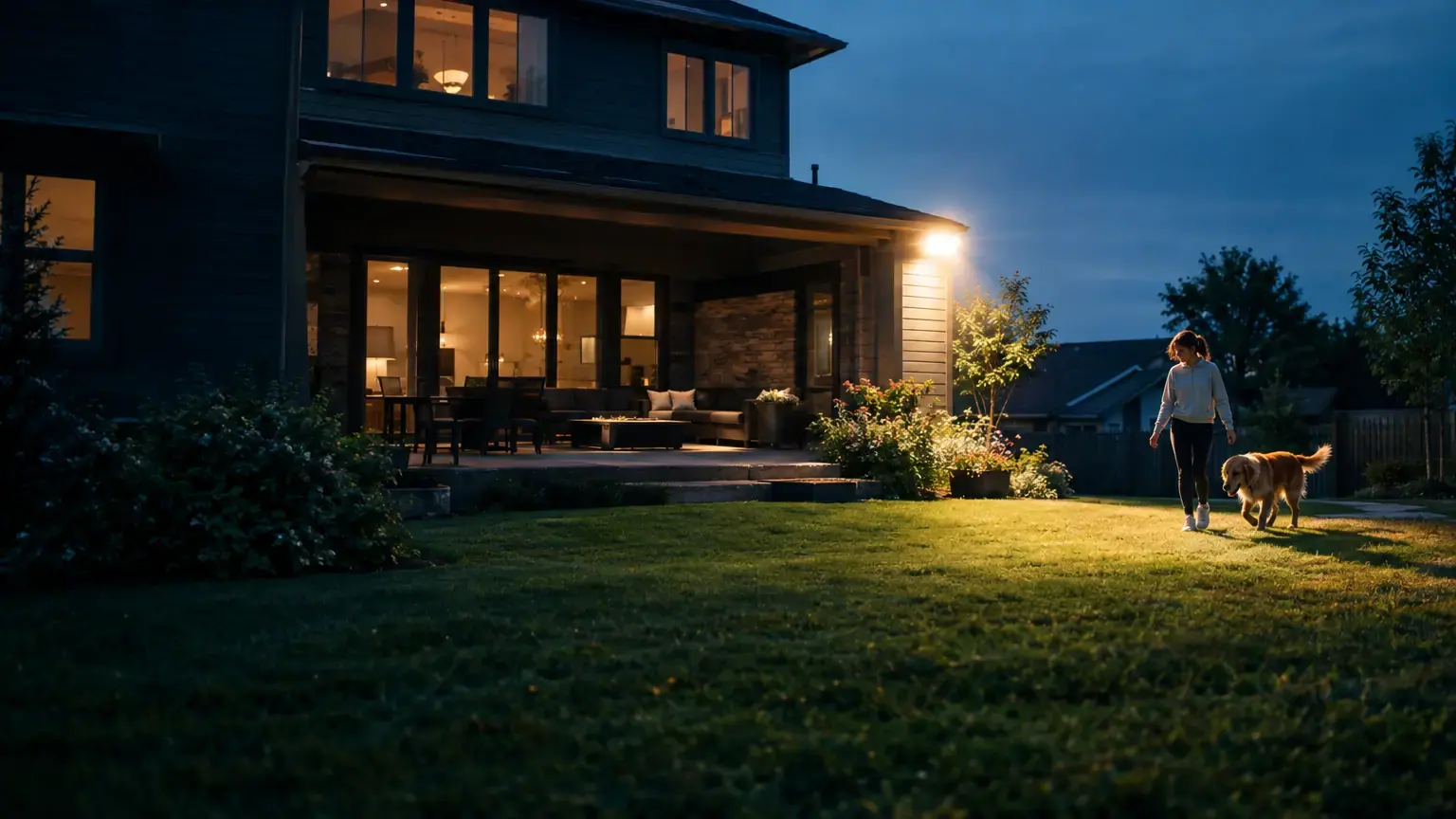
Hillside brick, creek valleys and Ohio Valley storms
Vivint Home Security in Cincinnati, OH
Cincinnati homes sit on steep hills and in creek valleys. Many are brick houses with basements, back alleys and detached garages that a good system has to cover. Hamilton County also carries Very High FEMA ratings for tornado and lightning, and the median Cincinnati home was built in 1951. That makes fire, water and power-loss protection as important as door sensors.
Independently owned authorized Vivint dealer, operated by Plondo. Not Vivint Smart Home, Inc.'s corporate site.
Quick answer
What is the best home security setup for a Cincinnati home?
Plan around the basement and the alley. In a typical Cincinnati brick house, that means sensors on the basement walkout and back door as well as the front, an Outdoor Camera Pro watching the detached garage or alley, and a Doorbell Camera Pro on the porch, all tied to a Vivint Smart Hub. Because Hamilton County rates Very High for lightning and Relatively High for inland flooding, add monitored smoke and carbon monoxide detectors and put water sensors beside the sump pump. A Vivint Smart Home Pro handles the install, and Vivint's agents monitor the system around the clock.
Last reviewed by the Vivint Security editorial team.
Cincinnati at a glance
| Data point | Value | Source |
|---|---|---|
| Population | 311,224U.S. Census Bureau, ACS 5-year 2024 | |
| Owner-occupied homes | 39.8%U.S. Census Bureau, ACS 5-year 2024 | |
| Single-family detached homes | 38.3%U.S. Census Bureau, ACS 5-year 2024 | |
| Homes in buildings with 10+ units | 28.4%U.S. Census Bureau, ACS 5-year 2024 | |
| Median year homes were built | 1951U.S. Census Bureau, ACS 5-year 2024 | |
| Median home value | $230,900U.S. Census Bureau, ACS 5-year 2024 | |
| Housing vacancy rate | 10.0%U.S. Census Bureau, ACS 5-year 2024 | |
| Overall natural hazard risk (county) | Relatively HighFEMA National Risk Index, Hamilton County | |
| Highest-rated hazards (county) | Tornado (Very High); Lightning (Very High); Inland flooding (Relatively High); Winter weather (Relatively High)FEMA National Risk Index, Hamilton County |
What threatens homes here
Storms, high water, winter ice and everyday property crime
FEMA's National Risk Index rates Hamilton County's overall natural hazard risk as Relatively High. Tornado and lightning both rate Very High. Spring and early summer storm lines cross the Ohio Valley quickly, and tornado warnings cover the city basin as well as the northern suburbs. When a storm knocks out power or internet, the Vivint Smart Hub keeps talking to the monitoring center over its cellular connection, and the Vivint app pushes alerts to your phone.
Lightning is a real fire risk on Cincinnati's tree-covered hillsides, especially in homes old enough to have original or patched wiring. Monitored smoke detectors matter most when nobody is home to hear a local alarm. If a detector trips, Vivint's monitoring agents verify the alarm and contact the fire department following local protocol.
Inland flooding rates Relatively High in the county. The Ohio River, Mill Creek and the Little Miami can rise after long rains, and much of the older city drains through combined sewers that can back up into basements during heavy downpours. Water sensors by the sump pump, water heater and floor drain warn you early, before a wet floor becomes ruined drywall and furniture.
Winter weather also rates Relatively High. Freezing rain makes hillside streets in places like Price Hill and Mount Adams hard to drive, cold snaps stress old pipes, and falling limbs can take down lines on heavily wooded blocks. A Vivint Smart Thermostat lets you check and adjust indoor temperature from the app when you cannot get home.
For most households the practical security concerns are packages left on porches, cars parked on the street, and tools stored in detached garages off the alley. With 10.0% of housing units vacant, some blocks also have empty buildings nearby. A Doorbell Camera Pro, an Outdoor Camera Pro with Smart Deter, and a Spotlight Pro aimed at the driveway or alley give you eyes on those spots and a light and sound warning that tells people to move along.
Housing and neighborhoods
Older brick homes, rental buildings and very different neighborhoods
Cincinnati's housing skews old. The median home was built in 1951, and only 38.3% of homes are single-family detached houses. Another 28.4% sit in buildings with 10 or more units, from converted warehouses downtown to garden apartments on the west side. Just 39.8% of homes are owner-occupied, so many readers rent, and the median home value is $230,900.
That mix means there is no single right system. A rowhouse with an alley entrance, a student rental with several bedrooms and a hillside house with a walkout basement all need different coverage. Here is how a setup usually changes across the city.
Over-the-Rhine and Pendleton
Italianate rowhouses and condo conversions share walls, have tall front windows close to the sidewalk, and often have a rear courtyard or alley door. Put sensors on the street door, the rear door and any ground-floor windows, and add glass break sensors on large front panes. An Indoor Camera Pro covers the stair hall, and a Doorbell Camera Pro handles busy sidewalk deliveries.
Clifton, Corryville and the streets around UC
Many older houses near the University of Cincinnati are split into units or rented by groups of students. Focus on each unit's entry door, a smart lock so roommates get their own codes, and window sensors on easy-to-reach first-floor and porch-roof windows. Summer and winter breaks leave these houses empty for weeks, so app alerts and cameras matter.
Hyde Park, Oakley and Mount Lookout
These east side neighborhoods have larger brick, Tudor and foursquare homes with deep front porches, basements and detached garages. Cover the porch with a Doorbell Camera Pro, add garage door control and an Outdoor Camera Pro on the driveway, and put water sensors in the basement. Motion sensors on the main floor round out coverage for larger layouts.
Westwood, Price Hill and the west side hills
Brick Cape Cods, bungalows and two-story homes climb steep streets, often with walkout basements and alley garages below the house. The basement door is frequently the least visible entry, so give it a door sensor and a Spotlight Pro. Smoke and carbon monoxide detectors on each level are smart in homes with older furnaces.
Questions about Vivint Home Security in Cincinnati? A Vivint expert can help.
Call 866.417.1540Where to start
A starting Vivint setup for a typical Cincinnati home
This setup fits the kind of older brick house with a basement and an alley or detached garage found across Cincinnati. Your Smart Home Pro will adjust it to your actual floor plan, and condo or apartment setups are usually smaller.
- Vivint Smart Hub: the control center, with cellular communication so alarms still reach monitoring during storm outages.
- Door and window sensors on the front, back and basement doors plus reachable first-floor windows, because older homes often have more entries than people remember.
- Doorbell Camera Pro: watches the porch for package theft and lets you talk to visitors from the Vivint app.
- Outdoor Camera Pro with Smart Deter on the alley, driveway or detached garage, the spots that sit out of view of the street.
- Spotlight Pro over a walkout basement door or dark side yard.
- Smart lock on the main entry so family, sitters and contractors get their own codes.
- Garage door control so you can check and close the garage from your phone.
- Monitored smoke and carbon monoxide detectors on every level, given the county's Very High lightning rating and the age of local heating systems.
- Water sensors near the sump pump, water heater and floor drain to catch basement flooding and sewer backups early.
- Vivint Smart Thermostat to watch indoor temperature during winter cold snaps.
How it works
Professional installation, 24/7 monitoring and app control
Your installer is a Vivint employee, a Smart Home Pro, not a subcontractor. In a Cincinnati house they often start in the basement, since that is where the sump pump, the furnace and the least visible door usually are, then work up through plaster-walled rooms and old wood window frames. Wireless sensors mount on those frames without opening up lath and plaster. Before leaving, they set up the Vivint app on your phone and have you arm and disarm the system yourself.
Picture a back door sensor tripping in a Northside bungalow while you are at work downtown. A Vivint monitoring agent picks up that signal at any hour, verifies it, and then reaches the right police, fire or medical dispatchers following local protocol. The signal travels over the Smart Hub's cellular link, which matters on wooded west side streets where an ice storm can drop limbs across cable and phone lines.
The Vivint app lets you arm and disarm, view live and recorded camera footage, lock doors and adjust the thermostat from anywhere. That is handy whether you commute over the Brent Spence Bridge to Northern Kentucky, work downtown or spend a Reds game or a weekend away from the house.
Alarm rules around here follow city lines, not mailing addresses. A Cincinnati mailing address can belong to Norwood, St. Bernard, Blue Ash or an unincorporated township, and each one handles monitored alarm registration its own way. Look up the rules for the jurisdiction that actually covers your house. If you are not sure which one that is, we can help sort it out on the call, where we also confirm what Vivint offers at your address and what it costs.
Questions about Vivint Home Security in Cincinnati? A Vivint expert can help.
Call 866.417.1540Built for Ohio Valley weather
Getting your system ready for storms, floods and freezes
Before spring storm season, make sure every level of the house has a monitored smoke detector and that Vivint app notifications are turned on. In hillside homes where the basement and top floor are far apart, a local alarm on one level can be hard to hear on another.
When the Ohio or Mill Creek runs high after days of rain, low-lying basements are the first to take water. Place water sensors on the floor next to the sump pump and floor drain, not on a shelf, so they catch water at the first inch.
Winter freezes strain furnaces and pipes in Cincinnati's mid-century and older housing. Carbon monoxide detectors matter when an older furnace runs hard, and the Vivint Smart Thermostat lets you confirm the heat is still on in a rental unit or an empty house over the holidays.
Talk to a Vivint expert right now.

Vivint Home Security in Cincinnati FAQ
I rent in Cincinnati. Can I still get a Vivint system?
Often, yes. Only 39.8% of Cincinnati homes are owner-occupied, so renting is common, and Vivint's wireless sensors and cameras usually install with little or no drilling. Check your lease and get your landlord's okay for anything mounted outside, like a Doorbell Camera Pro. If you move, ask about taking your equipment with you. We confirm the options for your address when you call.
Does Vivint work in a downtown or Banks area apartment building?
Yes. In buildings with 10 or more units, a system usually focuses on your own unit: a door sensor, a smart lock, an Indoor Camera Pro and smoke and carbon monoxide detectors. Building rules may limit hallway cameras or doorbell mounts, so check with management. Your Smart Home Pro will design around what the building allows.
My condo or townhome has an HOA. Will that be a problem?
Usually not, but read the rules first. Condo conversions in Over-the-Rhine and townhome communities in the suburbs sometimes limit exterior cameras, signs or anything attached to shared walls or historic facades. Indoor equipment rarely needs approval. If outdoor cameras need sign-off, your Smart Home Pro can suggest placements that stay within your unit's space.
What happens to my system during a tornado warning or power outage?
When sirens sound across Hamilton County, the system keeps working. A backup battery keeps the Smart Hub running if a storm cuts power, and its cellular radio keeps sending alarms to Vivint's monitoring agents even if your internet provider goes dark. That matters in a county FEMA rates Very High for both tornado and lightning, since a strike can start a fire while your family waits in the basement. Agents verify each alarm and contact emergency services following local protocol. Take shelter first and follow official warnings.
How can Vivint help while I am away, like during UC breaks or holiday travel?
The Vivint app shows you who is at the door, lets you lock up and review camera clips, and alerts you to water or smoke events while you are gone. That helps student renters in Clifton who leave for weeks and homeowners who travel. You can give a neighbor their own smart lock code, and setting the Vivint Smart Thermostat to a safe temperature helps protect older pipes during a winter trip.
Does Cincinnati require an alarm permit?
It depends on which city actually governs your house. The City of Cincinnati sets its own rules, while Norwood, Blue Ash, Sharonville and the townships set theirs, even where the mailing address says Cincinnati. Check with the right jurisdiction before your system goes live. We do not quote permit fees, but we can help you figure out where to look when you call.
I am building or buying new construction. When should I set up security?
Call before you move in if you can. New infill homes in neighborhoods like Oakley and Over-the-Rhine, and newer houses in the suburbs, are easy to equip because Smart Home Pros can plan camera and sensor placement around a clean layout. Add water sensors and smoke and carbon monoxide detectors from day one, then expand with cameras as you settle in.
I am moving from Clifton to a house in Northside. Can my system come with me?
Vivint has options for customers who relocate. Your new house will likely need a different layout, such as extra basement door sensors or an alley camera for a hillside lot. Call before your move so we can review your account, check what transfers, and confirm pricing and availability at your new address.
Is this Vivint itself?
No. This site is run by an independently owned company that is an authorized Vivint dealer. Our part is the conversation: helping you work out what a Clifton rental, a Westwood walkout or an Oakley foursquare actually needs, then getting you a quote. Vivint's own Smart Home Pros handle installation, and Vivint's monitoring center watches the system 24/7. What is available and what it costs depends on your address, so we go over both when you call.
Vivint products for homes in Cincinnati
 Home Security SystemsProfessionally installed Vivint home security systems with 24/7 monitoring.
 Security CamerasVivint indoor, outdoor and doorbell security cameras with smart deterrence.
 Doorbell Camera ProVivint Doorbell Camera Pro with package protection and two-way talk.
- Outdoor Camera ProVivint Outdoor Camera Pro with Smart Deter and night vision.
 24/7 MonitoringVivint 24/7 professional home security monitoring.
- Vivint Cost and PricingWhat Vivint costs: monitoring plans, equipment and offers.