Built for walk-ups, doorman towers and brownstones
Vivint Home Security in Manhattan, NY
In Manhattan, 89.8% of homes sit in buildings with 10 or more units. Protecting yours usually means your own front door, the window by the fire escape and the packages piling up in a shared lobby, not a yard. FEMA also rates New York County Very High for inland flooding, winter weather and strong wind, so leak, smoke and carbon monoxide sensors matter as much here as cameras.
Independently owned authorized Vivint dealer, operated by Plondo. Not Vivint Smart Home, Inc.'s corporate site.
Quick answer
What is the best Vivint setup for a Manhattan apartment?
For most Manhattan apartments, start with a Vivint Smart Hub, door and window sensors on the entry door and any fire escape or ground-floor window, a motion sensor, an Indoor Camera Pro facing the door, water sensors under the sink and near the radiator or washer, and smoke and carbon monoxide detectors. Add a Doorbell Camera Pro only where your building allows it. Vivint's own technicians install the system, 24/7 professional monitoring handles intrusion, smoke and carbon monoxide alarms, and water sensors send leak alerts to the Vivint app.
Last reviewed by the Vivint Security editorial team.
Manhattan at a glance
| Data point | Value | Source |
|---|---|---|
| Population | 1,629,477U.S. Census Bureau, ACS 5-year 2024 | |
| Owner-occupied homes | 25.1%U.S. Census Bureau, ACS 5-year 2024 | |
| Single-family detached homes | 1.1%U.S. Census Bureau, ACS 5-year 2024 | |
| Homes in buildings with 10+ units | 89.8%U.S. Census Bureau, ACS 5-year 2024 | |
| Median year homes were built | 1951U.S. Census Bureau, ACS 5-year 2024 | |
| Median home value | $1,090,500U.S. Census Bureau, ACS 5-year 2024 | |
| Housing vacancy rate | 15.7%U.S. Census Bureau, ACS 5-year 2024 | |
| Overall natural hazard risk (county) | Relatively HighFEMA National Risk Index, New York County | |
| Highest-rated hazards (county) | Inland flooding (Very High); Winter weather (Very High); Strong wind (Very High); Hurricane (Relatively High)FEMA National Risk Index, New York County |
What threatens homes here
The real risks for a Manhattan home
FEMA's National Risk Index rates New York County Relatively High for overall natural hazard risk. The top hazards are inland flooding, winter weather and strong wind, all rated Very High, with hurricanes rated Relatively High. In a borough of towers and walk-ups, those hazards show up in specific ways.
Inland flooding here is less about rivers and more about water finding its way in. Heavy summer downpours can overwhelm street drains and push water into garden-level apartments and basements. Higher up, the more common problem is a burst pipe, a failed radiator valve or an upstairs neighbor's overflowing tub. Vivint water sensors under sinks, beside the washer and near old radiators send an alert to your phone when they detect water, so you can call the super before it reaches the unit below.
Winter weather brings nor'easters, icy sidewalks and long cold snaps. Older steam heat can quit, and a pied-a-terre left at a low setting can drop toward freezing. A Vivint Smart Thermostat lets you check and adjust the temperature from the Vivint app, and smoke and carbon monoxide detectors matter more when space heaters and old boilers are running hard.
Strong wind and hurricanes hit high floors, terraces and big windows hardest. Hurricane Sandy flooded parts of Lower Manhattan and left much of the island below Midtown without power for days. The Smart Hub has a backup battery and communicates over cellular, so monitoring can keep working when the building's power or internet goes out. Glass break sensors add coverage for large windows that a storm or a burglar could shatter.
Property crime in Manhattan tends to be opportunistic: packages taken from lobbies and stoops, a window opened from the fire escape, a tailgater slipping through the front door, a bike lifted from a hallway. Door and window sensors, an Indoor Camera Pro and smart locks cover the points a thief actually uses in an apartment.
Housing and neighborhoods
How Manhattan homes are built, and how to protect each type
Manhattan is overwhelmingly an apartment borough. Only 1.1% of homes are single-family detached houses, the median home was built in 1951, and just 25.1% of homes are owner-occupied, so most residents rent. The median home value is $1,090,500, which shows how much is at stake for owners in co-ops, condos and townhouses. The housing vacancy rate is 15.7%, and the Census count of vacant homes includes units held for seasonal or occasional use, such as pied-a-terres that sit empty for weeks at a time.
That mix means a system has to be flexible. Renters need equipment that installs without major drilling and comes with them when they move. Co-op and condo owners need gear that respects board rules and alteration agreements. Townhouse owners need perimeter coverage that looks more like a house.
Harlem and Hamilton Heights brownstones
Rowhouses and brownstones here often have a stoop entrance, a garden-level door under it, a backyard and windows on every floor. Treat them like a house: sensors on both street doors and the rear door, glass break sensors on the parlor floor, a Doorbell Camera Pro at the stoop and an Outdoor Camera Pro watching the garden or areaway with Smart Deter. Owners renting out a garden unit can set separate access codes on smart locks.
Upper West Side and Upper East Side co-ops
Prewar co-ops and postwar doorman buildings add a front desk, but your door still matters, especially when packages and contractors move through the halls. Plan around the alteration agreement: wireless door sensors, an Indoor Camera Pro aimed at the entry, smart locks where the board allows them, and water sensors near old radiators and under kitchens and baths, where leaks into the unit below cause the most friction with neighbors.
East Village and Lower East Side walk-ups
Old tenement walk-ups usually have no doorman, a buzzer front door and fire escapes outside rear and side windows. Put sensors on every fire escape window, add a motion sensor in the main room, and use an Indoor Camera Pro since hallway cameras are often off limits. Everything can be wireless and removable, which suits renters who move every lease or two.
Lower Manhattan, Battery Park City and Tribeca
Glass condo towers and converted lofts downtown sit close to the water, and Sandy showed how hard a hurricane can hit this part of the island. Owners here should prioritize water sensors and the Smart Hub's cellular and battery backup, plus glass break sensors on large loft windows. A Vivint Smart Thermostat helps you keep an eye on indoor temperature while you are away. Loft buildings with keyed elevators benefit from smart locks and an Indoor Camera Pro covering the elevator entry.
Questions about Vivint Home Security in Manhattan? A Vivint expert can help.
Call 866.417.1540Where to start
A starting Vivint setup for a typical Manhattan apartment
Most Manhattan homes are apartments with one entry door and a few windows that matter. This starting point covers the usual risks. We can adjust it for your layout and building rules on the call, and Vivint's Smart Home Pro fine-tunes placement at install.
- Vivint Smart Hub: the control panel that arms the system, talks to monitoring over cellular and keeps running on backup battery during outages.
- Door sensor on the apartment entry: the main way into most apartments, whether it is a forced door or someone who slipped past the lobby.
- Window sensors on fire escape, ground-floor and garden-level windows: a key weak point in older Manhattan buildings.
- Motion sensor in the main living area: a backup layer if an entry point is missed.
- Indoor Camera Pro facing the door: records who comes and goes when hallway cameras are not permitted, and lets you check on dog walkers or cleaners.
- Doorbell Camera Pro, where allowed: ideal for brownstones and some walk-ups, and helpful against package theft at the stoop.
- Smart locks: give the super, a contractor or a guest a temporary code instead of a spare key.
- Water sensors under the kitchen sink, bathroom vanity, washer and near radiators: catch leaks before they reach a neighbor's ceiling.
- Smoke and carbon monoxide detectors: monitored alarms that alert you and the monitoring team even when you are not home.
- Vivint Smart Thermostat, if your unit controls its own heat or cooling: remote control during cold snaps and long trips.
How it works
Installation, monitoring and the Vivint app in Manhattan
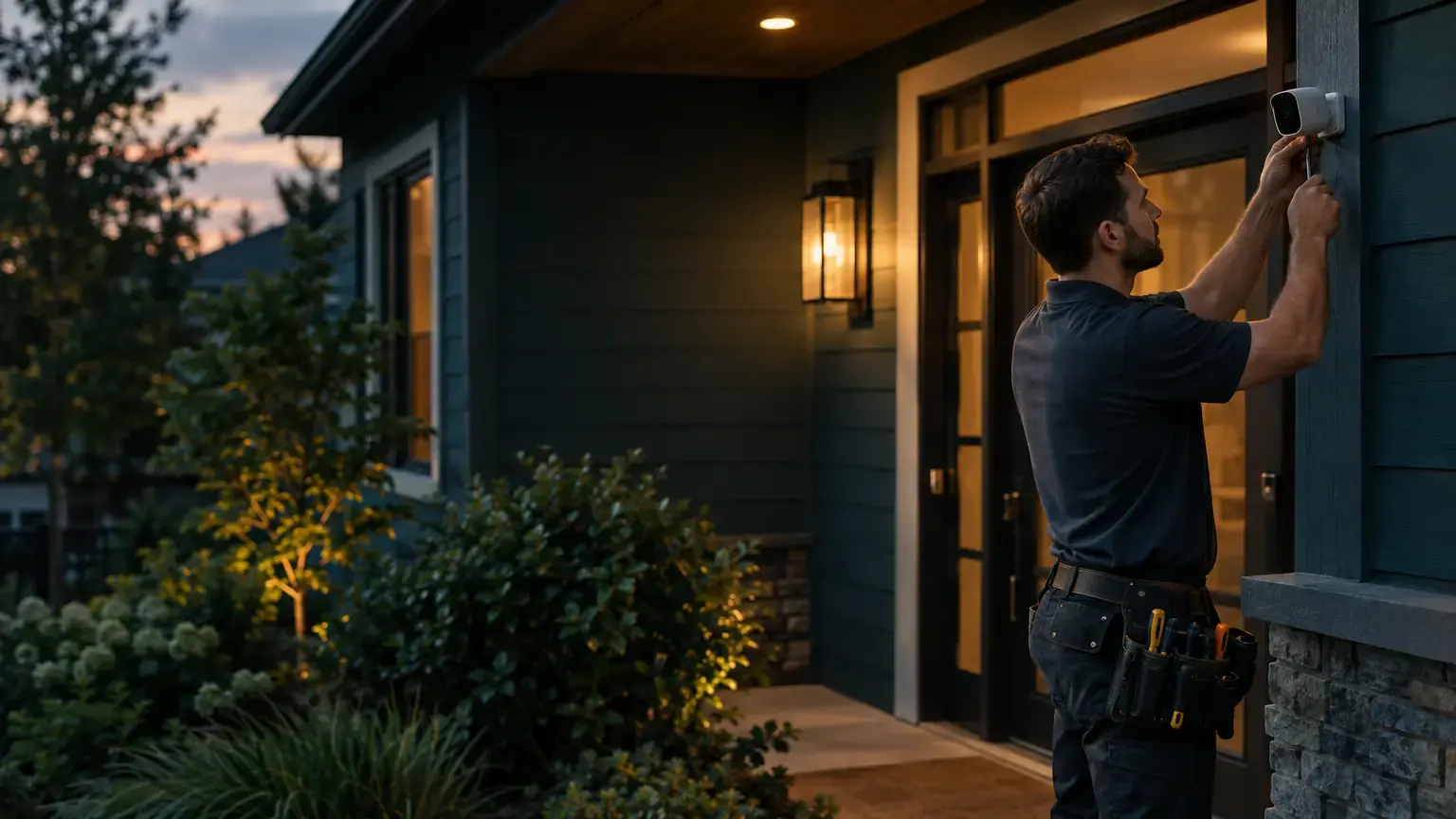
We are an independently owned authorized Vivint dealer. When you call, we review your apartment or townhouse, your building's rules and the current offers for your address, since availability and pricing vary by location. Vivint then sends its own technicians, called Smart Home Pros, to install and set up the system. Most equipment is wireless, which helps in buildings that limit drilling or require board or landlord approval. If your building needs a certificate of insurance or scheduled elevator time for contractors, mention it on the call so the visit can be arranged around it.
Day and night, Vivint's monitoring agents receive the signals your Smart Hub sends, whether it is a forced entry door on the fifth floor of a walk-up or a smoke alarm in a co-op kitchen while you are at work in Midtown. An agent works to confirm the alarm, then reaches emergency services following local protocol. Prewar masonry and steel-framed towers can weaken wireless signals, so the Smart Home Pro mounts the hub where its cellular connection tests strong. Since the hub reaches the monitoring center over cellular instead of the building's internet or your Wi-Fi, a dead router or a building network outage does not cut it off.
The Vivint app lets you arm and disarm from the subway or the office, review camera clips with Playback DVR, unlock the door for a delivery or dog walker and get leak alerts on your phone. Before your system goes live, ask us to help you check whether New York City or your building requires an alarm permit or registration, so false alarm rules and any paperwork are handled up front.
Questions about Vivint Home Security in Manhattan? A Vivint expert can help.
Call 866.417.1540Storms, cold and leaks
Getting ready for Manhattan weather
New York County's Very High ratings for inland flooding, winter weather and strong wind turn small problems into big ones. A cracked pipe in a prewar riser during a cold snap, a clogged drain under a summer cloudburst or a window failing in a nor'easter can damage your unit and the units around you.
Water sensors are the most valuable add-on for most apartments here, especially garden levels, top floors under old roofs and any unit with a washer or dishwasher. Smoke and carbon monoxide detectors protect against kitchen fires, space heaters and aging boilers during long winters. A Vivint Smart Thermostat helps you keep an empty apartment warm enough to protect the pipes, and the Smart Hub's backup battery and cellular connection keep alerts flowing when a hurricane or heavy storm knocks out power.
Talk to a Vivint expert right now.

Vivint Home Security in Manhattan FAQ
Can I get Vivint if I rent my Manhattan apartment?
Yes. Most Manhattan households rent, and much of Vivint's equipment is wireless, so sensors, the Smart Hub and indoor cameras can go in with little or no drilling. Check your lease before changing the lock cylinder or mounting anything on the door. On the call, tell us about your landlord's rules and we will plan a setup that fits them.
Will my co-op or condo board allow a Vivint system?
Many do, but rules vary. Some boards require an alteration agreement, a certificate of insurance from installers or approval for smart locks and anything mounted in hallways. Indoor equipment like door sensors, motion sensors and an Indoor Camera Pro rarely raises issues. Bring a copy of your building's rules to the call and we will help you plan around them.
Can I put a doorbell camera on my apartment door?
It depends on your building. Many co-ops, condos and rentals restrict cameras in shared hallways because they record neighbors and common areas. Brownstones and many townhouses can use a Doorbell Camera Pro at the stoop. Where hallway cameras are not allowed, an Indoor Camera Pro aimed at your entry door is a common alternative that still records who comes in.
Does Manhattan require an alarm permit or registration?
Requirements can change, and some buildings have their own rules for monitored alarms. Before your system goes live, ask us to help you check whether New York City or your building requires an alarm permit or registration. Settling that early helps you avoid false alarm problems and keeps your monitoring setup in line with local rules.
What happens to my system during a hurricane or power outage?
The Vivint Smart Hub has a backup battery and communicates with monitoring over cellular, so it can keep sending alerts when building power or internet goes down. That matters downtown and near the rivers, where Hurricane Sandy caused long outages. Battery-powered sensors such as water sensors keep reporting to the hub, and you can check alerts in the Vivint app.
Is Vivint useful for a pied-a-terre or an apartment I leave for months?
Yes. Many Manhattan homes sit empty for stretches, and an empty unit is where a leak or a heat failure does the most damage. Water sensors, a Vivint Smart Thermostat and an Indoor Camera Pro let you watch the apartment from anywhere, and smart locks let you give the super or a cleaner a temporary code.
Can Vivint go into a new construction condo tower?
Yes. Newer towers often have strong lobby security, but your unit still benefits from door sensors, water sensors and smoke and carbon monoxide detectors. Large glass walls are a good fit for glass break sensors. Tell us about your developer or management rules on the call, since some new buildings set specific requirements for installers.
What if I move to another apartment in Manhattan?
People move often here, from a walk-up to a doorman building or uptown to downtown. Much of Vivint's equipment is wireless and can be reinstalled in your new home. Call us before your move so we can review what transfers, what your new building allows and whether any changes make sense for the new layout.
Vivint products for homes in Manhattan
 Home Security SystemsProfessionally installed Vivint home security systems with 24/7 monitoring.
 Security CamerasVivint indoor, outdoor and doorbell security cameras with smart deterrence.
 Doorbell Camera ProVivint Doorbell Camera Pro with package protection and two-way talk.
- Outdoor Camera ProVivint Outdoor Camera Pro with Smart Deter and night vision.
 24/7 MonitoringVivint 24/7 professional home security monitoring.
- Vivint Cost and PricingWhat Vivint costs: monitoring plans, equipment and offers.