Security built for walk-ups, co-ops and row houses
Vivint Home Security in Bronx, NY
In the Bronx, 66.9% of homes sit in buildings with 10 or more units, so security usually starts at your own apartment door, your fire escape window and the lobby where your packages land. FEMA also rates the borough Very High for winter weather, strong wind and cold waves. A good system here watches for burst pipes and keeps working through power loss, not just intruders.
Independently owned authorized Vivint dealer, operated by Plondo. Not Vivint Smart Home, Inc.'s corporate site.
Quick answer
What is the best Vivint setup for a Bronx home?
For most Bronx homes, start with a Vivint Smart Hub, door sensors on every entry, window or glass break sensors on fire escape and ground floor windows, a Doorbell Camera Pro or Indoor Camera Pro, a smart lock, and smoke, carbon monoxide and water sensors. Vivint Smart Home Pros install it, and 24/7 monitoring with a cellular connection helps keep it online during winter storms. Pricing and availability vary by address, so call for a free quote.
Last reviewed by the Vivint Security editorial team.
Bronx at a glance
| Data point | Value | Source |
|---|---|---|
| Population | 1,404,779U.S. Census Bureau, ACS 5-year 2024 | |
| Owner-occupied homes | 20.1%U.S. Census Bureau, ACS 5-year 2024 | |
| Single-family detached homes | 6.5%U.S. Census Bureau, ACS 5-year 2024 | |
| Homes in buildings with 10+ units | 66.9%U.S. Census Bureau, ACS 5-year 2024 | |
| Median year homes were built | 1955U.S. Census Bureau, ACS 5-year 2024 | |
| Median home value | $529,500U.S. Census Bureau, ACS 5-year 2024 | |
| Housing vacancy rate | 4.5%U.S. Census Bureau, ACS 5-year 2024 | |
| Overall natural hazard risk (county) | Relatively HighFEMA National Risk Index, Bronx County | |
| Highest-rated hazards (county) | Winter weather (Very High); Strong wind (Very High); Cold wave (Very High); Hurricane (Relatively High)FEMA National Risk Index, Bronx County |
What threatens homes here
Bronx Risks: Winter Storms, Wind, Cold Waves and Easy Entry Points
FEMA's National Risk Index rates Bronx County's overall natural hazard risk Relatively High. Winter weather, strong wind and cold waves all rate Very High, and hurricanes rate Relatively High. Those ratings match what Bronx residents already know: nor'easters that bury Grand Concourse sidewalks, gusts that rattle old window frames, cold snaps that test aging steam heat, and tropical storms that can hit the shore at City Island and Throggs Neck hard.
Cold waves are where small problems turn expensive. A radiator valve fails, a pipe freezes in an exterior wall, or a boiler quits overnight. Vivint water sensors placed under sinks, behind the washer and near radiators send an alert to the Vivint app when they detect water, so you can call the super or a plumber before it soaks the unit below. Smoke and carbon monoxide detectors matter here too, because many buildings run gas stoves and older boilers, and space heaters come out every January.
Strong wind and hurricanes knock out power and internet. The Vivint Smart Hub uses a cellular connection to reach the monitoring center, and its backup battery keeps the system running through an outage, so an alarm can still get through when the block goes dark.
Bronx housing also creates its own weak spots: packages left in shared lobbies and on stoops, fire escape and ground floor windows, and cars parked on the street or in narrow driveways. A Doorbell Camera Pro records who comes to your door, glass break sensors listen for a window being smashed, and an Outdoor Camera Pro with Smart Deter can warn off someone lingering by your gate or driveway.
Housing stock
Bronx Homes: Prewar Buildings, Attached Houses and a Renter Majority
The Bronx is home to 1,404,779 people, and much of its housing is old and dense. The median home was built in 1955. Only 20.1% of homes are owner-occupied, and just 6.5% are single-family detached houses. The housing vacancy rate is 4.5%, a tight market, so protection that fits one unit without altering the building makes sense. The median home value is $529,500, so the owners who do have a house or co-op have a lot to protect.
That mix shapes the right system. Most residents need protection that covers one unit, works with building rules and can move with them. Owners of two-family houses need to cover a front stoop, a rear yard, a basement and sometimes a tenant's floor. Here is how setups differ across a few familiar areas.
Grand Concourse and the South Bronx
The Concourse is lined with prewar Art Deco and courtyard buildings, and the blocks around it are full of walk-ups and larger rentals. Focus on your own unit: a door sensor and smart lock on the apartment door, an Indoor Camera Pro facing the entry, and window sensors on any window that opens onto a fire escape. Never block a fire escape window. Sensors protect it without restricting your exit.
Riverdale and Fieldston
Riverdale mixes high-rise co-ops along the Hudson with the detached houses and winding private streets of Fieldston. Co-op owners usually need board approval for anything on the hallway side, so start with interior devices and an approved doorbell camera. Fieldston homeowners benefit from a full perimeter: Outdoor Camera Pro or Spotlight Pro on the driveway, garage door control and motion sensors on the lower level.
Throggs Neck, Country Club and City Island
These waterfront neighborhoods have more detached and semi-attached houses, and they sit exposed to Long Island Sound, where hurricanes and strong wind can strike hard. Put water sensors in the basement and near the boiler, add an Outdoor Camera Pro to cover boats, driveways and side yards, and rely on cellular backup for the storms that cut power along the shore.
Morris Park and Pelham Bay
These areas are known for brick two-family and attached homes with a front stoop, a narrow side path and a back yard. Cover the front and rear doors, add a Doorbell Camera Pro at the stoop, and consider a Spotlight Pro over the rear yard. If you rent out a floor, keep your devices on your own space and shared entrances.
Questions about Vivint Home Security in Bronx? A Vivint expert can help.
Call 866.417.1540Where to start
A Starting Vivint Setup for a Typical Bronx Home
This is a sensible starting point for an apartment or attached house. Your Smart Home Pro will adjust it for your layout, your building rules and whether you own or rent.
- Vivint Smart Hub: the control panel that talks to monitoring over cellular, so it works without relying on building internet.
- Door and window sensors: on your entry door and every window reachable from a fire escape, stoop, roof or yard.
- Glass break sensors: a good fit for rooms with several old windows facing a fire escape or yard.
- Smart lock: lets you let in a dog walker, super or family member from the Vivint app without handing out keys.
- Doorbell Camera Pro or Indoor Camera Pro: watches your door and helps you see who picked up a package.
- Outdoor Camera Pro with Smart Deter: for houses with a driveway, yard or gate, it can warn off people who linger.
- Smoke and carbon monoxide detectors: monitored, so an alarm reaches the monitoring center even when you are out.
- Water sensors: under sinks, by radiators and in basements, the places winter leaks start.
- Vivint Smart Thermostat: for homes that control their own heat, it helps you keep the place warm while you travel.
How it works
Installation, 24/7 Monitoring and the Vivint App in the Bronx
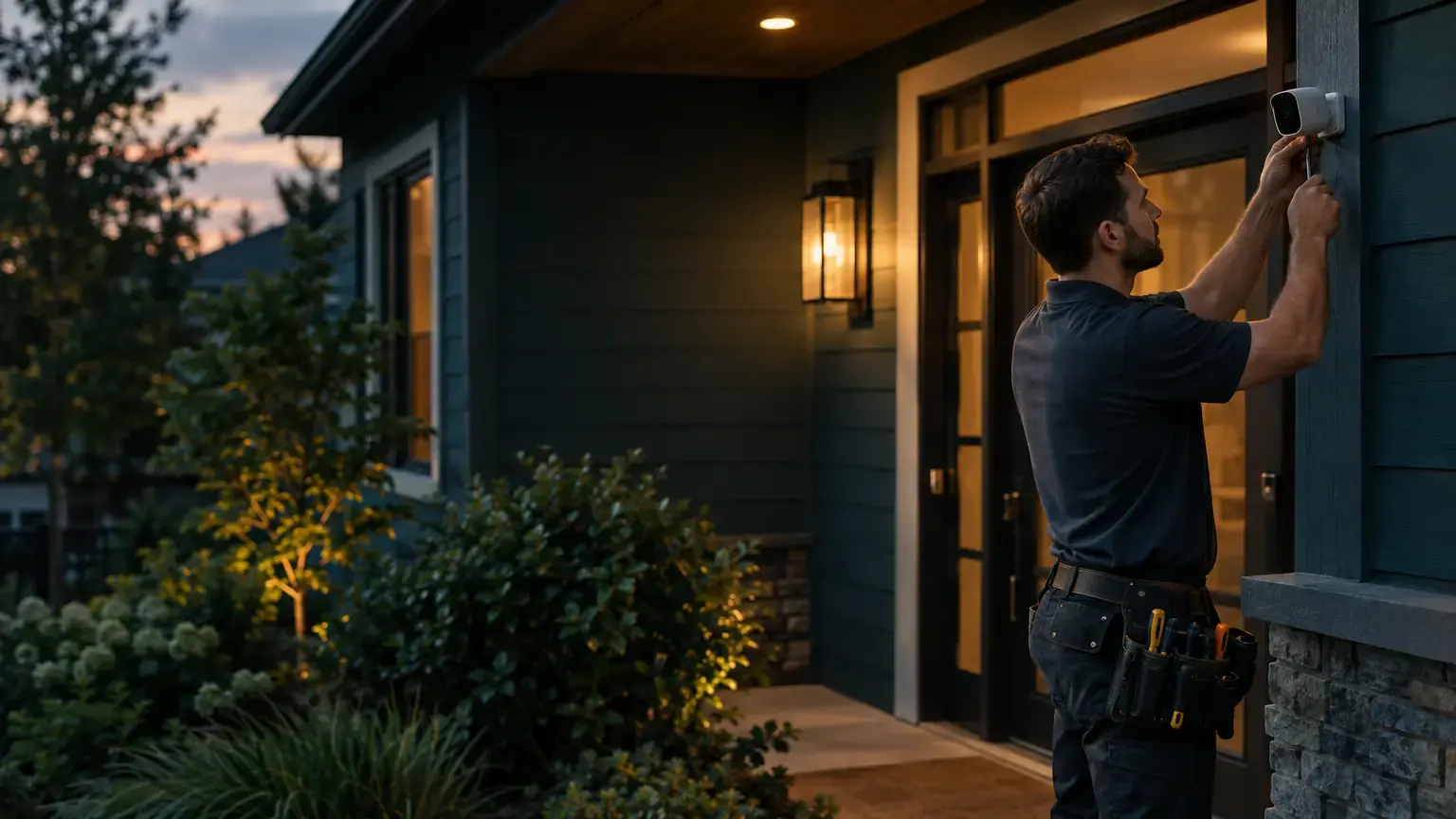
We are an independently owned authorized Vivint dealer. Vivint installs every system with its own technicians, called Smart Home Pros. They place sensors, mount cameras, connect the Smart Hub and walk you through the Vivint app. In apartments and co-ops, ask on your quote call about mounting options that suit your lease or board rules.
In a Bronx building, a fire or leak in one unit rarely stays there. That is why monitoring covers smoke, carbon monoxide and water alongside intrusion, around the clock. When a sensor trips, agents verify the alarm and contact emergency services following local protocol. If a nor'easter or high wind darkens your block, the hub's cellular link and backup battery keep that connection open.
The Vivint app lets you arm the system, lock the door, check cameras and review Playback DVR footage while you ride the 4 or the D downtown, or from wherever you travel. In apartments, it also helps you confirm who the super or a delivery driver let in. Availability, pricing and offers vary by address, so confirm details on a call.
Questions about Vivint Home Security in Bronx? A Vivint expert can help.
Call 866.417.1540Built for Bronx winters
Getting Ready for Cold Waves, Nor'easters and Hurricane Season
Winter weather and cold waves both rate Very High in Bronx County, so leak and fire protection deserve the same attention as locks. Water sensors near radiators, under kitchen and bathroom sinks and beside water heaters catch a burst pipe early. Monitored smoke and carbon monoxide detectors cover the risks that come with space heaters, gas stoves and older boilers.
For hurricane season and strong wind, water sensors in basements and on lower floors, plus cellular backup on the Smart Hub, help you stay informed when power and internet fail. If you control your own heat, the Vivint Smart Thermostat lets you adjust it from the app when a storm keeps you away from home.
Talk to a Vivint expert right now.

Vivint Home Security in Bronx FAQ
I rent my Bronx apartment. Can I still get Vivint?
Yes. Most Bronx households rent, and many Vivint devices protect a single unit without changing the building. Your Smart Home Pro can focus on your apartment door, windows and interior cameras. Check your lease and talk to your landlord before anything is mounted in a hallway or on an exterior wall. Ask about renter options on your free quote call.
Does Vivint work in a co-op or condo building?
It does. Co-op and condo boards often set rules about doorbells, hallway cameras and exterior wiring, so start with devices inside your unit: door and window sensors, an Indoor Camera Pro, a smart lock and smoke and carbon monoxide detectors. If your board allows a doorbell or outside camera, it can be added. Bring your building rules to the quote call.
How do I protect fire escape windows without blocking them?
Use window sensors and glass break sensors instead of anything that restricts the exit. A sensor alerts you and the monitoring center if the window opens while armed, and a glass break sensor listens for breaking glass. Your fire escape stays a clear way out, which is required for safety, while the window is still covered by the system.
What happens if a winter storm knocks out power or internet?
The Vivint Smart Hub connects to monitoring over cellular, not your home internet, and has a backup battery. During a nor'easter or high wind outage, the system can keep sending intrusion, smoke, carbon monoxide and water alarms to the monitoring center. Cameras that rely on Wi-Fi may pause until power and internet return.
Do I need an alarm permit in the Bronx?
Rules can change, so ask during your quote call or check with New York City whether your address needs an alarm permit or registration before your system is active. Requirements can differ for homes and businesses. Your Smart Home Pro can also help you set up the system to reduce false alarms.
How can I stop package theft in my building?
A Doorbell Camera Pro at a house or private entrance records deliveries and visitors, and Playback DVR lets you review what happened. In an apartment building, an Indoor Camera Pro facing your door helps when packages are left in the hallway. Many residents also schedule deliveries for when they are home, using app alerts to know when someone arrives.
I travel for long stretches. How does Vivint help while I'm away?
From the Vivint app you can arm the system, check cameras, lock the door and grant a smart lock code to a neighbor or super. Water sensors alert you to a leak, and if you control your heat, the Vivint Smart Thermostat helps keep pipes from freezing during a cold wave. Monitoring agents handle alarms around the clock.
Can I take my system with me if I move within the Bronx?
Ask on your call about Vivint's options for moving your service and equipment to a new address. A new layout, like going from a walk-up on the Concourse to a two-family house in Morris Park, may call for extra sensors or an outdoor camera, and your Smart Home Pro can plan that.
Vivint products for homes in Bronx
 Home Security SystemsProfessionally installed Vivint home security systems with 24/7 monitoring.
 Security CamerasVivint indoor, outdoor and doorbell security cameras with smart deterrence.
 Doorbell Camera ProVivint Doorbell Camera Pro with package protection and two-way talk.
- Outdoor Camera ProVivint Outdoor Camera Pro with Smart Deter and night vision.
 24/7 MonitoringVivint 24/7 professional home security monitoring.
- Vivint Cost and PricingWhat Vivint costs: monitoring plans, equipment and offers.