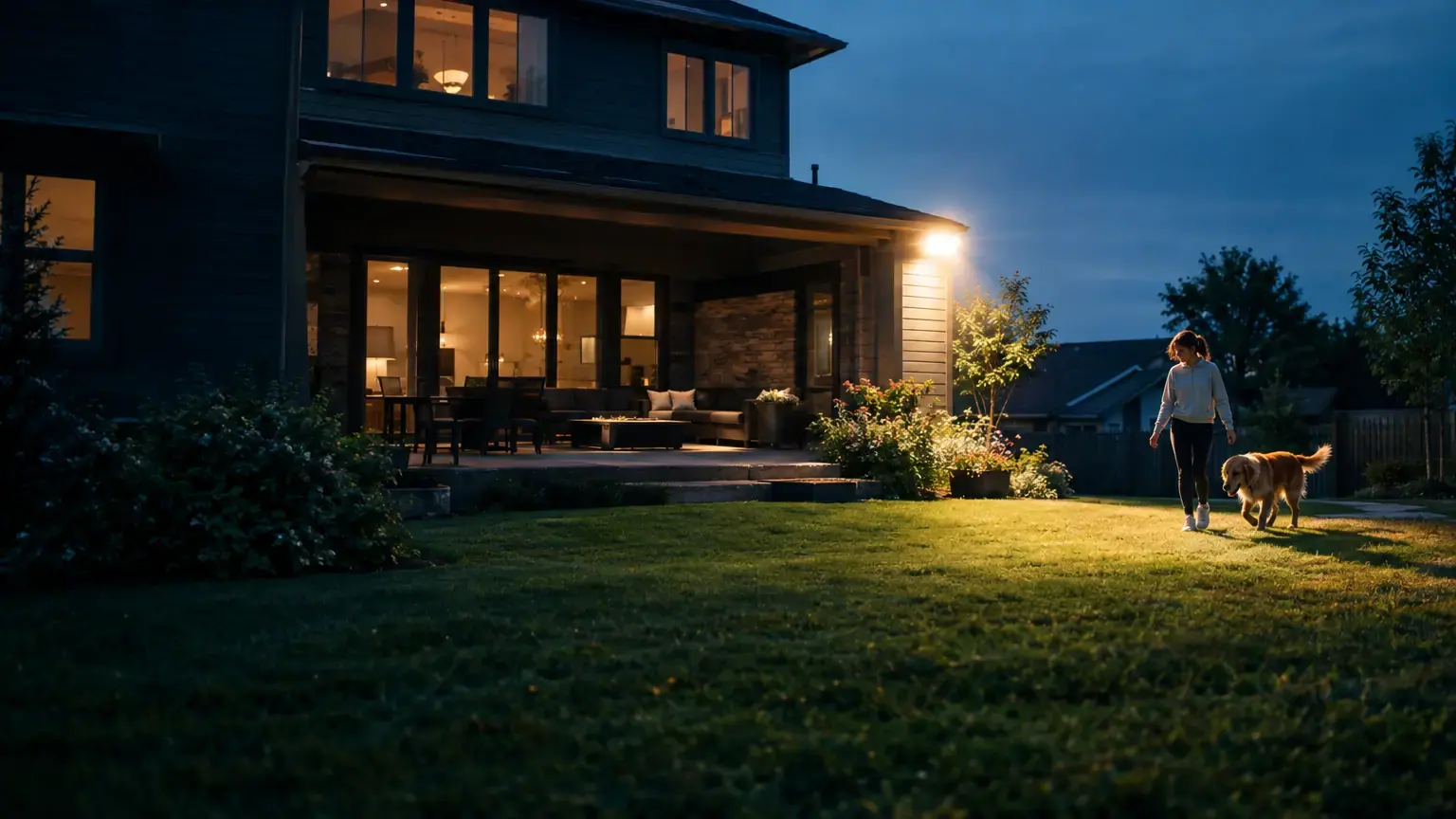
Duplexes, alley garages and long Milwaukee winters
Vivint Home Security in Milwaukee, WI
Milwaukee homes skew old, with a median build year of 1953. Many are upper and lower duplexes where two households share a porch, a stairwell and a basement. Add tornado warnings, deep January cold and summer downpours that back up basement drains, and a good system here has to watch for weather damage as closely as it watches the doors.
Independently owned authorized Vivint dealer, operated by Plondo. Not Vivint Smart Home, Inc.'s corporate site.
Quick answer
What is a good Vivint setup for a Milwaukee home?
In a typical Milwaukee bungalow or duplex flat, the core is a Vivint Smart Hub plus sensors on the porch door, the back stair door and the ground-level basement windows older homes here are known for. A Doorbell Camera Pro watches the front porch, and an Outdoor Camera Pro covers the detached garage off the alley. Because the county's top hazards include cold waves and inland flooding, put water sensors by the floor drain and water heater, and add smoke and carbon monoxide detectors near the furnace. Vivint's Smart Home Pros handle installation, and 24/7 professional monitoring takes over from there. Pricing and offers depend on your address, and we confirm them on a free quote call.
Last reviewed by the Vivint Security editorial team.
Milwaukee at a glance
| Data point | Value | Source |
|---|---|---|
| Population | 566,973U.S. Census Bureau, ACS 5-year 2024 | |
| Owner-occupied homes | 41.8%U.S. Census Bureau, ACS 5-year 2024 | |
| Single-family detached homes | 39.1%U.S. Census Bureau, ACS 5-year 2024 | |
| Homes in buildings with 10+ units | 21.4%U.S. Census Bureau, ACS 5-year 2024 | |
| Median year homes were built | 1953U.S. Census Bureau, ACS 5-year 2024 | |
| Median home value | $184,000U.S. Census Bureau, ACS 5-year 2024 | |
| Housing vacancy rate | 10.3%U.S. Census Bureau, ACS 5-year 2024 | |
| Overall natural hazard risk (county) | Relatively HighFEMA National Risk Index, Milwaukee County | |
| Highest-rated hazards (county) | Tornado (Very High); Winter weather (Very High); Cold wave (Very High); Inland flooding (Relatively High)FEMA National Risk Index, Milwaukee County |
What threatens homes here
Milwaukee's real risks, and the equipment that answers each one
FEMA's National Risk Index rates Milwaukee County's overall natural hazard risk as Relatively High. Three hazards are rated Very High: tornado, winter weather and cold wave. Inland flooding is rated Relatively High. Those ratings match what Milwaukee homeowners already know: spring and summer storms that roll in from the west, snow and ice that pile up through the winter, stretches of bitter cold, and heavy rain that overwhelms storm sewers and pushes water into basements.
Tornadoes and severe storms: when the sirens sound, you want to know your home is still connected. The Vivint Smart Hub keeps a cellular connection to the monitoring center if the internet goes down, and the Vivint app lets you check cameras and sensors from a basement shelter or from work.
Winter weather and cold waves: in older Milwaukee homes, frozen pipes along exterior basement walls are a serious winter risk. Water sensors near the water heater, washer and exposed basement pipes alert you to a leak early. A Vivint Smart Thermostat lets you watch indoor temperature and adjust the heat from your phone during a deep freeze.
Inland flooding: neighborhoods near the Menomonee, Kinnickinnic and Milwaukee rivers, and older blocks served by combined sewers, can see basement backups after a big storm. Water sensors on the basement floor and by the floor drain give you a head start on pumping, moving belongings and calling a plumber.
Everyday security: many Milwaukee homes have a detached garage on an alley and a front porch facing the street, two spots that are easy to overlook. An Outdoor Camera Pro with Smart Deter watches the driveway or alley and can warn off lingerers with lights and sound. A Doorbell Camera Pro covers the porch and package deliveries, and garage door control lets you confirm the overhead door is closed. With a housing vacancy rate of 10.3%, some blocks also have empty houses nearby, which makes visible cameras and lit entries more useful.
Housing and neighborhoods
Older homes, shared buildings and how to set them up
Milwaukee is a city of 566,973 people with an older, varied housing stock. The median home was built in 1953. Only 39.1% of homes are single-family detached houses, and 21.4% are in buildings with ten or more units. Owners occupy 41.8% of homes, so a large share of households rent. The median home value is $184,000.
That mix shapes security planning. Upper and lower duplexes and Polish flats often have separate front doors, a shared back stair and a shared basement. Bungalows and Cream City brick homes often have detached garages on an alley, basement windows at ground level and original wood windows. Here is how a system typically fits a few well-known neighborhoods.
Bay View
Bay View mixes workers' cottages, bungalows and duplexes on narrow lots near the lake, with short walks to Kinnickinnic Avenue. Put a Doorbell Camera Pro at the street entry, door sensors on the shared back door, and an Outdoor Camera Pro on the alley side. Wind off Lake Michigan and winter cold make a water sensor near basement pipes a smart add.
Riverwest
Riverwest is full of upper and lower duplexes, some with the owner in one unit and a tenant in the other. Each unit can have its own Vivint Smart Hub and sensors, so one household's system is not tied to the other's. Cover the shared basement door with a sensor, and use smart locks so you can let in a guest or contractor without hiding a key.
Washington Heights and Sherman Park
These west side neighborhoods have large early twentieth century homes with big front porches, leaded glass and full basements. Glass break sensors protect rooms with many original windows. Motion sensors in the basement and first floor hallways cover large footprints, and an Outdoor Camera Pro with Playback DVR watches the detached garage.
East Side and Historic Third Ward
On the East Side near UW-Milwaukee and in the Third Ward's converted warehouse lofts, many residents live in apartments and condos with shared lobbies and parking. Focus on the unit itself: a Doorbell Camera Pro or Indoor Camera Pro at the entry, a smart lock, door sensors and a water sensor under sinks and the washer. UWM students heading home between semesters can check on an empty apartment from the Vivint app.
Questions about Vivint Home Security in Milwaukee? A Vivint expert can help.
Call 866.417.1540Where to start
A starting Vivint setup for a typical Milwaukee home
This setup fits a common Milwaukee house: an older bungalow or duplex unit with a front porch, a back door, a basement and a detached alley garage. We tailor it to your floor plan and budget on your free quote call, and your Smart Home Pro fine-tunes placement at installation.
- Vivint Smart Hub: the control center, with cellular backup so monitoring continues if your internet drops during a storm.
- Door and window sensors on front, back and side doors, plus every ground-level basement window, since older basement windows are a common weak point.
- Doorbell Camera Pro on the front porch to see visitors and watch over package deliveries.
- Outdoor Camera Pro with Smart Deter facing the alley and detached garage, a part of the property you cannot see from the house.
- Garage door control so you can confirm and close the overhead door from the Vivint app.
- Smart lock on the most used entry, helpful for duplex owners, tenants, dog walkers and snow shoveling help.
- Smoke and carbon monoxide detectors near bedrooms and the furnace, since gas furnaces and water heaters work hard all winter.
- Water sensors by the water heater, washer, floor drain and any sump pit to catch leaks, frozen pipe bursts and sewer backups early.
- Vivint Smart Thermostat to monitor and adjust indoor temperature remotely during cold waves.
How it works
Installation, 24/7 monitoring and the Vivint app in Milwaukee
We are an independently owned authorized Vivint dealer, not Vivint corporate. Our part comes first. On the phone, we sort out whether you are protecting a big Sherman Park house, one half of a Riverwest duplex or a Third Ward loft, and we look up current pricing and offers for that exact address. Vivint's own technicians, the Smart Home Pros, then mount sensors on old wood window frames and basement sashes, aim cameras down the alley, pair the Smart Hub and show you the Vivint app before they go.
Once your system is live, Vivint agents are on duty around the clock. Say the back stair door of your lower flat opens in the middle of the night while you are armed. The signal reaches an agent, who tries to confirm whether it is a real intrusion and, if it is, calls emergency services following local protocol. Your smoke and carbon monoxide detectors are tied into the same service, which counts most during the long heating season, when boilers, furnaces and space heaters run in sealed-up Milwaukee houses and flats.
A spring line of storms or an ice-heavy branch on an overhead wire can knock out home internet across a whole block. The Smart Hub talks to the monitoring center over cellular, so alarms still get through. From a desk downtown, a cabin Up North or a winter getaway, the Vivint app shows porch clips, alley camera footage, whether the basement is dry and what the thermostat reads.
Permits and false alarm policies are set locally. Before your system goes live, check with the City of Milwaukee or the Milwaukee Police Department about whether a monitored alarm at your address must be registered and what follows repeated false alarms. Duplex owners have one more decision: which unit's account covers the shared basement door. Settle that up front so an upstairs tenant carrying laundry down at night does not set off the downstairs alarm.
Questions about Vivint Home Security in Milwaukee? A Vivint expert can help.
Call 866.417.1540Built for Milwaukee weather
Sensors for cold snaps, storms and wet basements
Cold waves are one of Milwaukee County's Very High hazards, and they can settle in for days. If a furnace or boiler quits during one, pipes in an older home can freeze fast, especially along exterior basement walls of brick and stone foundations. Water sensors near those pipes, the water heater and the washer flag a leak early. A Vivint Smart Thermostat lets you confirm the heat is holding while you are at work or away.
Spring and summer bring the opposite problem: heavy rain that floods streets and backs up into basements, which is why inland flooding also ranks high for the county. Water sensors on the basement floor and near the floor drain or sump pit give early warning. Monitored smoke and carbon monoxide detectors round out the setup, since closed-up winter houses and space heaters raise the stakes for both.
Talk to a Vivint expert right now.

Vivint Home Security in Milwaukee FAQ
I rent in Milwaukee. Can I still get a Vivint system?
Often, yes. With owners occupying 41.8% of homes, most Milwaukee households rent, many in duplexes and apartment buildings. Door sensors, cameras and the Vivint Smart Hub can usually be installed with minimal changes. Check your lease and get your landlord's approval first, especially for smart locks or exterior cameras. On your call, we can talk through what fits your unit and confirm availability at your address.
I own a duplex and live in one unit. Can each unit have its own system?
Yes. Upper and lower flats are common in neighborhoods like Riverwest and Bay View, and each unit can have its own Vivint Smart Hub, sensors and app account. That keeps your system private from your tenant's. Shared spaces like the basement door or back stair can be covered thoughtfully, and outdoor cameras should respect your tenant's privacy. Call us to plan coverage for both units.
Does Vivint work in Milwaukee apartments and condos?
Yes. In East Side apartments, Third Ward lofts and downtown condos, the focus is your unit's entry. A Doorbell Camera Pro or Indoor Camera Pro at the door, a smart lock, door sensors and water sensors under sinks cover the most common needs. Your building may limit hallway cameras or lock changes, so confirm the rules with management before installation.
Do condo association or HOA rules affect what I can install?
They can. Some Milwaukee condo associations, including those in converted Third Ward warehouses, limit exterior cameras, hallway devices, door hardware changes or drilling into shared brick walls. Review your bylaws and ask the board or property manager before scheduling. Keeping equipment inside the unit or on your own door often works within common rules, and your Smart Home Pro can suggest placement that fits.
What happens to my system during a tornado warning or storm power outage?
The Vivint Smart Hub uses a cellular connection for monitoring, so losing internet does not cut off communication with the monitoring center. The hub also has a backup battery for short power outages. From a basement shelter, you can check cameras and sensors in the Vivint app. For an alarm, agents verify and contact emergency services following local protocol.
How can I protect my home during a winter trip or long vacation?
Leaving a Milwaukee house empty in January means watching for frozen pipes as much as break-ins. Place water sensors near exposed basement pipes and the water heater, and use a Vivint Smart Thermostat to confirm the heat is holding. Cameras and door sensors cover the porch and alley garage, and smart locks let a neighbor check in without a spare key.
Do I need an alarm permit in Milwaukee?
Possibly. Any permit, registration or false alarm rules come from the City of Milwaukee and the Milwaukee Police Department, and they can change, so ask them about your specific address. When your system is installed, your Smart Home Pro walks everyone in the household through arming, disarming and canceling an alarm, which is the simplest way to prevent accidental dispatches.
I'm buying a newer home or moving to another Milwaukee neighborhood. What should I know?
For a newer build or a recent condo conversion, plan sensors, cameras and a smart lock early, and add water sensors near the sump pit and water heater. If you are moving within Milwaukee, from a Riverwest flat to a Bay View bungalow, for example, call before your move. Equipment needs and offers can differ by address, and we can help you plan the new setup.
Vivint products for homes in Milwaukee
 Home Security SystemsProfessionally installed Vivint home security systems with 24/7 monitoring.
 Security CamerasVivint indoor, outdoor and doorbell security cameras with smart deterrence.
 Doorbell Camera ProVivint Doorbell Camera Pro with package protection and two-way talk.
- Outdoor Camera ProVivint Outdoor Camera Pro with Smart Deter and night vision.
 24/7 MonitoringVivint 24/7 professional home security monitoring.
- Vivint Cost and PricingWhat Vivint costs: monitoring plans, equipment and offers.