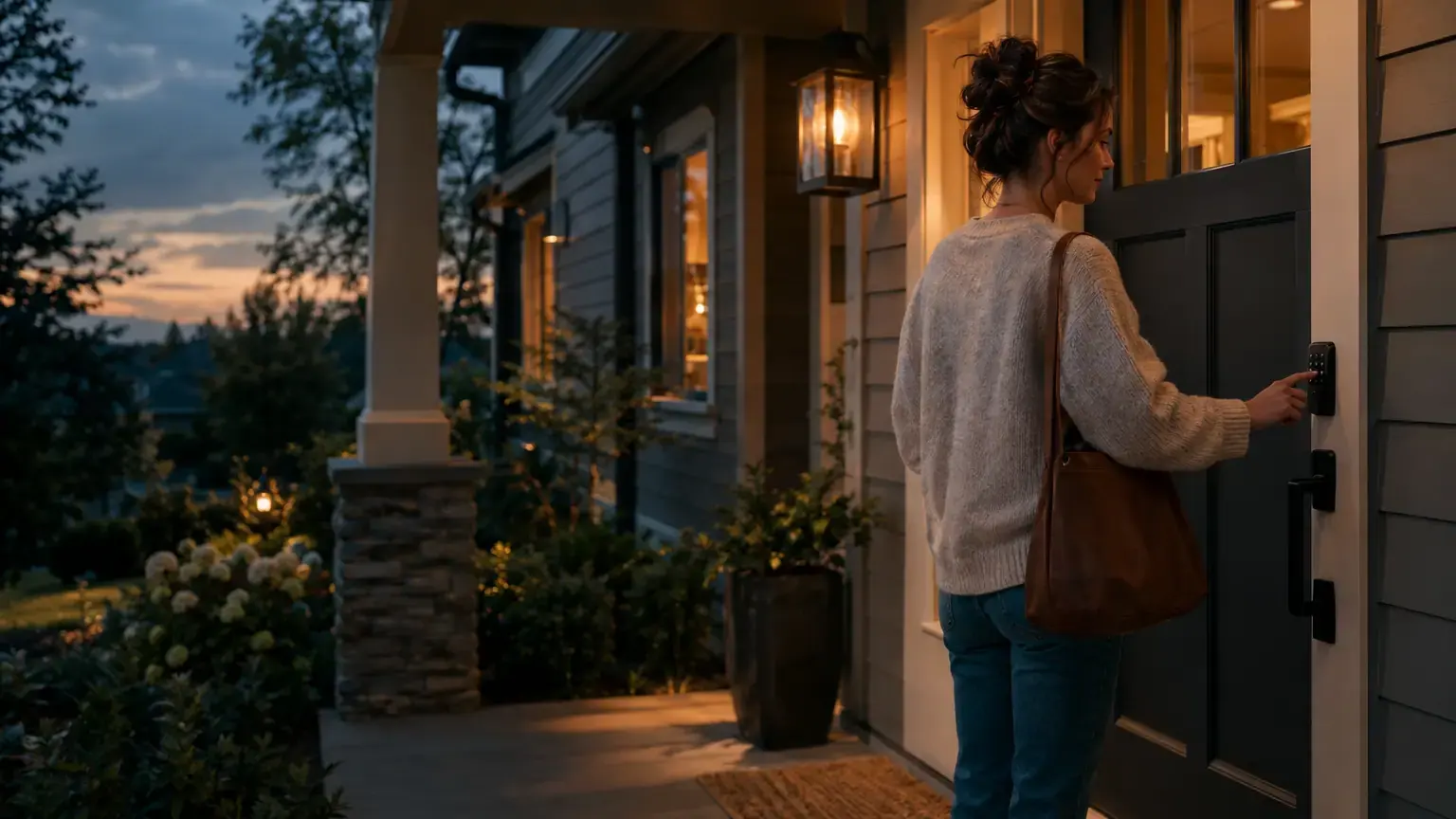
Rowhouses, twins and high-rises from the river wards to the Northeast
Vivint Home Security in Philadelphia, PA
Most Philadelphia homes share walls, face a busy sidewalk in front and open onto an alley or small yard in back, and the median home here was built in 1949. A good system watches both doors, helps deter package theft from the stoop, and warns you about basement flooding, frozen pipes and summer heat. FEMA rates inland flooding, winter weather, heat waves and cold waves all Very High in Philadelphia County.
Independently owned authorized Vivint dealer, operated by Plondo. Not Vivint Smart Home, Inc.'s corporate site.
Quick answer
Can I get Vivint home security in Philadelphia?
Yes. As an authorized Vivint dealer, we help Philadelphians plan systems for South Philly rowhouses, Northeast twins and Center City condos. A Vivint Smart Home Pro does the install, usually with wireless sensors so old plaster and brick stay intact. Monitoring runs around the clock over cellular and covers intrusion, smoke, carbon monoxide and basement water. Most rowhouse plans start with a Doorbell Camera Pro on the stoop, a smart lock, and sensors on both the front door and the alley door. Call to confirm availability, pricing and offers for your address.
Last reviewed by the Vivint Security editorial team.
Philadelphia at a glance
| Data point | Value | Source |
|---|---|---|
| Population | 1,579,706U.S. Census Bureau, ACS 5-year 2024 | |
| Owner-occupied homes | 51.8%U.S. Census Bureau, ACS 5-year 2024 | |
| Single-family detached homes | 8.5%U.S. Census Bureau, ACS 5-year 2024 | |
| Homes in buildings with 10+ units | 17.6%U.S. Census Bureau, ACS 5-year 2024 | |
| Median year homes were built | 1949U.S. Census Bureau, ACS 5-year 2024 | |
| Median home value | $243,100U.S. Census Bureau, ACS 5-year 2024 | |
| Housing vacancy rate | 9.2%U.S. Census Bureau, ACS 5-year 2024 | |
| Overall natural hazard risk (county) | Very HighFEMA National Risk Index, Philadelphia County | |
| Highest-rated hazards (county) | Inland flooding (Very High); Winter weather (Very High); Heat wave (Very High); Cold wave (Very High)FEMA National Risk Index, Philadelphia County |
What threatens Philadelphia homes
Flooded basements, hard winters, heat and the back door
FEMA rates the overall natural hazard risk for Philadelphia County Very High. Four hazards lead the list, each rated Very High: inland flooding, winter weather, heat waves and cold waves. That matters for security planning, because the system that watches your doors can also watch your basement, your pipes and your indoor temperature.
Flooding is a known problem near the Schuylkill in Manayunk and East Falls, along Cobbs Creek and Darby Creek in Southwest Philly and Eastwick, and near Pennypack and Tacony creeks in the Northeast. Away from the water, hard summer storms can overwhelm the city's older combined sewers and push water up through basement floor drains. Vivint water sensors by the water heater, sump pit or floor drain send an alert to the Vivint app as soon as they get wet.
Nor'easters bring snow and ice, and deep cold snaps can freeze pipes that run along the outside walls of older rowhouses. Temperature alerts and a Vivint Smart Thermostat you control from your phone help you catch a cold house before a pipe splits, even when you are down the Shore or away for the holidays.
Heat waves bake brick blocks with little shade, and many older homes lean on window units through July and August. Monitored smoke and carbon monoxide detectors protect everyone inside, including older relatives and pets, and the thermostat lets you cool the house before you get home.
On the property crime side, the everyday concerns are packages taken from stoops and vestibules, car break-ins on the block, and entry through rear doors and basement windows off alleys where few people are watching. A Doorbell Camera Pro covers the front step, an Outdoor Camera Pro watches the back, and Smart Deter uses light and sound to warn off someone lingering before they try a door. With a citywide housing vacancy rate of 9.2%, some blocks have an empty house next door, which makes rear and roof access worth covering.
Housing and neighborhoods
A rowhouse city needs a rowhouse plan
Philadelphia is home to 1,579,706 people, and very few of them live in a stand-alone house. Only 8.5% of homes are single-family detached, while 17.6% are in buildings with ten or more units. The median home was built in 1949 and the median home value is $243,100. About 51.8% of homes are owner-occupied, so a large share of residents rent, which shapes what kind of install makes sense.
A typical older rowhouse has a front door at the sidewalk, a rear door to a yard or shared driveway, basement windows at ground level, and sometimes a roof deck or hatch. Plaster and brick walls make wireless sensors the practical choice. Here is how setups usually change across the city.
South Philadelphia: Passyunk, Point Breeze and Pennsport
Long blocks of two-story brick rowhouses with front doors right on the sidewalk and narrow rear yards. Package theft from the stoop is a common worry, so a Doorbell Camera Pro and a smart lock on the front door come first. Add a door sensor and an Outdoor Camera Pro on the rear, plus glass break sensors for basement windows that sit at sidewalk level.
Fishtown, Northern Liberties and Graduate Hospital
Older brick rowhouses sit beside new construction townhomes with roof decks, garages and big rear glass. Cover the roof deck door with a contact sensor, put a camera on the deck or garage, and use garage door control so you can close it from the Vivint app. Newer homes often have open floor plans, where a motion sensor or Indoor Camera Pro covers a lot of space.
Northeast Philadelphia: Mayfair, Rhawnhurst and Fox Chase
More brick twins and rowhouses with driveways, rear garages off a shared alley and finished basements. Point an Outdoor Camera Pro or Spotlight Pro at the driveway and alley, add garage door control, and place water sensors in the basement, especially on blocks near Pennypack Creek.
Manayunk, Roxborough and the Northwest
Hillside rowhouses in Manayunk and Roxborough, and stone twins and singles in Germantown, Mount Airy and Chestnut Hill. Homes near the Schuylkill and the Wissahickon need water sensors at the lowest point of the basement. Larger stone houses with several entrances call for sensors on every exterior door, motion sensors on the first floor and cameras on side yards and detached garages.
Questions about Vivint Home Security in Philadelphia? A Vivint expert can help.
Call 866.417.1540Where to start
A starting Vivint setup for a typical Philadelphia rowhouse
This is a sensible starting point for a two-story rowhouse or twin with a basement. Your Smart Home Pro adjusts it to your layout, and a quote call is the place to talk through what you actually need.
- Vivint Smart Hub: the control panel that ties everything together and keeps the system connected over cellular.
- Doorbell Camera Pro: watches the stoop and vestibule, sees packages and lets you talk to visitors from anywhere.
- Smart lock on the front door: lock up from the Vivint app and give codes to dog walkers, family or contractors.
- Door and window sensors on front, rear and basement doors and any roof deck access.
- Outdoor Camera Pro or Spotlight Pro on the rear yard, alley or driveway, with Smart Deter to warn off lurkers.
- Glass break sensors for ground-level basement windows and large rear glass.
- A motion sensor covering the first-floor path between the front and back doors.
- Smoke and carbon monoxide detectors, important in older homes with gas heat and shared walls.
- Water sensors by the water heater, sump pit or floor drain for storm and burst-pipe protection.
- Vivint Smart Thermostat for heat waves, cold snaps and adjusting the temperature while you are out.
How it works here
Installation, monitoring and the app
Vivint installs every system with its own technicians, called Smart Home Pros. In Philadelphia that usually means wireless sensors that avoid drilling through old plaster and brick, camera mounts placed to handle narrow sidewalks and tight alleys, and a walkthrough of the Vivint app before the technician leaves.
Once your system is live, Vivint's monitoring center watches it around the clock. Say a rear door off the alley opens while you are armed away, or a smoke detector trips in a rowhouse that shares a wall with your neighbor. An agent works to confirm what is going on, then contacts Philadelphia emergency services following local protocol. Signals travel over cellular rather than a landline, so a nor'easter that knocks out your cable internet in Mayfair or Manayunk does not cut the system off.
The Vivint app lets you arm and disarm, check cameras, review clips on Playback DVR, lock doors and adjust the thermostat from an office tower in Center City or a seat on Regional Rail. Before activation, check whether the City of Philadelphia requires your alarm to be registered or permitted. The city sets those rules and any fees, and we can walk you through what to look for when you call.
Questions about Vivint Home Security in Philadelphia? A Vivint expert can help.
Call 866.417.1540Weather-ready
Built for Philadelphia storms, freezes and heat
When the remnants of a tropical storm push the Schuylkill over its banks along Main Street in Manayunk, or a summer downpour backs up the sewers in a Kensington or Point Breeze basement, a water sensor is the first thing to know. It alerts your phone before standing water reaches a finished floor, a furnace or the boxes you keep downstairs.
Monitored smoke and carbon monoxide detectors matter more on a block of attached rowhouses, where a fire or gas problem next door can reach you through a shared wall. In January, the Vivint Smart Thermostat and temperature alerts can flag a dead boiler in a drafty pre-war house before pipes freeze. In July, they can flag a stuffy third floor when a window unit quits, so you can act before someone inside gets sick.
Talk to a Vivint expert right now.

Vivint Home Security in Philadelphia FAQ
I rent in Philadelphia. Can I still get Vivint?
Often, yes. A large share of Philadelphians rent, and Vivint systems rely mostly on wireless sensors and cameras that mount with minimal drilling. Ask your landlord before swapping a lock or mounting outdoor cameras, since leases differ. On your quote call, mention that you rent so we can talk about equipment that fits your lease and is easy to take with you when you move.
Does Vivint work in a Center City or University City apartment?
Yes. Apartments and condos in high-rises and converted buildings usually need a smaller setup: a Doorbell Camera Pro or Indoor Camera Pro, a door sensor, a smart lock if the building allows it, and smoke, carbon monoxide and water sensors. A water sensor is especially useful when a leak could reach the unit below. Building rules vary, so check with management first.
My new construction townhome has an HOA or condo association. Are cameras allowed?
Many associations in newer developments in Fishtown, Northern Liberties and similar areas set rules on exterior cameras, doorbells and anything mounted on the facade. Review your association documents or ask the board before installation. Your Smart Home Pro can often place cameras on a roof deck, inside a garage or at the door frame to stay within the rules.
What happens to my system during a snowstorm or summer power outage?
The Vivint Smart Hub communicates over a cellular connection and includes a backup battery, so the system can keep working for a period during a power or internet outage. Water sensors and temperature alerts are especially useful during nor'easters and cold waves, when frozen pipes and basement water are a real concern. Ask on your call how backup power works with your equipment.
Can Vivint watch my house while I am at the Shore or traveling?
Yes. Many Philadelphians spend summer weekends down the Shore or travel for the holidays. From the Vivint app you can check cameras, confirm doors are locked, see package deliveries on the stoop and adjust the thermostat. Water sensors and temperature alerts let you know about a leak or a cold house while you are away, so a neighbor can check in.
Do I need an alarm permit or registration in Philadelphia?
Check with the City of Philadelphia before your system is activated. The city sets its own alarm registration or permit rules and any related fees, and those can change. We do not handle city paperwork for you, but we can explain what to look for during your quote call so your monitored system is set up the right way.
Is a rowhouse harder to secure than a single-family home?
Not harder, just different. Rowhouses usually have fewer entry points, but the rear door, basement windows and roof deck often face an alley or yard that few people watch. Covering front and back with cameras and door sensors, plus glass break sensors on low windows, handles the most common weak spots. Shared walls also make monitored smoke detection more important.
I am moving from South Philly to the Northeast. Can I take my system?
Moving within Philadelphia is common, and Vivint can help with a move. A twin in the Northeast may need more coverage than a South Philly rowhouse, such as a driveway camera or garage door control. Call before your move to talk about transferring service, adding equipment for the new layout and confirming availability and offers for your new address.
Vivint products for homes in Philadelphia
 Home Security SystemsProfessionally installed Vivint home security systems with 24/7 monitoring.
 Security CamerasVivint indoor, outdoor and doorbell security cameras with smart deterrence.
 Doorbell Camera ProVivint Doorbell Camera Pro with package protection and two-way talk.
- Outdoor Camera ProVivint Outdoor Camera Pro with Smart Deter and night vision.
 24/7 MonitoringVivint 24/7 professional home security monitoring.
- Vivint Cost and PricingWhat Vivint costs: monitoring plans, equipment and offers.