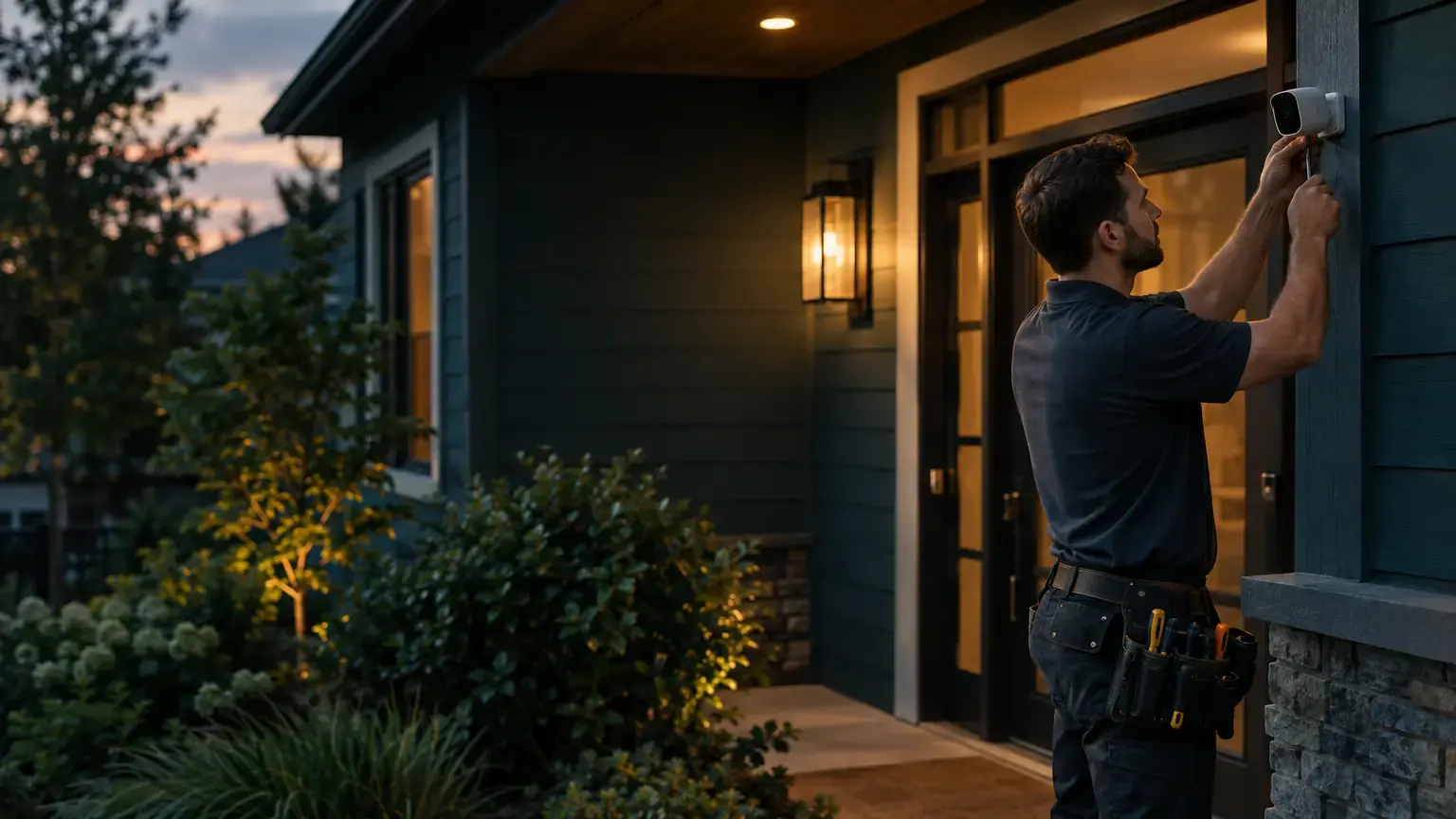
Built for lake-effect winters and older Buffalo houses
Vivint Home Security in Buffalo, NY
A Buffalo home has to ride out lake-effect snow, deep cold snaps that threaten old pipes, and flooding from snowmelt and ice jams. Often it does this with a stone basement and a detached garage out back. Many people here also live in an upper or lower flat of a Buffalo double, so a good system protects your own unit, your shared entry and whatever sits at the end of the driveway.
Independently owned authorized Vivint dealer, operated by Plondo. Not Vivint Smart Home, Inc.'s corporate site.
Quick answer
Is Vivint a good home security choice for a Buffalo home?
Yes, for most Buffalo homes. Vivint installs professionally, monitors 24/7 and uses a cellular connection, so alarms can still reach the monitoring center when a winter storm knocks out home internet. Older Buffalo houses benefit from cameras on porches and detached garages, plus water sensors and temperature alerts for stone basements. Renters in upper or lower flats can protect just their own unit. As an authorized Vivint dealer, we confirm pricing and availability for your address on a free quote call.
Last reviewed by the Vivint Security editorial team.
Buffalo at a glance
| Data point | Value | Source |
|---|---|---|
| Population | 276,854U.S. Census Bureau, ACS 5-year 2024 | |
| Owner-occupied homes | 43.0%U.S. Census Bureau, ACS 5-year 2024 | |
| Single-family detached homes | 36.2%U.S. Census Bureau, ACS 5-year 2024 | |
| Homes in buildings with 10+ units | 13.1%U.S. Census Bureau, ACS 5-year 2024 | |
| Median year homes were built | 1938U.S. Census Bureau, ACS 5-year 2024 | |
| Median home value | $164,200U.S. Census Bureau, ACS 5-year 2024 | |
| Housing vacancy rate | 12.6%U.S. Census Bureau, ACS 5-year 2024 | |
| Overall natural hazard risk (county) | Relatively HighFEMA National Risk Index, Erie County | |
| Highest-rated hazards (county) | Winter weather (Very High); Cold wave (Very High); Tornado (Relatively High); Inland flooding (Relatively High)FEMA National Risk Index, Erie County |
What threatens Buffalo homes
Snow, deep cold, storms and break-ins: what a Buffalo system needs to handle
FEMA's National Risk Index rates Erie County's overall natural hazard risk as Relatively High. Winter weather and cold waves both rate Very High, while tornadoes and inland flooding rate Relatively High. That matches what Buffalo residents already know: lake-effect bands off Lake Erie can bury South Buffalo while North Buffalo sees flurries, and a hard freeze can follow right behind.
Winter weather and cold waves are the biggest threats to the house itself. Long outages and bitter wind off the lake can freeze supply lines in old balloon-frame walls and unheated basements. The Vivint Smart Thermostat lets you watch and adjust the temperature from the Vivint app, and water sensors near the water heater, washer and main shutoff warn you quickly when a pipe lets go. Smoke and carbon monoxide detectors matter here too, since furnaces, space heaters and snowed-in vents all raise CO risk in deep winter.
Inland flooding in Buffalo often comes from snowmelt, heavy rain and ice jams on Cazenovia Creek and the Buffalo River, plus old basements that seep when the ground thaws. Water sensors on the basement floor and by the sump pit give you an early alert. For tornadoes and strong summer storms, glass break sensors and door and window sensors tell you if an opening is breached, and outdoor cameras give you a record of the property afterward.
Common worries for Buffalo homeowners and renters are packages taken off front porches, cars and detached garages rifled overnight, and tools lifted from sheds along narrow back lots. Some blocks also have vacant houses nearby, which can draw people cutting through yards. The Doorbell Camera Pro covers the porch, the Outdoor Camera Pro with Smart Deter watches the driveway and garage, and door and window sensors plus motion sensors cover the house itself.
Buffalo housing
Older houses, Buffalo doubles and how to protect them
Buffalo has 276,854 residents and an old housing stock: the median home was built in 1938. Only 36.2% of homes are single-family detached, and 13.1% are in buildings with 10 or more units, so a large share of the city lives in two-family doubles, upper and lower flats and small multi-unit houses. About 43.0% of homes are owner-occupied, the median home value is $164,200, and the housing vacancy rate is 12.6%.
In practice that means wood-frame houses with front porches, narrow side driveways, detached garages at the back of the lot, stone or block basements and lots of original windows. Each of those is an entry point or a weather weak spot, so we plan a Buffalo system around them instead of a generic template.
Elmwood Village and the West Side
Big Victorian and Queen Anne houses, many split into flats, sit close together with porches facing the sidewalk. Here a Doorbell Camera Pro at each entry you control, door sensors on side and back doors, and glass break sensors on large first-floor windows make sense. If you rent a flat, keep the system inside your unit and add an Indoor Camera Pro facing your own door.
North Buffalo and Parkside
A mix of doubles and single-family homes on deep, narrow lots, often with a long driveway to a detached garage. An Outdoor Camera Pro or Spotlight Pro aimed down the driveway, garage door control and a smart lock on the back door cover the parts of the property you can't see from the front window.
South Buffalo
Solid frame houses on close-set streets near Cazenovia Park and the Buffalo River, where lake-effect snow often hits hardest. Flood and freeze come first here: water sensors in the basement and by the sump, the Vivint Smart Thermostat for remote temperature checks, and smoke and carbon monoxide detectors on every level. Add outdoor cameras for the garage and back yard.
University Heights
Near the University at Buffalo's South Campus, many houses are student rentals that sit empty over winter and summer breaks. Owners and tenants benefit from smart locks to manage keys between leases, door and window sensors on every ground-floor opening, and app alerts so the house is watched while everyone is away.
Questions about Vivint Home Security in Buffalo? A Vivint expert can help.
Call 866.417.1540Where to start
A starting Vivint setup for a typical Buffalo home
This is a sensible baseline for an older Buffalo single-family house or an owner-occupied double. Your Smart Home Pro will adjust it during the in-home visit based on your layout, garage and basement.
- Vivint Smart Hub: the central panel that arms the system and stays connected by cellular even when a storm drops your internet.
- Doorbell Camera Pro: watches the front porch for package thieves and lets you answer the door without opening it in the cold.
- Outdoor Camera Pro with Smart Deter: covers the side driveway and detached garage at the back of the lot, the parts of a Buffalo property hardest to see from inside.
- Door and window sensors: on front, side and back doors plus reachable first-floor and basement windows.
- Glass break sensors: for older homes with large original windows that are easy to break quietly.
- Smoke and carbon monoxide detectors: monitored, so agents can contact emergency services even if you are at work or away for the weekend.
- Water sensors: on the basement floor, near the water heater and by the sump pit to catch thaw seepage and burst pipes.
- Vivint Smart Thermostat: check and adjust heat remotely during a cold wave or a lake-effect storm.
- Smart lock and garage door control: lock up and close the garage from the Vivint app instead of walking out in a snowstorm.
How it works
Installation, 24/7 monitoring and the Vivint app in Buffalo
vivint.security is an independently owned, authorized Vivint dealer. We are not Vivint's corporate company. On a free quote call we ask about your house: is it a double, does the garage sit at the back of the lot, is the basement stone or block. Then we confirm which equipment, pricing and offers are available at your address. Vivint's Smart Home Pros handle installation, place each device and walk you through the Vivint app. Wireless sensors suit the plaster walls and original window casings found in so much of Buffalo's pre-war housing, so walls rarely need to be opened.
Vivint's professional monitoring runs 24/7. When an alarm trips, monitoring agents work to verify it and contact police, fire or medical services following local protocol. The system communicates over cellular, so a downed line or a lost Wi-Fi connection in a storm does not cut you off, and the Smart Hub has battery backup for power outages.
The Vivint app lets you arm and disarm, view live video and Playback DVR clips, lock doors, adjust the thermostat and get water or smoke alerts from anywhere, whether you are at a Bills game in Orchard Park, across the Peace Bridge or wintering somewhere warmer.
Before activating monitoring, check whether the City of Buffalo requires an alarm permit or registration, and ask about any false alarm rules. Suburbs such as Amherst, Cheektowaga and Tonawanda set their own rules, so confirm with your town or village. We can help you figure out what applies during your quote call.
Questions about Vivint Home Security in Buffalo? A Vivint expert can help.
Call 866.417.1540Winter and storm prep
Getting your system ready for Buffalo weather
Anyone who has been stuck at work behind a driving ban, a closed Skyway or a whiteout on the Thruway knows the worry of not being able to get home. Snowbirds who leave for the winter feel it for months. Water sensors in the basement and near any plumbing on exterior walls catch leaks early, and app alerts reach you wherever you are. The Vivint Smart Thermostat lets you confirm the heat is running and nudge it up before a deep freeze.
Monitored smoke and carbon monoxide detectors matter most when furnaces run hard for weeks and lake-effect drifts can block exhaust vents. In spring, the same water sensors that catch frozen pipes help you watch for thaw seepage and creek flooding. Keep outdoor cameras clear of drifting snow and ice, and your Smart Home Pro can suggest mounting spots under eaves that stay clearer through a Buffalo winter.
Talk to a Vivint expert right now.

Vivint Home Security in Buffalo FAQ
I rent an upper flat in a Buffalo double. Can I still get Vivint?
Yes. Many renters protect just their own unit with wireless door and window sensors, an Indoor Camera Pro and smoke and carbon monoxide detectors. Wireless equipment keeps wall damage minimal, but check your lease and ask your landlord before mounting a doorbell or outdoor camera on shared areas. On a quote call we can suggest a renter-friendly setup and confirm availability for your address.
Does Vivint work in Buffalo apartment buildings?
It does. In a downtown loft conversion or a larger building near Elmwood or the waterfront, you focus on your own unit: a sensor on your entry door, an Indoor Camera Pro, a smart lock if management allows it, and monitored smoke and carbon monoxide detection. The system communicates over cellular, so it doesn't depend on building internet. Check building rules about doorbells or hallway cameras before installation, and we will tailor the plan to what is permitted.
What happens to my system during a lake-effect storm or power outage?
The Vivint Smart Hub communicates over cellular rather than relying on your home internet, and it has battery backup for power outages. That helps alarms keep reaching the monitoring center during a storm. Some devices, such as cameras on Wi-Fi, may pause if your power or internet is out. Water sensors and thermostat alerts are especially useful when you can't get home through the snow.
Can Vivint help protect my house while I'm away for the winter?
Yes. Buffalo snowbirds and travelers can use water sensors, the Vivint Smart Thermostat and outdoor cameras to watch the house from the Vivint app. You can check that the heat is running, see who comes to the porch and get alerts for leaks or smoke. Smart locks let a neighbor or plow contractor in without handing out keys, and access can be removed anytime.
Does Buffalo require an alarm permit or registration?
Rules can change, so check with the City of Buffalo before your system goes live and ask about any registration or false alarm requirements. If you live in a suburb such as Amherst, Cheektowaga or the Tonawandas, contact your town or village, since each sets its own rules. We can help you sort out what applies to your address during your quote call.
Will a Vivint system work in my older Buffalo house with plaster walls?
Usually yes. Vivint sensors and cameras are mostly wireless, which suits houses from the early twentieth century with plaster walls, original trim and odd window sizes. Smart Home Pros plan placement to avoid unnecessary drilling. Older homes often benefit most from glass break sensors on large windows, basement water sensors and cameras covering detached garages at the back of the lot.
I'm building or buying a newer home in the suburbs. Should I plan the system now?
Planning early helps. In new construction in places like Amherst, Clarence or Orchard Park, you can decide on doorbell and camera locations, garage door control and smart locks before you move in. Check any HOA rules on exterior cameras and doorbells first. Call us to talk through the plan and confirm equipment and pricing for the new address.
What if I move to another neighborhood in Buffalo or Erie County?
Call us before moving day so we can review your account and explain your options for the new home. Moving from a West Side flat to a house in North Buffalo or the suburbs may call for different gear, such as outdoor cameras or garage door control, and we can confirm equipment and availability for the new address.
Vivint products for homes in Buffalo
 Home Security SystemsProfessionally installed Vivint home security systems with 24/7 monitoring.
 Security CamerasVivint indoor, outdoor and doorbell security cameras with smart deterrence.
 Doorbell Camera ProVivint Doorbell Camera Pro with package protection and two-way talk.
- Outdoor Camera ProVivint Outdoor Camera Pro with Smart Deter and night vision.
 24/7 MonitoringVivint 24/7 professional home security monitoring.
- Vivint Cost and PricingWhat Vivint costs: monitoring plans, equipment and offers.