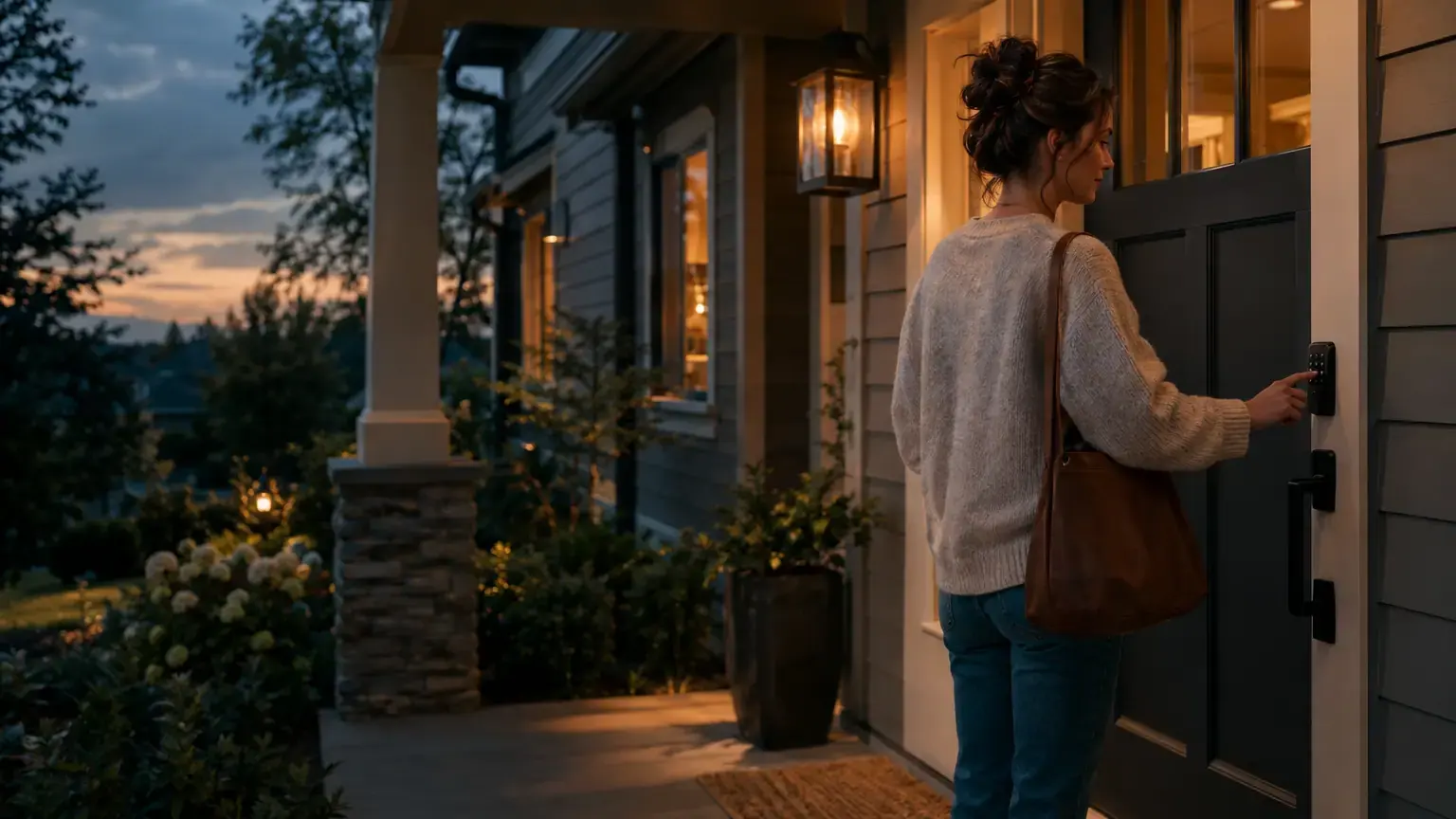
Working harbor, old houses, storm surge
Vivint Home Security in New Bedford, MA
New Bedford's homes are old, and its harbor sits behind a hurricane barrier that doesn't cover every street. A good system here has to cope with aging wiring, shared buildings and power that can drop in a storm.
Independently owned authorized Vivint dealer, operated by Plondo. Not Vivint Smart Home, Inc.'s corporate site.
Quick answer
What does home security in New Bedford need to handle?
New Bedford needs a system that works in old buildings and keeps working in storms. The typical home was built around 1938, and a hurricane barrier finished in 1966 protects downtown, yet shoreline streets can still flood. Vivint's wireless sensors, cameras and Smart Hub with 24/7 professional monitoring fit older houses, triple-deckers and rentals without opening walls, and the Vivint app lets you check in while you're away.
Last reviewed by the Vivint Security editorial team.
New Bedford at a glance
| Data point | Value | Source |
|---|---|---|
| Population | 101,318U.S. Census Bureau, Vintage 2024 population estimates | |
| Owner-occupied homes | 40.3%U.S. Census Bureau, ACS 5-year 2024 | |
| Single-family detached homes | 30.5%U.S. Census Bureau, ACS 5-year 2024 | |
| Homes in buildings with 10+ units | 12.4%U.S. Census Bureau, ACS 5-year 2024 | |
| Median year homes were built | 1938U.S. Census Bureau, ACS 5-year 2024 | |
| Median home value | $357,300U.S. Census Bureau, ACS 5-year 2024 | |
| Housing vacancy rate | 4.7%U.S. Census Bureau, ACS 5-year 2024 | |
| Highest-rated hazards (county) | Inland flooding (Relatively High); Strong wind (Relatively High); Ice storm (Relatively High)FEMA National Risk Index, Bristol County | |
| Hurricane barrier completed | 1966, built to protect against storms up to a Category 3 hurricaneThe New Bedford Light | |
| Estimated damage prevented by the barrier | $24 million over its lifetimeThe New Bedford Light | |
| Barrier height raised in 2015 | Covewalk added roughly a foot to the barrier height in 2015The New Bedford Light | |
| Shoreline evacuation areas in Category 1 or 2 storm | Federal 2014 hurricane maps show shore areas may need evacuation at high tideThe New Bedford Light | |
| 1938 hurricane flooding | Sections of New Bedford were under as much as 8 feet of waterNWS Boston - The Great Hurricane of 1938 | |
| 1938 hurricane toll in Southern New England | 564 deaths and at least 1,700 injuriesNWS Boston - The Great Hurricane of 1938 | |
| City incorporated | 1847Quakers - New Bedford Whaling National Historical Park (NPS) | |
| Renamed New Bedford | 1787Quakers - New Bedford Whaling National Historical Park (NPS) | |
| African American residents in 1853 | 1,008, of whom 700 were escaped slavesAfrican American History - New Bedford Whaling NHP (NPS) |
Harbor and storm surge
Behind the hurricane barrier, but not out of reach of the water
The hurricane barrier across the harbor was completed in 1966. It's built to protect downtown New Bedford and Fairhaven from storms up to a Category 3 hurricane, and it has prevented an estimated $24 million in damages over its lifetime.
That's a real shield. It isn't a promise that every street stays dry. Federal hurricane maps from 2014 show that in a Category 1 or 2 storm at high tide, areas along the shore may need to be evacuated. The city raised the barrier by roughly a foot in 2015 when the Covewalk was built, because sea level keeps creeping up.
If you live near the water, you might leave for a day or two and come back to a house you couldn't watch. Water sensors near the basement stairs, the water heater and the washer give you a text before a small leak turns into a big one. Smoke and carbon monoxide detectors stay on guard the whole time, and the Vivint Smart Hub keeps talking to the monitoring center over its cellular backup if your internet goes down.
Storms hit fast here.
- Water sensors in basements and utility rooms alert you from anywhere.
- Smart Hub cellular backup keeps monitoring going when the router is dead.
- The Vivint app shows door, window and camera status while you're away from home.
Housing stock
A median build year of 1938 and what's inside those walls
The median New Bedford home was built in 1938. Plaster and lath, knob-and-tube leftovers, narrow stairways and wood-framed porches are all common in houses that age. Running new wire through them is slow, messy and sometimes impossible.
That's why wireless matters. Door and window sensors stick on and talk to the Smart Hub by radio, so there's no drilling through old plaster. Motion sensors cover a hallway or a first-floor room in minutes. Glass break sensors listen for the sound of a smashed pane on older windows that don't close tightly.
Only 30.5% of homes here are single-family detached houses, so a lot of New Bedford lives in two-families, triple-deckers and attached homes. The median home value is $357,300, which means even a modest house holds a lot of money and belongings. A Doorbell Camera Pro on the front porch and an Outdoor Camera Pro over the back stairs give you eyes on the two spots where most people come and go. Give each person in a shared house their own lock code instead of copying keys, and you'll see who came in and when.
Smart locks help here.
Questions about Vivint Home Security in New Bedford? A Vivint expert can help.
Call 866.417.1540Weather
The 1938 hurricane, and the wind and ice ratings that still apply
The National Weather Service says sections of New Bedford were under as much as 8 feet of water in the Great Hurricane of 1938. The storm caused 564 deaths and at least 1,700 injuries across Southern New England. The barrier exists because of that day. Nobody forgot it.
Today FEMA rates Bristol County's overall natural hazard risk as moderate, but three hazards stand out: inland flooding, strong wind and ice storms all carry a relatively high rating. That mix is familiar to anyone who has lost power in a nor'easter or watched a limb come down across a service line.
A security system shouldn't go quiet when the lights go out. Your hub keeps a backup battery and a cellular link, and the sensors carry their own batteries too. Monitoring agents can still receive an alarm during an outage, then contact emergency services following local protocol.
Smart Deter and Spotlight Pro add light and sound at the first sign of someone in the yard, which helps on the dark streets storms tend to leave behind.
Questions about Vivint Home Security in New Bedford? A Vivint expert can help.
Call 866.417.1540A port with a long memory
A port that's been New Bedford since 1787
Bedford Village became New Bedford in 1787, and the city was incorporated in 1847. Much of the older housing grew up around the working waterfront, close together on narrow lots.
Close quarters cut both ways. Neighbors notice things. A porch light or a camera covers more than your own steps. Doorbell Camera Pro captures the person at your door, and Playback DVR keeps the footage so you can review it later.
A fishing and port economy also means some households keep unusual schedules: early starts, long trips, and weeks when the house runs on a timer. Set up lights, locks and the thermostat through the Vivint app, and a house can look lived in even when nobody's home.
Next steps
Getting a Vivint system set up in New Bedford
Start with a call. A Vivint specialist asks about your home, whether it's a single-family, a two-family or an apartment, and which doors and windows matter most. Pricing and offers depend on your address, so you'll confirm them on that call.
Vivint's own Smart Home Pros handle the installation. The system connects to 24/7 professional monitoring. Check with the city about any alarm registration rule before you go live.
Most New Bedford homes do well with a Smart Hub, a doorbell camera, entry sensors on the main doors and windows, a motion sensor and smoke, carbon monoxide and water detection. Add outdoor cameras if the lot is exposed.
Talk to a Vivint expert right now.

Vivint Home Security in New Bedford FAQ
Does the hurricane barrier mean I don't need to worry about flooding?
Not entirely. The barrier was completed in 1966 and protects downtown from storms up to a Category 3 hurricane, but federal maps show shoreline areas may still need to evacuate in a smaller storm at high tide. Water sensors in your basement or utility room alert you early, even if you're away from home.
My house is a really old one. Can Vivint still be installed?
Yes. The median home here dates to 1938, and Vivint's sensors and Smart Hub work wirelessly, so installers don't need to open old plaster walls. Door and window sensors stick on, motion sensors sit on a shelf or wall, and smoke and carbon monoxide detectors replace older ones. A technician will explain the layout on installation day.
I rent in New Bedford. Can I get Vivint?
Often, yes. About 40.3% of homes here are owner-occupied, so many people rent. Wireless equipment can go up without major changes, but you should ask your landlord first. Pricing, availability and offers depend on your address, so call to confirm what's possible for your building.
What happens to my alarm if the power goes out in a storm?
Yes, it keeps working. The hub runs on a backup battery and talks over a cellular link, so a dead router or a downed line doesn't silence it. Each sensor has its own battery. If an alarm comes in, monitoring agents verify it and call for help following local protocol. Ask about battery details on your call.
Is a smart system useful in a two-family or triple-decker?
It is. Only 30.5% of New Bedford homes are single-family detached houses, so shared entries are common. Smart locks let you issue separate codes, a doorbell camera shows who's at the common door, and each unit can have its own sensors. Owners can also add smoke and carbon monoxide detectors to shared stairwells.
Can I watch my home while I'm away on a long trip?
Yes. The Vivint app shows camera views, lets you lock doors, and sends alerts from your phone. Lights and the Vivint Smart Thermostat can follow a schedule so the house looks lived in. Water sensors warn you about leaks and freezing pipes. That's useful for fishing crews, travelers and anyone who leaves for weeks.
Does New Bedford require an alarm registration?
Many Massachusetts communities have alarm or false alarm rules, and requirements can change. We don't have a city rule to quote, so check with the New Bedford city offices before you activate a system. Our specialist can also point you to the right questions on the call, then walk you through setup.
How do I get a quote for a New Bedford home?
Use the call button or the quote form on this page. You'll talk with a specialist about your building, the entries you want covered and the problems you want solved. Offers and pricing change by address, so the details get confirmed live. Vivint's technicians install the system once you agree.
Vivint products for homes in New Bedford
 Home Security SystemsProfessionally installed Vivint home security systems with 24/7 monitoring.
 Security CamerasVivint indoor, outdoor and doorbell security cameras with smart deterrence.
 Doorbell Camera ProVivint Doorbell Camera Pro with package protection and two-way talk.
- Outdoor Camera ProVivint Outdoor Camera Pro with Smart Deter and night vision.
 24/7 MonitoringVivint 24/7 professional home security monitoring.
- Vivint Cost and PricingWhat Vivint costs: monitoring plans, equipment and offers.