Lake-effect winters, older homes and game-day crowds
Vivint Home Security in South Bend, IN
The median South Bend home was built in 1955. A good system here has to cover basements, detached garages and plenty of original doors and windows. FEMA also rates St. Joseph County Relatively High for tornado, hail, strong wind and cold wave. Your setup should watch for frozen pipes and smoke as closely as it watches the front porch.
Independently owned authorized Vivint dealer, operated by Plondo. Not Vivint Smart Home, Inc.'s corporate site.
Quick answer
What is the best Vivint setup for a South Bend home?
Most South Bend homes do best with a Vivint Smart Hub, door and window sensors on every ground-floor and basement opening, a Doorbell Camera Pro, an Outdoor Camera Pro aimed at the driveway or detached garage, and smoke, carbon monoxide and water sensors. That mix covers older houses with many entry points, Relatively High tornado, wind and cold wave risk, and long winters when furnaces and pipes work hardest. Vivint technicians install it, and Vivint agents monitor it around the clock.
Last reviewed by the Vivint Security editorial team.
South Bend at a glance
| Data point | Value | Source |
|---|---|---|
| Population | 103,085U.S. Census Bureau, ACS 5-year 2024 | |
| Owner-occupied homes | 60.2%U.S. Census Bureau, ACS 5-year 2024 | |
| Single-family detached homes | 71.6%U.S. Census Bureau, ACS 5-year 2024 | |
| Homes in buildings with 10+ units | 11.7%U.S. Census Bureau, ACS 5-year 2024 | |
| Median year homes were built | 1955U.S. Census Bureau, ACS 5-year 2024 | |
| Median home value | $140,400U.S. Census Bureau, ACS 5-year 2024 | |
| Housing vacancy rate | 13.6%U.S. Census Bureau, ACS 5-year 2024 | |
| Overall natural hazard risk (county) | Relatively ModerateFEMA National Risk Index, St. Joseph County | |
| Highest-rated hazards (county) | Tornado (Relatively High); Hail (Relatively High); Strong wind (Relatively High); Cold wave (Relatively High)FEMA National Risk Index, St. Joseph County |
What threatens homes here
Storms, deep cold and unwatched corners in South Bend
FEMA rates the overall natural hazard risk in St. Joseph County as Relatively Moderate, but four hazards stand out as Relatively High: tornado, hail, strong wind and cold wave. Spring and early summer bring tornado warnings and hailstorms that roll in across the open farmland west of the city. Winter brings arctic air and lake-effect snow off Lake Michigan, and the cold can settle in for days.
In South Bend's older housing, those risks hit predictable places. Strong wind and hail can drop power, crack a tall old window or send a limb from a mature street tree through a porch roof. A cold wave can freeze a pipe in a fieldstone or block basement wall or a crawl space, and the damage often goes unnoticed until the thaw. Heating season also means aging furnaces, space heaters and fireplaces running for months, which raises the stakes for smoke and carbon monoxide.
Vivint ties those sensors to the same panel as your security system. Smoke and carbon monoxide detectors are monitored around the clock. Water sensors near the water heater, washer or sump pit send an alert to your phone when they detect moisture. Glass break sensors listen for a shattered pane, so you know right away when a window breaks.
Many South Bend blocks have alleys behind the houses, with detached garages and sheds that sit out of view from the front door. Porches face the street, and cars often park on driveways and curbs. The city's housing vacancy rate of 13.6% matters too, since an empty house nearby means fewer eyes on the block. A Doorbell Camera Pro on the porch, an Outdoor Camera Pro with Smart Deter on the alley side and garage door control cover the spots that are hardest to watch from inside.
Housing stock
How South Bend homes and neighborhoods shape your system
South Bend is mostly a city of houses. About 71.6% of homes are single-family detached, roughly 60.2% are owner-occupied, and the median home value is $140,400. Only about 11.7% of homes sit in buildings with 10 or more units, so most people here are protecting a whole house with its own yard, porch and garage rather than a single apartment door.
The median year built is 1955, and many neighborhoods are far older. That means bungalows, foursquares and Victorians with front, back and side doors, cellar entries and many windows. These houses reward a system planned room by room, with sensors on every opening a person could actually use, not just the front entry.
Northeast Neighborhood and the streets near Notre Dame
Close to campus you find a mix of long-time owners, faculty families and student rentals. Homes can sit empty over winter break and the summer, and home football weekends bring heavy foot traffic and parked cars on every block. A Doorbell Camera Pro and an Outdoor Camera Pro facing the street help here, and smart locks let landlords or owners issue and revoke access codes as tenants change.
Near Northwest and West Washington
These older neighborhoods west of downtown hold large Victorian and early twentieth century homes with deep porches, tall windows and back doors that open onto alleys. Put door and window sensors on every ground-floor opening, add glass break sensors in rooms with many panes, and aim an Outdoor Camera Pro with a Spotlight Pro at the alley side and any detached garage.
Sunnymede, Harter Heights and River Park
On the east side, brick and frame homes sit under mature trees on quiet streets, and River Park runs out toward the Mishawaka line. Big trees mean more downed limbs and power outages in strong wind, so the Smart Hub's cellular connection matters. Many of these homes have basements that see heavy use, which makes water sensors near the sump and water heater a smart addition alongside standard entry protection.
The south side around Miami Hills and Rum Village
Modest older homes and mid-century ranches are common south of downtown, many with a garage that is easy to leave open. Garage door control lets you check and close it from the Vivint app. A motion sensor in the main hallway and a camera covering the driveway round out a simple, effective setup for one-story layouts.
Questions about Vivint Home Security in South Bend? A Vivint expert can help.
Call 866.417.1540Where to start
A starting Vivint setup for a typical South Bend home
Your Smart Home Pro will walk the property before finalizing a plan, since a West Washington Victorian and a south side ranch need different coverage. For a typical South Bend home built around the middle of the last century, this is a solid place to begin.
- Vivint Smart Hub: the touchscreen panel that runs the system, with cellular communication so storms that drop power lines do not cut off monitoring.
- Door and window sensors on every exterior door and ground-floor window, including basement doors and side entries that older homes often have.
- Doorbell Camera Pro: for packages and visitors, with two-way talk so you can answer the door from work or from a game at Notre Dame Stadium.
- Outdoor Camera Pro with Smart Deter: aimed at the driveway, alley or detached garage, the parts of the lot you cannot see from inside.
- Spotlight Pro: adds light to dark side yards and alleys during long winter nights.
- Playback DVR: keeps continuous recordings so you can review what happened before and after an event.
- Glass break sensors in rooms with large or numerous windows, where a broken pane is the easiest way in.
- Smoke and carbon monoxide detectors with 24/7 monitoring, since furnaces and heaters run for months here.
- Water sensors near the water heater, washer and sump pump to catch leaks and burst pipes early.
- Vivint Smart Thermostat: lets you watch indoor temperature during a cold wave and adjust heat from your phone while you travel.
- Smart locks and garage door control: lock up, open for a guest or close a forgotten garage door from the Vivint app.
How it works
Installation, monitoring and the Vivint app in South Bend
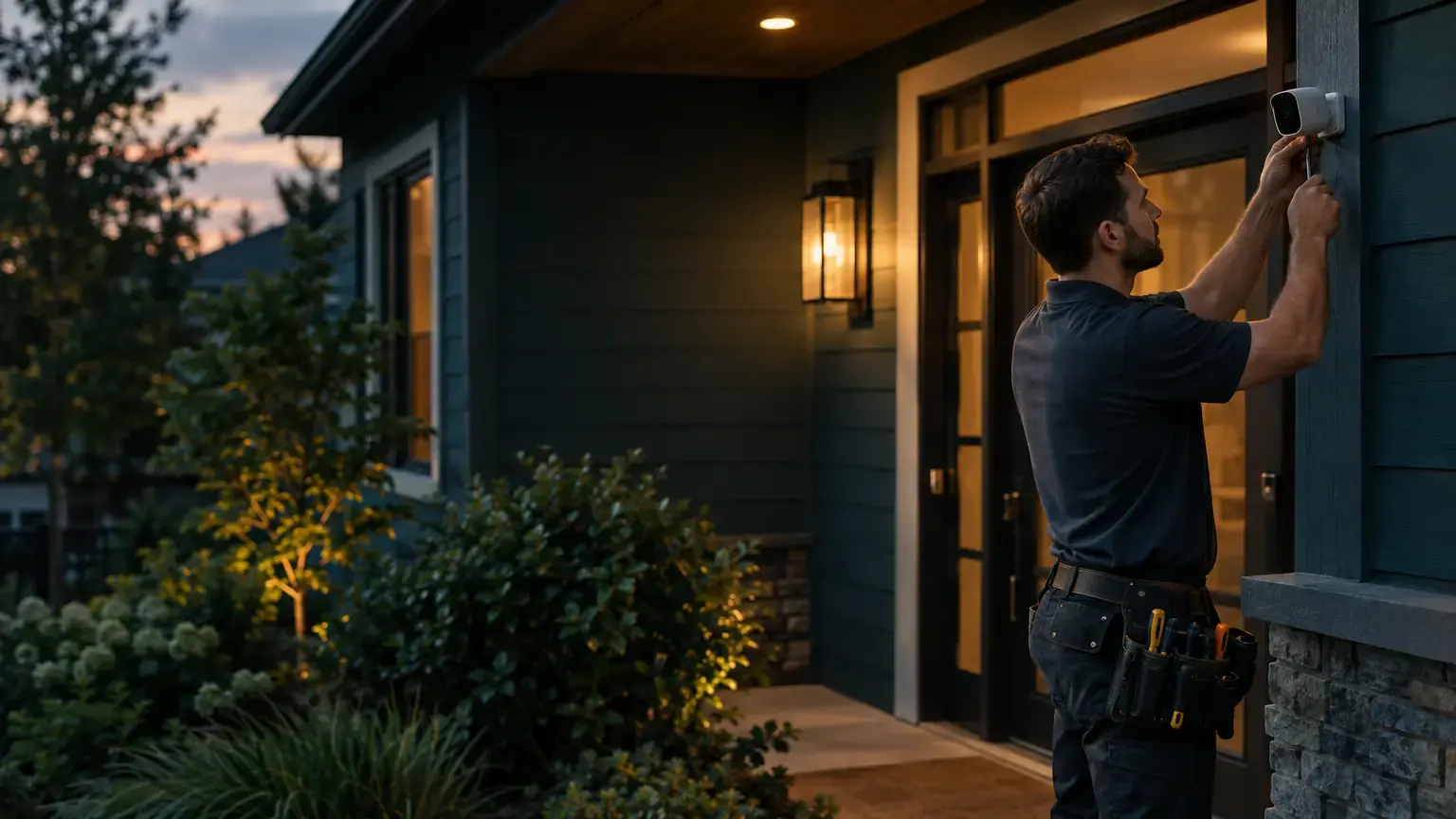
Your equipment goes in with Vivint's own Smart Home Pros, not a subcontractor. In a South Bend bungalow or foursquare with plaster walls, original wood window frames and a fieldstone basement, wireless door and window sensors mount cleanly without cutting into trim. The Pro decides where the Smart Hub, cameras and detectors belong, connects everything, loads the Vivint app on your phone and walks each person in the house through arming and disarming.
Once your system is activated, monitoring runs 24/7. If an armed door sensor or motion sensor trips, a Vivint agent verifies the alarm and contacts emergency services following local protocol. Smoke, carbon monoxide and water sensors report to the same agents, which helps when you are riding the South Shore Line into Chicago, tailgating on a home football Saturday or spending the holidays out of state.
No landline or cable modem is needed. The Smart Hub sends its signals over cellular, so a thunderstorm that drops a maple across the lines on your street, or a January wind event that knocks out internet across St. Joseph County, does not leave the panel silent.
The City of South Bend may have its own requirements for monitored alarms, such as registration. Check with the South Bend Police Department or city offices before activation. Your plan, pricing and any current offer also depend on your address, and a short call is how you confirm them.
Questions about Vivint Home Security in South Bend? A Vivint expert can help.
Call 866.417.1540Built for northern Indiana weather
Getting ready for cold waves, storms and basement water
Cold wave risk in St. Joseph County is rated Relatively High, and a deep freeze is when older homes show their weak spots. Pipes along exterior walls, in crawl spaces or in enclosed porches can freeze and split. A Vivint Smart Thermostat lets you check the indoor temperature from anywhere and turn the heat up if a house is cooling off while you are away.
Water sensors are the other half of that plan. Place them by the water heater, under sinks on exterior walls, near the washer and beside the sump pump. When spring storms or melting lake-effect snow push water into a basement, or a thawing pipe starts to drip, you get an alert right away instead of finding a flooded floor days later.
Tornado, hail and strong wind are all rated Relatively High here as well. Monitored smoke and carbon monoxide detectors protect you when the power is out and families turn to generators or alternate heat, and the Smart Hub's cellular connection keeps it in touch with monitoring when the grid is not.
Talk to a Vivint expert right now.

Vivint Home Security in South Bend FAQ
Can I get Vivint if I rent in South Bend?
Yes, in many cases. Vivint uses wireless sensors and cameras that install without major drilling, which works well for renters near Notre Dame, IU South Bend or downtown. Get your landlord's approval before installation, especially for smart locks or a doorbell camera. Equipment and plan options vary by address, so call to confirm what fits your lease and your home.
Does Vivint work in South Bend apartments and condos?
Yes. Most South Bend homes are houses, but apartments and condos downtown or near campus can still use a Smart Hub, door and window sensors, an Indoor Camera Pro and a Doorbell Camera Pro where the building allows it. Check your building's rules about hallway cameras and lock changes. Your Smart Home Pro can tailor a smaller setup that covers your unit's entry and windows.
Do HOA or historic district rules affect cameras and doorbells?
They can. Newer subdivisions with an HOA sometimes set rules on exterior equipment, and historic areas like West Washington may have guidelines on visible changes to a home's front. Doorbell cameras and small outdoor cameras often fit within those rules, but check with your HOA or the city before installation so placement does not cause problems later.
What happens to my system during a tornado warning or winter power outage?
The Vivint Smart Hub has a backup battery and communicates over cellular, so it stays connected when power and internet lines are down. Smoke, carbon monoxide and water sensors keep reporting to the monitoring center. That matters in St. Joseph County, where FEMA rates tornado, strong wind and cold wave risk as Relatively High and storms can knock out power for hours.
How can Vivint help when I travel or leave the house empty for winter?
Arm the system from the Vivint app, watch your cameras and set the Vivint Smart Thermostat so the house stays warm. Water sensors alert you to a leak or burst pipe, which is a real risk during a South Bend cold wave. Smart locks let a neighbor check in with a temporary code, and you can revoke it when you return.
Do I need an alarm permit in South Bend?
Requirements for registering a monitored alarm can change over time. Before your Vivint system goes live, check with the City of South Bend or the South Bend Police Department to see what currently applies. We can talk through the process on your call, but the city has the final word on requirements.
Is Vivint a good fit for a newly built home around South Bend?
Yes. Most of South Bend's housing is older, but newer subdivisions on the city's edges make it easy to plan camera locations, garage door control and smart locks from the start. Even in a newer house, add water sensors near the water heater and sump, plus monitored smoke and carbon monoxide detectors. Share your floor plan with your Smart Home Pro for a recommended setup before or right after move-in.
What if I move from South Bend to Mishawaka or Granger?
Vivint has options for customers who relocate, whether you are trading a Near Northwest Victorian for a newer house in Granger or moving across the line to Mishawaka. Depending on your equipment and plan, some devices may move with you and a Smart Home Pro can set them up in the new home. Options vary by address and account, so call before your move to confirm what transfers and what your new home needs.
Vivint products for homes in South Bend
 Home Security SystemsProfessionally installed Vivint home security systems with 24/7 monitoring.
 Security CamerasVivint indoor, outdoor and doorbell security cameras with smart deterrence.
 Doorbell Camera ProVivint Doorbell Camera Pro with package protection and two-way talk.
- Outdoor Camera ProVivint Outdoor Camera Pro with Smart Deter and night vision.
 24/7 MonitoringVivint 24/7 professional home security monitoring.
- Vivint Cost and PricingWhat Vivint costs: monitoring plans, equipment and offers.