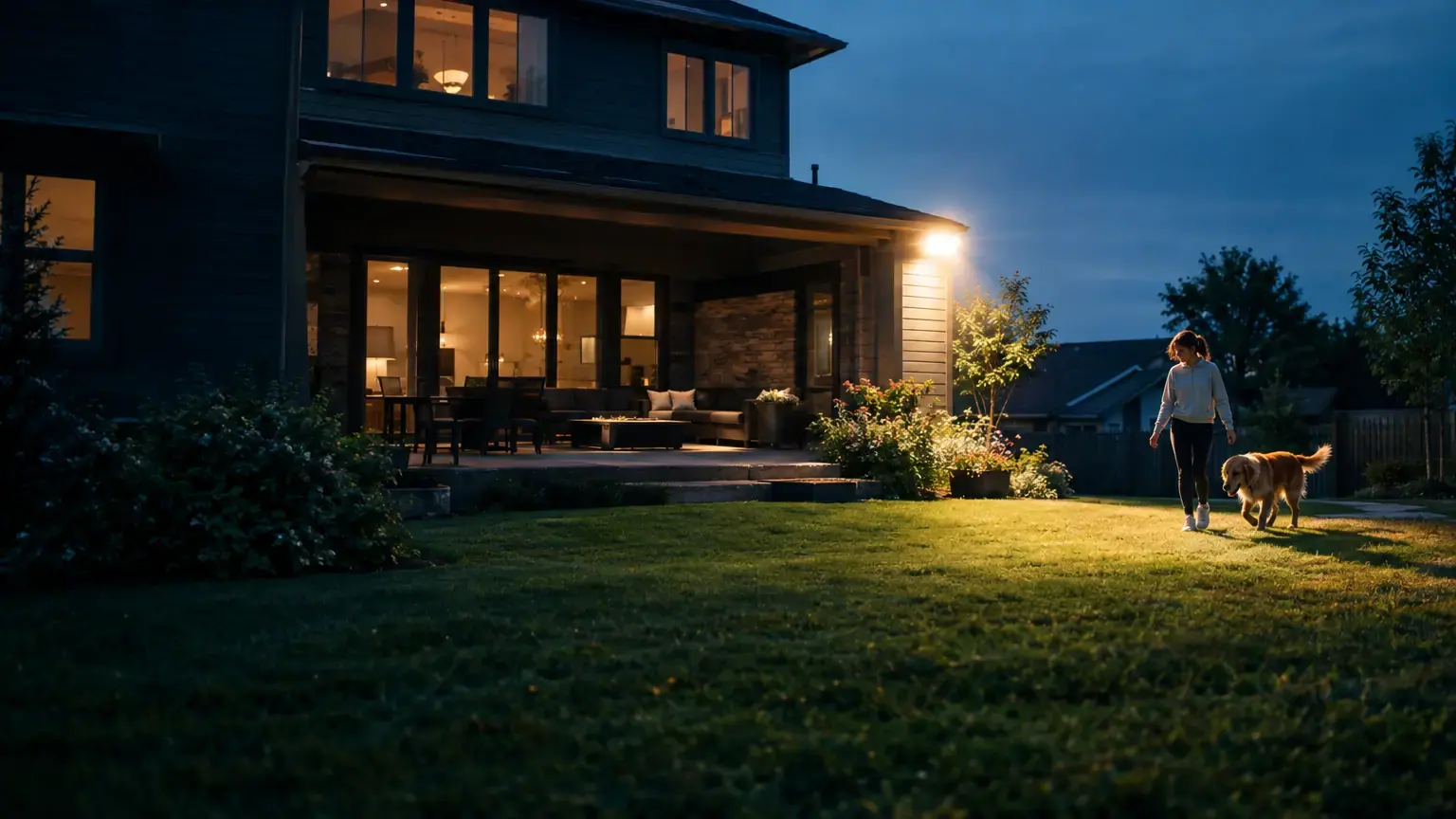
Built for storm season on the First Coast
Vivint Home Security in Jacksonville, FL
In Duval County, FEMA rates lightning risk Very High, and hurricane season brings wind, rain and power outages to homes on both sides of the St. Johns River. A Jacksonville system needs to keep reporting when the lights go out, catch water inside the house, and watch driveways, garages and porches in a sprawling city where almost everyone drives.
Independently owned authorized Vivint dealer, operated by Plondo. Not Vivint Smart Home, Inc.'s corporate site.
Quick answer
What is the best Vivint setup for a Jacksonville home?
With a median build year of 1987, many Jacksonville houses are block ranches with an attached garage and a slider to a screened porch or pool cage, so that is where we begin. Cover the slider, the garage entry door and the ground-floor windows with sensors, put a Doorbell Camera Pro at the front for deliveries, and point an Outdoor Camera Pro down the driveway. Lightning risk in Duval County is rated Very High, so monitored smoke and carbon monoxide detectors come next, along with water sensors beside the AC air handler. A cellular Vivint Smart Hub ties it together, Vivint's own technicians install it, and the Vivint app keeps you connected if you evacuate inland.
Last reviewed by the Vivint Security editorial team.
Jacksonville at a glance
| Data point | Value | Source |
|---|---|---|
| Population | 977,670U.S. Census Bureau, ACS 5-year 2024 | |
| Owner-occupied homes | 57.6%U.S. Census Bureau, ACS 5-year 2024 | |
| Single-family detached homes | 59.2%U.S. Census Bureau, ACS 5-year 2024 | |
| Homes in buildings with 10+ units | 19.7%U.S. Census Bureau, ACS 5-year 2024 | |
| Median year homes were built | 1987U.S. Census Bureau, ACS 5-year 2024 | |
| Median home value | $293,700U.S. Census Bureau, ACS 5-year 2024 | |
| Housing vacancy rate | 8.5%U.S. Census Bureau, ACS 5-year 2024 | |
| Overall natural hazard risk (county) | Relatively HighFEMA National Risk Index, Duval County | |
| Highest-rated hazards (county) | Lightning (Very High); Hurricane (Relatively High); Tornado (Relatively High); Hail (Relatively High)FEMA National Risk Index, Duval County |
Local risks
What threatens Jacksonville homes
The FEMA National Risk Index rates Duval County's overall natural hazard risk Relatively High. Lightning sits at the top of the list at Very High. Afternoon thunderstorms roll in through much of the summer, and a strike can start an attic fire, damage electronics or knock out power to the whole street. Monitored smoke detectors matter here because a fire that starts in the attic during a storm can grow while you are at work or asleep. The Vivint Smart Hub talks to the monitoring center over cellular, so it does not depend on a cable or internet line that a storm can take down.
Hurricane, tornado and hail risk are each rated Relatively High. Tropical systems push wind-driven rain under doors and through roof edges, raise water along the St. Johns River and the Intracoastal Waterway, and can leave neighborhoods without power for days. Tornadoes can spin up inside those storm bands with little warning, and hail can crack skylights and windows. Water sensors flag leaks early, glass break sensors respond to shattered panes, and outdoor cameras let you look at your house from wherever you rode out the storm.
Between storms, the risks are closer to the curb. Southside apartment complexes have big open parking lots, delivery vans circle the St. Johns Town Center area all day, and an attached garage left open on a July afternoon invites anyone walking by. With commutes that can cross the Buckman, Dames Point or Fuller Warren bridges, you are often a long drive from home when something happens. Cameras, lighting and app alerts let you see trouble on your phone and decide what to do from the other side of the river.
- Lightning: monitored smoke detectors, cellular communication on the Smart Hub, and app alerts if the system loses power.
- Hurricanes: water sensors at low points and near doors, outdoor cameras for remote checks, and smart locks so you can let in a roofer or neighbor.
- Tornado and hail: glass break sensors on large windows and sliders, plus indoor cameras to see damage before you return.
- Packages and parked cars: Doorbell Camera Pro at the front door and Outdoor Camera Pro with Smart Deter over the driveway.
- Open garages: garage door control with alerts when the door is left up.
Homes and neighborhoods
Jacksonville housing and how to protect it
Jacksonville is home to 977,670 people, and because the city and Duval County are consolidated, it covers a huge, car-dependent area. About 59.2% of homes are single-family detached houses, and 19.7% are in buildings with 10 or more units, many of them apartment communities on the Southside. The owner-occupied rate is 57.6%, so a large share of residents rent and need equipment that installs without major changes to the walls.
The median year homes were built is 1987, and across much of the city that means concrete block, slab-on-grade ranch houses with attached garages and sliding doors to a screened porch or pool enclosure. The median home value is $293,700. Older wood-frame houses near the urban core and newer subdivisions toward the edges of the county need different setups, so here is how we would think about a few areas.
Riverside and Avondale
These historic streets are full of early twentieth-century bungalows and two-story wood homes with deep porches, lots of original windows and detached garages off back alleys. Streets closest to the St. Johns River can take on water when a hurricane pushes the river up. Put sensors on every accessible window, add glass break sensors where there are many panes, aim an Outdoor Camera Pro at the alley and garage, and place water sensors in the lowest rooms and near older plumbing.
Mandarin
Mandarin has larger lots, long driveways and heavy live oak canopy, with many homes set back from the road or near the river. Trees block streetlight and can come down in storms. A Spotlight Pro over the driveway, an Outdoor Camera Pro covering the side yard, and a Doorbell Camera Pro for the long walk up to the door work well. Add water sensors by the water heater and under sinks.
Southside, Baymeadows and the Town Center area
This is apartment and condo country, with large gated complexes, University of North Florida students, young professionals and a steady flow of package deliveries. Wireless door sensors, a motion sensor, an Indoor Camera Pro and a Doorbell Camera Pro where the lease allows give solid coverage without drilling. Smart locks can replace keys for dog walkers and guests if your landlord approves.
Westside near NAS Jacksonville and Northside subdivisions
Many military households live on the Westside around NAS Jacksonville, and newer HOA subdivisions are common there and on the Northside. Families dealing with deployments and travel benefit from garage door control, smart locks, a Vivint Smart Thermostat and outdoor cameras placed to meet HOA guidelines. One app lets a spouse at home and a service member away both see what is happening.
Questions about Vivint Home Security in Jacksonville? A Vivint expert can help.
Call 866.417.1540Recommended setup
A starting Vivint setup for a typical Jacksonville home
Picture a block ranch with an attached garage, a front porch and sliding doors to a screened pool area. This is where we would start, then adjust on your call based on layout, budget and whether you own or rent.
- Vivint Smart Hub: the center of the system, communicating over cellular so it does not rely on a cable or internet line.
- Door and window sensors: on every exterior door, ground-floor windows and especially sliding glass doors to the porch or pool.
- Glass break sensors: for large sliders and picture windows that hail or an intruder could break.
- Doorbell Camera Pro: package detection and two-way talk for frequent deliveries.
- Outdoor Camera Pro with Smart Deter: covers the driveway and is designed to discourage people who linger near your cars.
- Garage door control: close the door from the app when you realize it is open after you leave.
- Smart locks: let a contractor, neighbor or pet sitter in during storm cleanup or travel without hiding a key.
- Smoke and carbon monoxide detectors: monitored around the clock, important during lightning season and generator use after storms.
- Water sensors: next to the AC air handler, water heater, washer and under sinks.
- Vivint Smart Thermostat: manage cooling from the app and spot an AC failure while you are away.
Installation and monitoring
How installation, monitoring and the app work in Jacksonville
Your installer is a Vivint Smart Home Pro, a Vivint technician rather than a subcontractor. In a typical Jacksonville block home, that visit covers the sliders to the lanai or pool cage, the door from the garage into the house, the air handler closet and the spots where afternoon storms tend to blow rain in. By the end, the Smart Hub is connected and the Vivint app is working on your phone. What is available at your address, the price and any current offer are confirmed on a quick call with us.
When the system is armed, Vivint's 24/7 professional monitoring center handles alarms. Agents verify what triggered an alarm and contact emergency services in Duval County following local protocol. Because the hub uses cellular communication, it can keep reaching the monitoring center when a storm knocks out your internet, as long as cellular service and backup power hold up. The app lets you arm and disarm, view live and recorded camera video, lock doors and get alerts, whether you are at a job site in Baymeadows or in a hotel inland during an evacuation.
Before your alarm goes live, check whether the City of Jacksonville or the Jacksonville Sheriff's Office requires you to register or permit a monitored alarm. Atlantic Beach, Neptune Beach and Jacksonville Beach set their own rules. We can tell you what to ask, but any fees are set locally and can change, so confirm them directly.
Questions about Vivint Home Security in Jacksonville? A Vivint expert can help.
Call 866.417.1540Weather ready
Smoke, CO, water and temperature protection for a humid, stormy climate
Jacksonville's humidity keeps air conditioners running for much of the year, and a clogged condensate line can quietly soak a ceiling or garage floor. Water sensors near the air handler, water heater and washer send an alert at the first sign of a leak, before the damage spreads. After a hurricane, roof leaks and water pushed under doors are common, so a sensor by the most exposed entry is worth adding.
Portable generators come out after big storms, and carbon monoxide can drift in from a garage or open window. Monitored carbon monoxide detectors cover that risk, and monitored smoke detectors cover lightning season. The Vivint Smart Thermostat lets you watch indoor temperature from the app, which helps when an AC unit fails during a summer trip or while the house sits empty after an evacuation.
Talk to a Vivint expert right now.

Vivint Home Security in Jacksonville FAQ
Can I get Vivint if I rent in Jacksonville?
Yes. Many Jacksonville residents rent, and Vivint can be set up with wireless sensors that mount with minimal wall impact. Door and window sensors, motion sensors, indoor cameras and a doorbell camera are common choices. Check your lease and ask your landlord before changing locks or mounting outdoor cameras. We can talk through a renter-friendly setup and confirm what is available at your address on a call.
Does Vivint work in a Southside apartment or a condo near the beaches?
It does. In apartments and condos, the focus is usually your front door, sliding doors to a balcony and the inside of the unit. Door sensors, a motion sensor, an Indoor Camera Pro and smoke and carbon monoxide detectors cover most layouts. Ask your property manager about doorbell cameras and smart locks, since many complexes on the Southside and condo buildings near the beaches have rules about exterior changes.
My neighborhood has an HOA. Will cameras be allowed?
Many HOAs allow security cameras but have guidelines about placement, visible wiring and lighting. Newer subdivisions on the Westside and Northside often spell this out in their covenants. Review your HOA documents before installation and share any rules with us on the call. The Smart Home Pro can place cameras and the Spotlight Pro to fit those guidelines while still covering your driveway and entries.
What happens to my system during a hurricane or power outage?
The Vivint Smart Hub communicates with the monitoring center over cellular, so a downed internet or cable line does not cut it off. The hub has a backup battery for shorter outages. During long outages after a major storm, cameras that run on household power may go offline until power returns. The app shows you what is still reporting, and you can get alerts when the system loses or regains power.
Can I watch my house if we evacuate or travel?
Yes. From the Vivint app you can see live and recorded video, check whether doors are locked, close the garage and get alerts from water and smoke sensors. That is useful when you evacuate inland during a storm or leave for a long trip. Smart locks also let you give a trusted neighbor or contractor access to check on the house without leaving a key under the mat.
Do I need an alarm permit in Jacksonville?
You may. Check with the City of Jacksonville or the Jacksonville Sheriff's Office about whether monitored alarms need to be registered or permitted, and whether there are rules about false alarms. If you live in Atlantic Beach, Neptune Beach or Jacksonville Beach, those cities set their own requirements. Rules and any fees can change, so confirm directly before your system goes live.
I am building a new home on the Northside or Westside. When should I set up Vivint?
Call while you are still in the planning or walkthrough stage if you can. Many new Jacksonville builds are block homes with attached garages and pool-ready back patios, and knowing the layout early helps decide where cameras, sensors and the doorbell will go and whether the builder needs to leave power at certain spots. If your builder includes a basic system, we can compare it with a full Vivint setup and monitoring for your address.
What if I move to another part of Jacksonville?
Moves across town are common here, from a Southside apartment to a house in Mandarin or a newer neighborhood on the Northside. Call before your move so we can review options for your new address, since equipment needs and offers can differ. A Mandarin house on a big wooded lot may need a Spotlight Pro and more outdoor cameras, while a Riverside bungalow may need extra window and glass break sensors.
Is Vivint a good fit for military families near NAS Jacksonville or Mayport?
It can be. Deployments, training trips and moves are part of life for many households near NAS Jacksonville and Naval Station Mayport. Shared access in the Vivint app lets both partners see cameras and alerts from anywhere. Smart locks, garage door control and monitored smoke and water sensors help the person at home manage the house alone. Ask on the call about options that fit your situation.
Vivint products for homes in Jacksonville
 Home Security SystemsProfessionally installed Vivint home security systems with 24/7 monitoring.
 Security CamerasVivint indoor, outdoor and doorbell security cameras with smart deterrence.
 Doorbell Camera ProVivint Doorbell Camera Pro with package protection and two-way talk.
- Outdoor Camera ProVivint Outdoor Camera Pro with Smart Deter and night vision.
 24/7 MonitoringVivint 24/7 professional home security monitoring.
- Vivint Cost and PricingWhat Vivint costs: monitoring plans, equipment and offers.