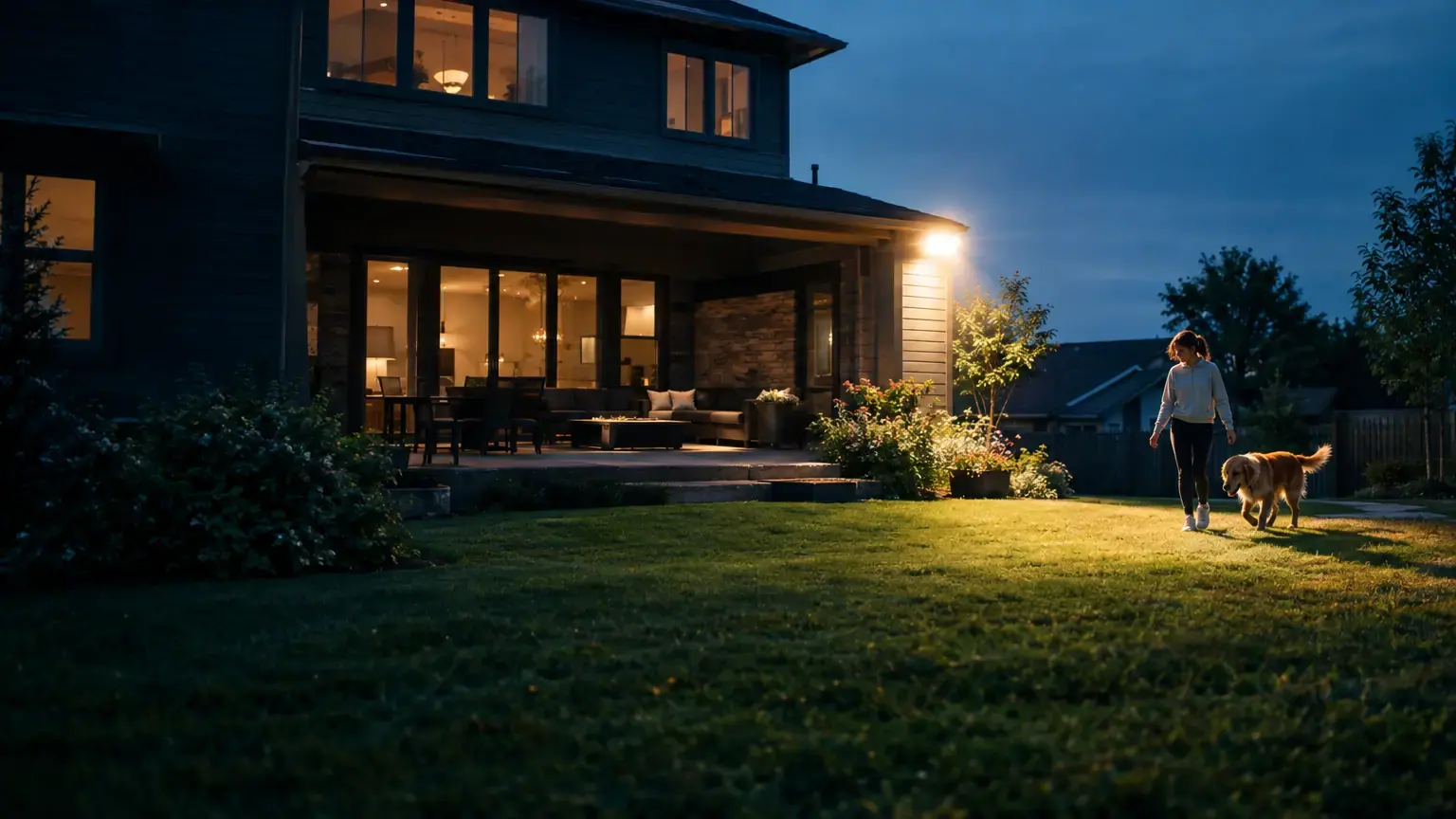
Built for Front Range storms and a city of condos and old brick
Vivint Home Security in Denver, CO
Afternoon storms roll off the foothills fast here, bringing hail, lightning and sudden runoff to a city where older brick bungalows sit a few blocks from new condo towers. A Denver system has to ride out storm outages and cold snaps, watch porches on busy blocks and keep an eye on alley garages, all from the Vivint app.
Independently owned authorized Vivint dealer, operated by Plondo. Not Vivint Smart Home, Inc.'s corporate site.
Quick answer
What is the best home security setup for a Denver home?
Match the system to the building. In a detached house in Washington Park or the Highlands, pair the Vivint Smart Hub with sensors on ground-floor doors, windows and basement window wells, a Doorbell Camera Pro at the porch and an Outdoor Camera Pro aimed at the alley garage. Add basement water sensors plus smoke and carbon monoxide detectors. In a LoDo or Capitol Hill condo, scale down to unit-door sensors, an Indoor Camera Pro and a smart lock. The hub reports over cellular with battery backup, which matters when hail or lightning cuts power. Pricing and offers vary by address, so call for a free quote.
Last reviewed by the Vivint Security editorial team.
Denver at a glance
| Data point | Value | Source |
|---|---|---|
| Population | 718,877U.S. Census Bureau, ACS 5-year 2024 | |
| Owner-occupied homes | 48.8%U.S. Census Bureau, ACS 5-year 2024 | |
| Single-family detached homes | 40.5%U.S. Census Bureau, ACS 5-year 2024 | |
| Homes in buildings with 10+ units | 40.7%U.S. Census Bureau, ACS 5-year 2024 | |
| Median year homes were built | 1975U.S. Census Bureau, ACS 5-year 2024 | |
| Median home value | $616,000U.S. Census Bureau, ACS 5-year 2024 | |
| Housing vacancy rate | 6.7%U.S. Census Bureau, ACS 5-year 2024 | |
| Overall natural hazard risk (county) | Relatively HighFEMA National Risk Index, Denver County | |
| Highest-rated hazards (county) | Hail (Very High); Lightning (Very High); Tornado (Relatively High); Inland flooding (Relatively High)FEMA National Risk Index, Denver County |
What threatens Denver homes
Hail, lightning, inland flooding and property crime
FEMA's National Risk Index rates Denver County's overall natural hazard risk as Relatively High. Hail and lightning both rate Very High. Tornado and inland flooding rate Relatively High. Longtime residents know the pattern: a clear summer afternoon can turn into a hailstorm quickly, and the same storm that dents cars and cracks windows often knocks out power.
Lightning is the quieter problem. Strikes and surges can cut power and internet across whole neighborhoods. A system that depends only on home Wi-Fi goes dark right when you want it working. The Vivint Smart Hub uses cellular communication with battery backup, so sensors and alarms keep reporting to the monitoring center during an outage.
Inland flooding in Denver usually means fast runoff, not slow rising water. Heavy storm cells can overwhelm drains and low streets near Cherry Creek and the South Platte, and water finds its way into older basements and garden-level units. Water sensors near floor drains, sump pits and water heaters send an alert to your phone the moment they get wet.
Property crime worries in Denver often center on vehicles, garages and porches. Alley garages are a common weak point, and packages left on stoops along busy blocks are easy targets. Outdoor Camera Pro with Smart Deter watches driveways and alleys and responds to lingering visitors with lights and a warning tone. Doorbell Camera Pro protects deliveries, and garage door control lets you close a door you forgot from anywhere.
Housing and neighborhoods
How Denver homes shape the right system
Denver is a city of 718,877 people with a split housing stock. Only 40.5% of homes are single-family detached houses, while 40.7% sit in buildings with 10 or more units. Just 48.8% of homes are owner-occupied, so many residents rent. The median year built is 1975, which means plenty of original windows, older doors and basements with window wells that deserve sensors. With a median home value of $616,000, protecting the house and what is in it matters.
The housing vacancy rate is 6.7%. If a unit or house near you sits empty, camera coverage of side yards, alleys and shared entries helps you see who is coming and going.
Capitol Hill and Cheesman Park
Grand old mansions here have been split into apartments, and they stand next to mid-century high-rises. Many residents rent or own a single unit. A compact setup works best: entry sensors on the unit door and any accessible windows, an Indoor Camera Pro facing the main room, and a smart lock so you can let in a dog walker without handing out keys. Check building rules before mounting anything in a shared hallway.
Highlands and LoHi
Victorian-era brick homes mix with newer townhomes and narrow multi-unit builds, often with rooftop decks and alley garages. Cover the alley with an Outdoor Camera Pro and Spotlight Pro, add glass break sensors for large modern windows, and put door sensors on deck access doors that are easy to forget.
Washington Park and Platt Park
Brick bungalows and boxy Denver Squares with detached garages and finished basements define this area. Older basement windows are a common weak spot, so add sensors or glass break detection there, place water sensors near the furnace and water heater, and use garage door control on the detached garage.
Central Park and Green Valley Ranch
These newer master-planned neighborhoods have attached garages, HOA rules and open exposure to storms rolling across the eastern plains. Doorbell Camera Pro handles front-porch deliveries, an Outdoor Camera Pro covers the driveway, and a Vivint Smart Thermostat helps manage heating and cooling in larger homes. Review HOA guidelines on exterior camera placement before install.
Questions about Vivint Home Security in Denver? A Vivint expert can help.
Call 866.417.1540Where to start
A starting Vivint setup for a typical Denver home
This is a sensible baseline for a detached Denver house with a garage and a basement. Condo owners and renters can drop the outdoor pieces and keep the core. We tailor the plan to your layout on the quote call, and the Smart Home Pro fine-tunes placement at install.
- Vivint Smart Hub: the touchscreen control center, with cellular communication and battery backup so it keeps reporting when storms take out power or internet.
- Door and window sensors on every ground-level entry, including basement windows common in older brick homes.
- Doorbell Camera Pro: detects packages and people at the porch, a key tool against porch theft.
- Outdoor Camera Pro with Smart Deter aimed at the driveway, alley or detached garage.
- Spotlight Pro for dark alleys and side yards.
- Garage door control so you can check and close the garage from the Vivint app.
- Smart locks on the front and back doors for keyless entry and remote locking.
- Smoke and carbon monoxide detectors, monitored around the clock, for furnace season and lightning season.
- Water sensors near the water heater, washer, sump pit and floor drains to catch storm seepage or a burst pipe early.
- Playback DVR so you can review continuous recordings after an incident or a hailstorm.
How it works
Installation, 24/7 monitoring and the Vivint app in Denver
Our part is the planning. As an independent, authorized Vivint dealer, we use the call to learn whether you are protecting a Platt Park bungalow, a LoHi townhome or a downtown high-rise unit, then confirm what Vivint offers at that address. The install itself belongs to Vivint: a Smart Home Pro technician mounts the cameras, pairs the sensors, sets up the hub and shows you the app before leaving. Old brick and plaster walls are the technician's job, not yours.
After install, Vivint's monitoring agents are on duty 24/7. If a sensor trips at your Park Hill house while you are at work downtown, an agent checks the alarm and, if it is real, contacts emergency services following local protocol. How quickly crews arrive is up to those agencies. Summer storms are the real test: one lightning strike can drop power and internet across a neighborhood, and the cellular link with battery backup keeps your hub reporting through it.
The Vivint app puts everything in one place: arm and disarm, watch live camera feeds, get package alerts, lock doors, close the garage and adjust the thermostat. That helps Denver residents who fly out of the airport for work or head up I-70 to the mountains for the weekend.
Before your system goes live, check whether the City and County of Denver requires an alarm permit or registration for your address and how to complete it. We can point you in the right direction on your call.
Questions about Vivint Home Security in Denver? A Vivint expert can help.
Call 866.417.1540Climate protection
Weather-ready sensors for Denver's swings
Denver weather can swing from mild to bitter in a day when an arctic front drops down the plains. Pipes in older homes, crawl spaces and exterior walls can freeze while you are at work or away skiing. The Vivint Smart Thermostat lets you watch indoor temperatures and adjust heat from the app, and water sensors flag a burst line before it soaks a finished basement.
Furnaces run for much of the year here, so monitored carbon monoxide detection makes sense, especially in older homes with aging heating systems. Monitored smoke detectors add protection during lightning season. After a hailstorm, outdoor cameras and Playback DVR give you a record of what happened to your property.
Talk to a Vivint expert right now.

Vivint Home Security in Denver FAQ
I rent in Denver. Can I still get a Vivint system?
Many renters can. Fewer than half of Denver homes are owner-occupied, and equipment like door and window sensors, Indoor Camera Pro and the Smart Hub can usually be installed with minimal impact. Get your landlord's approval before changing locks or mounting outdoor cameras. When you call, we will go over options that fit a rental and confirm availability and pricing for your address.
Does Vivint work in Denver condos and high-rise apartments?
Yes. Many Denver homes are in larger buildings, so a smaller setup often makes sense: sensors on your unit door and accessible windows, an Indoor Camera Pro, a smart lock and smoke and carbon monoxide detectors. Building rules may limit what goes in hallways or on balconies, so check with your HOA or management first. The Smart Hub reports to monitoring over cellular, so alarms do not rely on building internet.
My HOA in Central Park has rules about exterior cameras. What should I do?
Read your HOA's architectural guidelines before install and request approval if required. Rules usually cover placement and appearance. Doorbell Camera Pro replaces an existing doorbell, which tends to raise fewer questions. Mention any HOA restrictions on your quote call so we can plan around them, and your Smart Home Pro can help with discreet mounting.
What happens to my system when a storm knocks out power?
The Vivint Smart Hub includes battery backup and communicates over cellular, so it keeps reporting to the monitoring center when lightning or hail takes out power or internet. Sensors are battery powered too. Cameras may pause during a long outage, but the alarm system itself stays connected so intrusion, smoke and carbon monoxide alerts still reach monitoring agents.
Does Denver require an alarm permit?
Denver residents should check with the City and County of Denver whether a permit or registration is required for their address before the system goes live. Requirements and any fees are set by local authorities and can change. We can help you find the right steps on your call, so your monitoring is set up correctly from the start.
How can Vivint help while I'm away for a ski weekend or a long trip?
The Vivint app lets you arm the system, watch cameras, confirm the garage is closed and lock doors from anywhere. Doorbell Camera Pro alerts you to packages so a neighbor can grab them. The Smart Thermostat and water sensors help protect against frozen or burst pipes during cold snaps, which matters when nobody is home to notice.
I'm buying a new build in Denver. When should I set up security?
Plan it before or right after closing. In growing neighborhoods like Central Park and Green Valley Ranch, construction traffic and frequent deliveries make porch and garage coverage worthwhile early. Installing early lets a Smart Home Pro place sensors and cameras cleanly, and you can add smart locks and garage door control from day one. Call with your new address to confirm availability and current offers.
Can I take my Vivint system with me if I move within Denver?
Vivint has options for customers who move, but what transfers depends on your account and new address. Moving from a Capitol Hill apartment to a Park Hill house, for example, might mean adding outdoor cameras and garage door control. Call before your move so we can review your options and plan the setup for your next home.
Vivint products for homes in Denver
 Home Security SystemsProfessionally installed Vivint home security systems with 24/7 monitoring.
 Security CamerasVivint indoor, outdoor and doorbell security cameras with smart deterrence.
 Doorbell Camera ProVivint Doorbell Camera Pro with package protection and two-way talk.
- Outdoor Camera ProVivint Outdoor Camera Pro with Smart Deter and night vision.
 24/7 MonitoringVivint 24/7 professional home security monitoring.
- Vivint Cost and PricingWhat Vivint costs: monitoring plans, equipment and offers.